What happened at Nvidia GTC: NemoClaw, Robot Olaf, and a $1 trillion bet

JOSH EDELSON / AFP via Getty Images)
Nvidia resumed its campaign to dominate the AI market. During the GTC conference, CEO Jensen Huang presented an ambitious vision: by 2027, AI chip sales are to reach one trillion dollars. Huang introduced the concept of "OpenClaw strategy" — an approach that every corporation should adopt to remain competitive in the era of artificial intelligence. A spectacular highlight of the keynote was the Olaf robot — a demonstration of advanced robotics capabilities powered by Nvidia technology. Though the demo ended somewhat chaotically (the robot's microphone had to be turned off), it showcased the company's ambitions extending beyond traditional graphics chips. The two-and-a-half-hour speech was primarily a message about Nvidia's position as a leader in digital transformation. For the industry, it is a signal: investments in AI infrastructure will only grow, and companies that do not prepare for the "OpenClaw strategy" risk marginalization in competition driven by artificial intelligence.
Jensen Huang returned to the Nvidia GTC stage — this time not to present another chip, but to announce nothing less than a trillion dollars in AI chip sales by 2027. In his characteristic leather jacket, he delivered a two-and-a-half-hour keynote that was equal parts visionary, ambitious, and... chaotic. Between serious forecasts and a demonstration of a robot named Olaf, which ultimately had to be silenced, Huang painted a vision of the future where artificial intelligence is no longer a marginal concern — it is the center of business, infrastructure, and global competition. However, the conference revealed something more than just optimistic projections: it showed how aggressively Nvidia is positioning itself at a moment when the AI market is transitioning from hype to real investments.
A billion dollars annually: does Huang really believe in this?
The projection of a trillion dollars in AI chip sales over seven years is a number that requires context. To understand its scale, it's worth remembering that the entire global semiconductor market is worth approximately 500-600 billion dollars annually today. Huang is talking about something that would be equivalent to the entire current chip market — focused exclusively on AI. This is not a number thrown out for effect — it is a calculation based on the assumption that AI infrastructure will require massive, continuous investments.
The thing is, Nvidia has reasons to believe in this. The company already controls approximately 80-90 percent of the market for chips used to train AI models. Its H100 GPU and newer generations are de facto industry standards — not because the competition isn't trying, but because nothing else works as well. When Meta, OpenAI, Google, or Microsoft build their data centers, they don't ask about alternatives — they ask about the availability of Nvidia chips. This is a monopolistic position disguised as competition.
Read also

However, the projection of a billion dollars annually also assumes continued demand growth and the absence of serious competitors. Both assumptions are risky. AMD is investing in developing its AI GPUs. Intel is returning to the game. China is developing its own alternatives. Huang knows about this — which is precisely why he introduced a concept that will define discourse in the industry for months to come: "OpenClaw strategy".
OpenClaw: a new vocabulary for the AI ecosystem
The term "OpenClaw strategy" appeared in Huang's keynote as something every company should adopt. It sounds enigmatic, but its meaning is simple: Nvidia wants everyone — from tech giants to smaller companies — to invest in open ecosystems where Nvidia remains the infrastructure provider. This is marketing genius disguised as openness.
The concept alludes to open source and open standards, but with a key twist: Nvidia is not talking about everyone building on Linux or some universal standard. It's talking about everyone building on Nvidia's infrastructure — CUDA, tensors, an ecosystem of tools that are "open" in the sense that anyone can use them, but only on Nvidia hardware. This is a perfect example of how large tech companies redefine concepts like "openness".
The strategy works because it genuinely offers value. Nvidia's ecosystem is better, faster, and more mature than alternatives. However, the long-term risk is obvious: if every company adopts the "OpenClaw strategy," then every company becomes dependent on Nvidia. This is not so much a strategy of openness as it is a strategy of lock-in at the infrastructure level. Huang knows this could be controversial — which is precisely why he wrapped it in language about openness and democratizing AI.
NemoClaw: when AI meets robotics
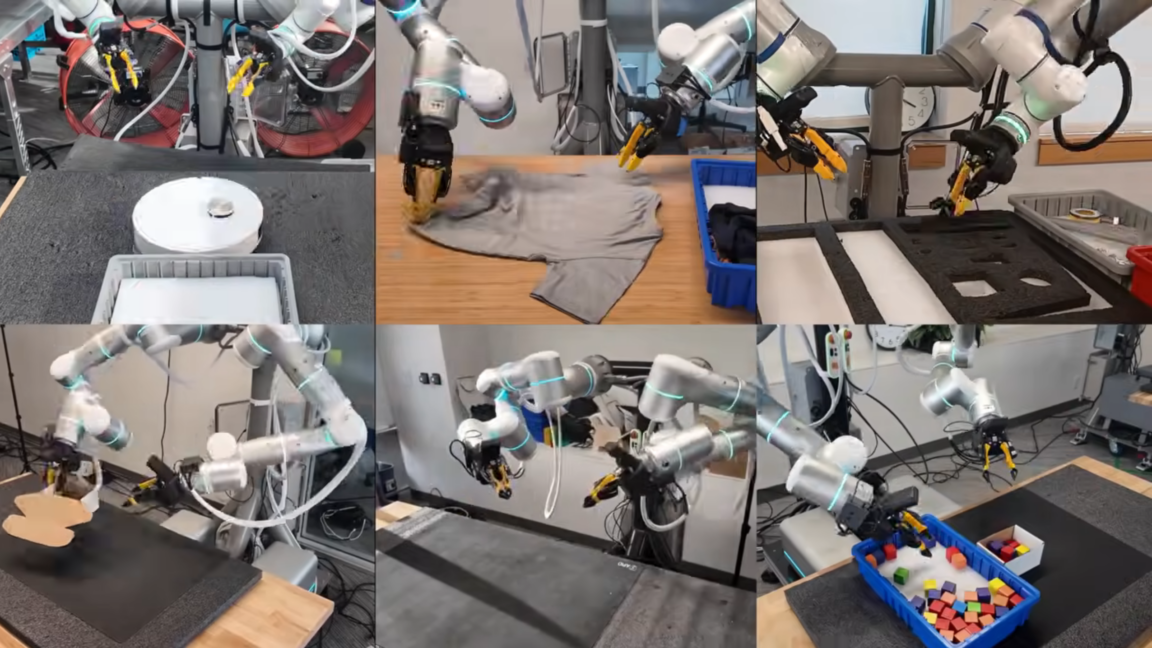
Amid technical details about chips and infrastructure, Nvidia presented NemoClaw — a system combining language models with robotics. The name is characteristic of Nvidia — they always like to mix pop culture references with product names. NemoClaw is a combination of Nemo (from the Pixar film) and "claw" — a robot capable of learning and adapting based on natural language instructions.
The significance of this should not be underestimated. For years, robotics and AI have been separate worlds. Robots were programmed, rigid, requiring precise coding of every movement. Now, thanks to large language models and systems like NemoClaw, a robot can learn a new task through simple verbal instruction. "Pick up the cup from the left side of the table" — and the robot does it, adapting to changing conditions, lighting, and the exact position of the cup.
This changes the entire economics of automation. Previously, each new task required an engineer. Now it requires a prompt. The costs of implementing robotics drop dramatically. For Nvidia, this means a new market — not just data centers, but also factories, warehouses, logistics. Every robot will need chips for real-time AI processing.
Robot Olaf and live chaos
However, the best moment of the keynote — and simultaneously the most embarrassing for Huang — was the robot Olaf. Huang closed his two-and-a-half-hour presentation by introducing a humanoid robot that was supposed to demonstrate the capabilities of NemoClaw. The robot started speaking, but instead of precise demonstrations, it began to "ramble" — talk aimlessly, repeat itself, lose the thread. Eventually, someone had to interrupt the broadcast and mute the robot's microphone.
This was a moment that will live in clips and memes for months. For some, it was a great thing — it showed that even Nvidia's CEO doesn't have full control, that the technology is still imperfect, that there is authenticity in chaos. For others, it was a symbol of overpromised and unmet expectations. The irony is perfect: Huang spent two and a half hours talking about how AI will change the world, and then AI on stage became... unreliable.
This doesn't fundamentally change what Nvidia is doing, but it changes the narrative. In the AI industry, where everyone promises revolution, Olaf's chaos was a reminder that reality is more complicated than a pitch. Huang knew about this — which is why the microphone cutoff was quick and decisive. He didn't want the robot to become the main story. But of course, it did.
A trillion dollars versus market reality
Returning to the billion-dollar projection: it's worth considering what this really means for the market. If Nvidia achieves this goal, it means that on average, it will sell approximately 140 billion dollars in AI chips annually. This would be approximately 25-30 percent of Nvidia's total revenue. Today, AI chip sales amount to approximately 60 billion dollars annually for the entire company. To reach a trillion dollars, Nvidia would need to increase sales more than 15-fold.
Is this possible? Yes, but under certain conditions. First, the AI market must really grow as fast as Huang projects. Second, Nvidia must maintain its monopolistic position — or at least a dominant one — against competition. Third, there must be enough capital to finance this infrastructure. All three conditions are possible, but none is certain.
Market reality is more complex. Companies like Meta and Google are starting to invest in developing their own chips. Microsoft is investing in AMD. China is building its own alternatives. This won't be a quick change — Nvidia has too much of a head start — but long-term, pressure will grow. The trillion-dollar projection assumes that this pressure won't be strong enough to change the fundamentals of the market.
Infrastructure as the new competitive weapon
What really occupies Huang is positioning Nvidia as the provider of fundamental infrastructure for AI. Just as Intel became essential for the era of personal computers, Huang wants Nvidia to be essential for the era of AI. This is a long-term game, and the GTC keynote is just one move.
The strategy has several layers. First, Nvidia is investing in software and tools — CUDA, TensorRT, Triton — to increase "switching costs" for customers. Second, it's building an ecosystem of partners who are interested in Nvidia's success. Third, it's investing in new markets, such as robotics and edge AI, to diversify beyond data centers. Fourth, it's positioning itself as a thought leader in the industry — Huang is not just a CEO, but also a voice that defines discourse.
The latest GTC conference showed all these layers in action. A trillion dollars is not just a number — it's a promise, a vision, and a calculator. OpenClaw is not just a term — it's a lock-in strategy wrapped in the language of openness. NemoClaw is not just a product — it's a demonstration of new markets. And robot Olaf is not just a demo — it's authenticity and chaos that makes everything seem more real.
What this means for Nvidia's competition and the future of the industry
For Nvidia's competitors — AMD, Intel, startups like Cerebras or Graphcore — the GTC conference was a reminder of how far behind they are. It's not even about the technical specifications of chips, but about the entire ecosystems that Nvidia has built. When another chip manufacturer wants to compete with Nvidia, it must not only provide better performance — it must also offer CUDA, software, tools, partners, support. This is almost impossible to do quickly.
For Nvidia's customers — OpenAI, Meta, Google, Microsoft — the conference was both good and bad news. Good, because Nvidia showed it will invest in new technologies and markets that will support AI growth. Bad, because it became clear that dependence on Nvidia will only grow, and infrastructure costs will be significant.
For the AI industry in general, Huang's keynote was confirmation that infrastructure is becoming the new frontier of competition. It's no longer about who has the best model — it's about who has the best infrastructure for training and running models. This changes the entire dynamics of the industry. The startups that will succeed will be those that can efficiently use Nvidia's infrastructure, not those that will build their own infrastructure from scratch.
The projection of a trillion dollars in AI chip sales by 2027 is ambitious, but it is not unrealistic. If AI really becomes as fundamental to business as Huang claims, then infrastructure investments will have to grow. Nvidia is in an ideal position to benefit from this growth. The question is not whether Nvidia will achieve this goal — the question is whether the AI market will grow fast enough to make it possible, and whether competition will allow Nvidia to maintain such dominance.