AI-pilled Arm CEO teases mystery products that will turn it into a money machine
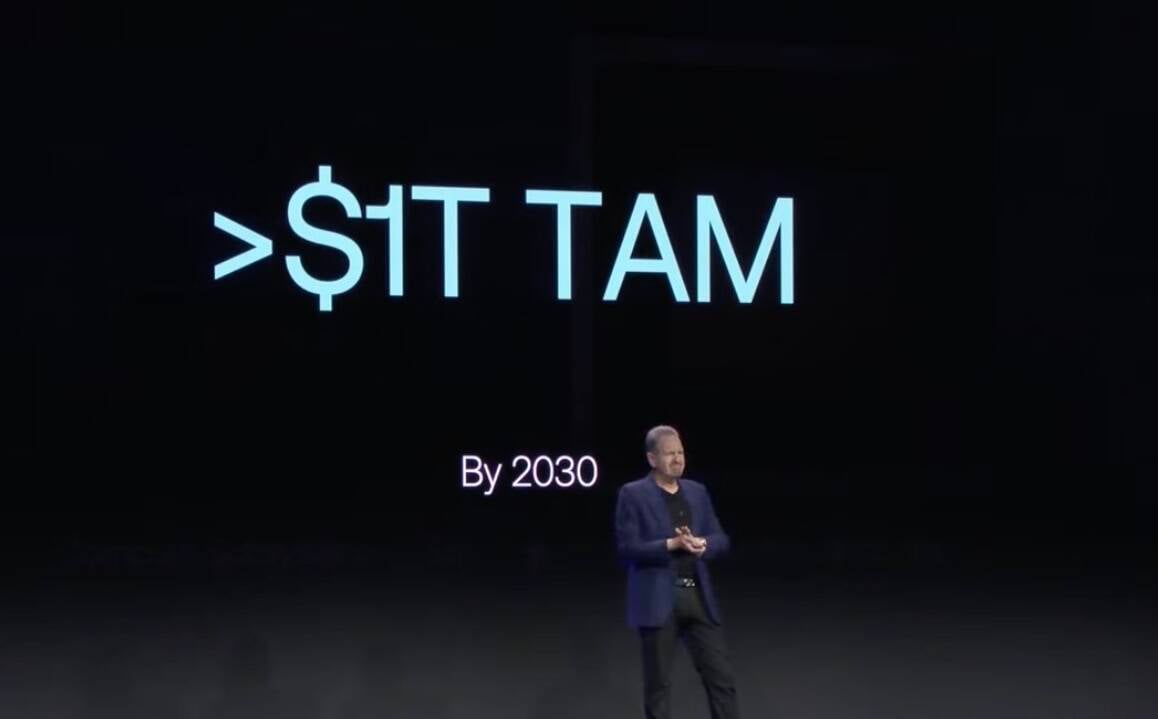
Foto: The Register
One trillion dollars – this is the Total Addressable Market (TAM) value forecasted by the end of the decade by Rene Haas, CEO of Arm, as he announced a radical shift in the giant's business model. During the Arm Everywhere conference, the company declared a move away from being solely an Intellectual Property (IP) licensor toward the direct sale of its own integrated circuits. The key to this transformation is the premiere of the AGI CPU, developed in collaboration with Meta, which is intended to become the foundation for agentic AI systems. The transition to a model of selling finished silicon is expected to increase Arm's revenue in the datacenter sector from the current $3 billion in royalties to a staggering $100 billion. The optimism of Arm's chief stems from the nature of agentic systems, such as the OpenClaw framework. While AI models themselves require GPU accelerators, the autonomous agents managing them operate primarily on CPU cores. According to forecasts, the demand for processor computing power will quadruple as a result, as agents generate massive traffic by communicating with each other without direct user involvement. For the global technology market, this marks a new era in cloud infrastructure construction. Although Meta and Microsoft continue to invest in their own chips and Nvidia solutions, the emergence of ready-made Arm processors lowers the barrier to entry for smaller players. The new AGI CPU, featuring 136 cores, has already gained support from giants such as OpenAI, SAP, and Cloudflare. The competition for dominance in data centers is entering a phase where the energy efficiency of the Arm architecture, combined with direct hardware distribution, may redefine the balance of power in the semiconductor industry.
The Agentic Revolution Drives Demand for CPU Cores
The foundation of Haas's optimism is the rapid growth of systems based on so-called **agentic AI**. While traditional large language models require powerful graphics accelerators (GPUs) for training and inference, agentic systems—capable of performing tasks independently and triggering other processes—rely heavily on the computing power of general-purpose processors. According to Arm's predictions, frameworks such as **OpenClaw** could lead to a fourfold increase in demand for CPU cores. Unlike single user queries, agentic systems generate massive internal traffic. Agents call other agents, execute generated code, and require additional memory resources and computing power to automate complex tasks. Haas estimates that this trend will drive the value of the data center processor market, in which Arm intends to participate, to **$100 billion**. For comparison, the company currently competes in a market worth approximately $3 billion annually in royalties alone. The transition from a license provider to a provider of finished silicon is a quantum leap in potential revenue.AGI CPU: The First Proprietary Silicon for Data Centers
The highlight of the announcement was the presentation of the **AGI CPU**—the first data center processor under the Arm brand. This is a breakthrough moment, as the company will for the first time sell a finished product directly to end customers instead of merely providing blueprints. This chip, the result of a collaboration with **Meta**, was designed specifically to handle agentic systems. The technical specifications of the unit are impressive, though they also raise questions about design strategy:- A design equipped with **136 cores**.
- No support for **simultaneous multithreading (SMT)** technology—Arm argues that the simplified architecture allows for more deterministic scaling of AI tasks.
- Optimized energy efficiency, crucial for modern server ecosystems.
Confrontation with Giants and the Fight for Dominance
The path to billion-dollar profits will not be paved with roses, however. Arm is entering a market that is currently a battlefield between established powers and new challengers. Mohamed Awad, EVP of Cloud AI at Arm, claims that their approach to core architecture is superior to the competition because it discards unnecessary features in favor of performance in AI tasks. However, industry rivals are not standing still. **AMD** plans to release **Epyc** processors offering up to **256 cores**, nearly double what Arm's current flagship offers. Meanwhile, **Intel**, after a brief experiment with abandoning multithreading in upcoming Diamond Rapids chips, plans to return to hyperthreading technology in **Coral Rapids** units. The biggest threat remains **Nvidia**, which not only dominates the GPU segment but is aggressively promoting its **Vera** processors, also equipped with SMT technology and tightly integrated into the AI ecosystem. It is worth noting that players like Meta are employing a diversification strategy. Although Meta collaborated on the AGI CPU project, it is simultaneously purchasing massive quantities of **Nvidia Grace** processors and custom chips from **Broadcom**. Arm, however, has a unique advantage—even if a customer chooses a competitor's solution, as long as it is based on the Arm architecture (like Nvidia's chips or Amazon Graviton), the British company still earns from licenses.A New Release Cycle and Haas's Determination
To maintain the pace set by the market, Arm cannot stop at a single launch. Rene Haas has already announced that the company is moving to an aggressive release cycle. New processors are expected to appear every year, and the third generation of **AGI CPU** chips is already under intensive development. This is a clear signal to investors and partners: Arm is no longer just a "design bureau," but a full-fledged semiconductor manufacturer ready to fight for the highest stakes. Transforming the company from an IP provider into a hardware giant is a risky move that could complicate relations with existing licensees. However, if the forecasts for agentic AI prove correct and the demand for specialized CPU units indeed grows fourfold, Arm could become the most important link in AI infrastructure. The transition from $3 billion in royalties to a $100 billion market pie is a vision too tempting for Haas to pass up. It seems the era in which Arm remained in the shadow of its partners is coming to an end.More from Industry
Broadcom agrees to expanded chip deals with Google, Anthropic
OpenAI asks California, Delaware to investigate Musk's 'anti-competitive behavior' ahead of April trial
Hope for a U.S.-Iran deal, Apple's anniversary, OpenAI's podcast deal and more in Morning Squawk
AI data center boom ‘stress tests’ insurers as private capital floods in
Related Articles

The Ridiculously Nerdy Intel Bet That Could Rake in Billions
Apr 6
Researchers didn’t want to glamorize cybercrims. So they roasted them
Apr 5
AI agents promise to 'run the business,' but who is liable if things go wrong?
Apr 5