Mass robotaxi malfunction halts traffic in Chinese city
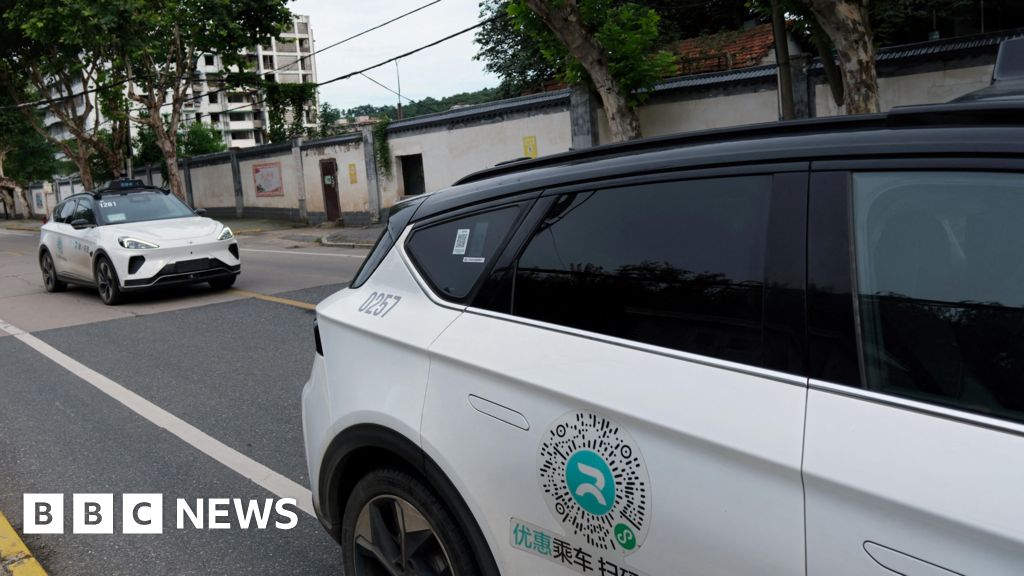
Foto: BBC Tech
More than a hundred Apollo Go autonomous taxis suddenly stopped in the middle of busy streets in Wuhan, China, leading to a complete traffic paralysis. According to preliminary findings by local police, the incident was caused by a massive system failure that immobilized the vehicles belonging to the tech giant Baidu. Although passengers exited the cars safely and no casualties were reported, social media footage suggests that the chaos led to a collision on a highway. This event casts a shadow over the ambitious expansion plans of Baidu, which in December 2025 announced a partnership with Uber and Lyft to test the Apollo Go fleet on roads in the United Kingdom. The incident in Wuhan is not an isolated case—similar problems previously affected Waymo in San Francisco following a power failure, and another Baidu vehicle fell into a trench at a construction site in Chongqing. For global users and regulators, this is a signal that autonomous technology, while statistically safer than human drivers, generates entirely new and unpredictable types of systemic risk. The scalability of robotaxi services currently depends not on the driving itself, but on the resilience of digital infrastructure to errors that can block an entire city in a fraction of a second.
Wuhan, the Chinese metropolis serving as a testing ground for cutting-edge transportation technologies, has become the scene of an unprecedented communication paralysis. At least one hundred autonomous taxis belonging to the Apollo Go fleet, a service developed by the technology giant Baidu, suddenly and without clear reason stopped in the middle of busy urban arteries. This incident is not merely a local logistical problem; it is a serious warning for the entire autonomous transport industry, which has been aggressively pushing forward in recent months, ignoring warning signs regarding the stability of centralized control systems.
The scale of the failure, which occurred last Tuesday, sheds new light on the risks associated with so-called "system malfunctions." Unlike human errors, which are individual in nature, a system error in the case of autonomous vehicles is cascading. Local authorities confirmed that preliminary findings point to a mass software glitch that led to the immobilization of vehicles at the city's most critical points. Although passengers exited the vehicles safely and police reported no casualties, videos circulating on social media, including the Weibo platform, show the scale of the chaos, including at least one highway collision caused by a robot's sudden stop.
Risk Architecture in the Apollo Go Ecosystem
The Apollo Go system is the foundation of Baidu's ambitions in the robotaxi sector, already operating in over a dozen cities, primarily within China. The business model is based on full autonomy, which in theory is meant to eliminate errors resulting from driver inattention. However, the incident in Wuhan exposes a fundamental weakness: the fleet's total dependence on a central network infrastructure or a shared operating system kernel. When a failure occurs at the platform level, hundreds of vehicles become expensive barricades that cannot be easily removed from the road without physical intervention.
Read also


This is not the first time Baidu's technology has failed in a spectacular way. In August 2025, an incident in Chongqing gained significant attention when an Apollo Go robotaxi with a passenger on board fell into a trench at a construction site. Such events, combined with the recent failure in Wuhan, suggest that vision algorithms and mapping systems still struggle with dynamically changing urban environments or critical data transmission errors. Despite this, Baidu continues its expansion, offering no official comment on Tuesday's paralysis at this time.
Global Ambitions vs. Local Failures
Technical problems in China have a direct impact on Western markets. In December 2025, news broke of a partnership between Uber and Lyft with Baidu. These ride-sharing giants plan to introduce Apollo Go cars to roads in the United Kingdom, aiming to start testing in 2026. The events in Wuhan cast doubt on these plans, particularly in the context of restrictive requirements from British regulators, who must grant approval for pilot programs.
Jack Stilgoe, a professor of science and technology policy at University College London, notes that while statistically autonomous systems may be safer than humans, they generate entirely new types of risks. "If we are to make informed decisions about this technology, we need to understand risks that didn't exist before," Stilgoe argues. The failure in Wuhan shows that a bug in the code can paralyze the logistics of an entire city in a single second, which in the case of traditional vehicles is physically impossible without the involvement of external factors.

The Shadow of San Francisco over Chinese Roads
It is worth looking at this problem more broadly, as it does not exclusively concern Chinese technology. The robotaxi industry faces similar challenges worldwide. In December 2025, almost at the same time as Baidu's announcement of cooperation with Western partners, San Francisco experienced a similar incident. At that time, a major power grid failure led to the immobilization of Waymo brand vehicles, causing massive traffic jams throughout the metropolis.
Comparing these cases leads to clear conclusions:
- Centralized control: Autonomous vehicles are only as safe as the stability of their connection to the server or power grid.
- Lack of fail-safe mechanisms: Current generations of robotaxis, in critical situations, choose the safest option for themselves but the worst for traffic—a complete stop.
- Regulations: The incidents in Wuhan and San Francisco will be fuel for opponents of the rapid adoption of AI in public transport.
- Accountability: The lack of clear procedures for removing immobilized "driverless" cars extends the duration of communication paralysis.
"This incident showed that technology can still fail in entirely new, unpredictable ways" — Jack Stilgoe, University College London.
Crisis of Confidence in Algorithms
The current situation puts Baidu in a difficult position regarding its public image. The company, which positions itself as a global leader in AI, must now explain why its systems lacked adequate protections against a mass cascading error. The corporation's silence only intensifies the concerns of users and regulators. If Apollo Go is indeed to appear on roads in Europe or the United States, Baidu must prove it can manage not only driving but, above all, critical situations.
It can be assumed that the coming months will be a period of intensive auditing of autonomous systems. The incident in Wuhan will likely force manufacturers such as Tesla, Waymo, or indeed Baidu, to implement more decentralized decision-making systems. Without the ability to autonomously pull over to the shoulder in the event of loss of connectivity with the base, robotaxis will remain a high-risk technology, capable of blocking the lifeblood of any modern city at the least expected moment.