Tech Life
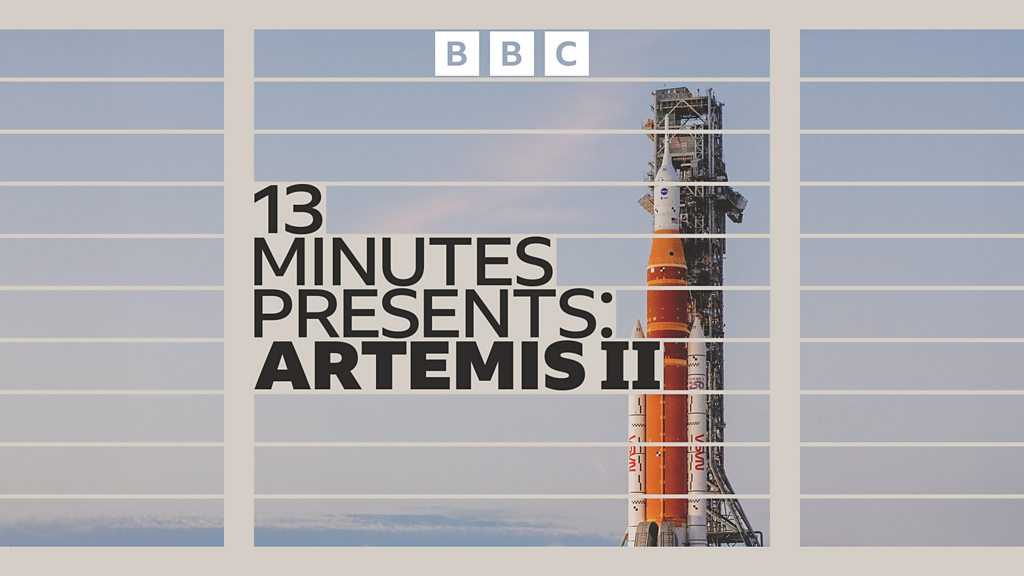
Foto: BBC Tech
Half a century after the last step was taken on the surface of the Silver Globe, humanity officially begins a new era of space exploration under the Artemis program. Instead of short visits, NASA and commercial partners plan to build a permanent lunar base and the Gateway station, which will serve as a transfer port on the way to Mars. The behind-the-scenes preparations are explored in the new BBC podcast series "13 Minutes," shedding light on the technological gap between the analog systems of the Apollo missions and today's solutions based on artificial intelligence and advanced robotics. For the global creative technology and engineering sectors, this signifies rapid development in fields such as interplanetary telecommunications, 3D printing using regolith, and life support systems in extreme conditions. Users worldwide will feel the effects of this race through the commercialization of space technologies that will enter everyday use—from more efficient photovoltaic cells to new standards for wireless data transmission. The return to the Moon is no longer just a matter of prestige, but the foundation for building a new extraterrestrial economy in which private companies will play a role as significant as government agencies. This transition from theoretical projects to a physical human presence on another celestial body will define the direction of innovation for decades to come.
Half a century after the last human left their footprint in the lunar regolith, humanity is once again turning its gaze toward our natural satellite. This is no longer just a matter of national pride or a political arms race, as was the case in the 1960s. Today's space revolution, driven by the Artemis program and the unprecedented development of AI and robotics technology, sets a much more ambitious goal: a permanent human presence beyond Earth. The behind-the-scenes preparations, technical challenges, and emotions accompanying this new era of exploration have become the foundation of the new installment of the BBC – 13 Minutes podcast, which analyzes the human return to the Moon.
Modern space technology differs from the Apollo era as drastically as today's smartphones differ from room-sized computers. A key element of the new mission is not just a safe landing, but the construction of infrastructure that will allow for multi-month operations. Life support systems, autonomous rovers controlled by advanced algorithms, and the construction of the Gateway station in lunar orbit are projects that require precision that NASA engineers in 1969 could only dream of. 13 Minutes dives into these technical nuances, showing that the return to the Moon is, in fact, a testing ground before the leap toward Mars.

The architecture of return and the role of artificial intelligence
Why are we returning now? The answer lies in technological maturity. Today's missions rely on In-Situ Resource Utilization (ISRU), which means attempting to extract water and fuel directly from ice sheets hidden in craters at the lunar poles. The 13 Minutes podcast highlights that the success of these operations depends on precise navigation and real-time data analysis. This is where artificial intelligence comes into play, managing landing systems in difficult terrain where communication delays with Earth make manual control impossible.
Read also


It is worth taking a closer look at the Space Launch System (SLS) rocket and the Orion capsule, which form the transport core of the Artemis missions. Unlike modules from the last century, Orion is designed as a multi-purpose spacecraft capable of deep space exploration. The use of modern composite materials and advanced thermal shields allows for multiple atmospheric re-entries at speeds significantly higher than those achieved in low Earth orbit. Experts on the BBC emphasize that every element of this machine is the result of decades of computer simulations and stress tests.
Another pillar is the commercialization of the space sector. Companies like SpaceX or Blue Origin are no longer just subcontractors, but key partners building lunar landers. This is a paradigm shift – a transition from purely government projects to a business model where orbital logistics becomes a new service market. 13 Minutes analyzes how this competition accelerates innovation, lowering the cost of launching a kilogram of cargo into space, which is a prerequisite for the sustainability of bases like the planned Artemis Base Camp.

Biological challenges and the psychology of isolation
The return to the Moon is not just a triumph of engineering, but above all a test of human endurance. Longer stays on the satellite's surface expose astronauts to cosmic radiation and lunar dust – regolith – which is extremely abrasive and toxic to the lungs. In the 13 Minutes podcast, we hear about research into new types of spacesuits that must be more flexible and resistant to extreme temperature fluctuations, ranging from -200 to over 100 degrees Celsius. These are physical barriers that require us to create autonomous medical systems based on AI, capable of diagnosing the crew without immediate support from doctors on Earth.
The psychological aspect cannot be ignored. Isolation in claustrophobic modules, hundreds of thousands of kilometers from home, is a challenge for mental health. Training programs for the new generation of astronauts include advanced stress management techniques and the use of virtual reality (VR) to maintain contact with the "Earth" environment. 13 Minutes sheds light on how important team cohesion is in conditions where one person's mistake could mean the failure of the entire mission. This is a lesson we must learn before sending the first crew to Mars.
Geopolitics also plays a significant role here. The Moon is becoming the eighth continent, where the rules of international cooperation will be redefined. The Artemis Accords aim to create a legal framework for the peaceful exploitation of resources, but competition from other powers means that the race for control over strategic points, such as the "peaks of eternal light" at the south pole, is picking up pace. The BBC podcast does not shy away from difficult questions about whether the Moon will become a zone of cooperation or another field of conflict.
A new chapter in the history of the species
The return to the Moon described in 13 Minutes is more than just a repeat of history. It is proof that technology has finally caught up with our ambitions. Through the combination of generative artificial intelligence optimizing flight trajectories, robotics building shelters from lunar dust, and a new commercial vision, we are becoming an interplanetary species. The Moon is no longer the finish line, but a stopover – a gas station and a laboratory where we will learn to live outside our cradle.
One could venture to say that the success of the Artemis missions will define the technological development of the entire 21st-century civilization. Innovations developed for survival in a vacuum and without an atmosphere – from water recycling systems to miniature nuclear reactors – will find direct application in the fight against the climate and energy crisis on Earth. Space exploration has always driven progress on our planet, and this time will be no different. The human return to the Moon is a catalyst that will force us to make a leap in the efficiency of resource and energy management.