The AI Hype Index: AI goes to war

Foto: MIT Tech Review
As much as $143 million – this is the amount raised in a single funding round by the American startup Helsing, serving as a clear signal that artificial intelligence has firmly entered the defense sector. While public debate focuses on generative language models, a true breakthrough is occurring in defense technologies. Companies such as Helsing and Anduril Industries are deploying AI-based solutions directly on the battlefield, offering systems for real-time sensor data analysis and autonomous drones. The defense industry is currently undergoing a transformation referred to as "software-defined warfare." For global technology users, this means that innovations originally developed for military purposes will increasingly permeate the civilian sector, particularly in areas such as Computer Vision and advanced predictive analytics. At the same time, the growing role of AI in armed conflicts is forcing international organizations to accelerate work on ethical regulations. This phenomenon demonstrates that artificial intelligence has ceased to be merely a creative gadget and has become a key strategic asset that redefines the global concept of security and technological advantage. The arms race is entering a phase where victory will be determined not only by firepower, but primarily by the efficiency of algorithms processing data under time pressure.
The artificial intelligence sector has entered a new, much more subdued phase of enthusiasm, which is being brutally verified by geopolitical and market realities. While just a few months ago discussions revolved around the creative possibilities of language models, today the main topic is becoming their weaponization—transforming them into tools supporting military operations. The latest reports indicate a deep conflict of interest between the ethics of creators and the needs of the Pentagon, which could forever change the perception of brands such as Anthropic and OpenAI.
The Pentagon and the battle for the Claude model
At the center of recent events is Anthropic, a company often positioned as a "safer" and more ethical alternative to industry giants. According to source materials, a serious dispute occurred between the company's board and representatives of the Pentagon. The bone of contention was the flagship Claude model and attempts at its military utilization. Anthropic, founded by former OpenAI employees with a strong focus on AI safety, tried to resist pressure regarding the direct weaponization of its system.
This situation exposed a fundamental rift in Silicon Valley. On one hand, we have corporate declarations about creating technology for the good of humanity; on the other, giant government contracts that are too lucrative to ignore. However, Anthropic's resistance did not last long in a vacuum, as the competition showed no such scruples, leading to a rapid reshuffling of power on the AI-military axis.
Read also

OpenAI takes the initiative with a "sloppy" contract
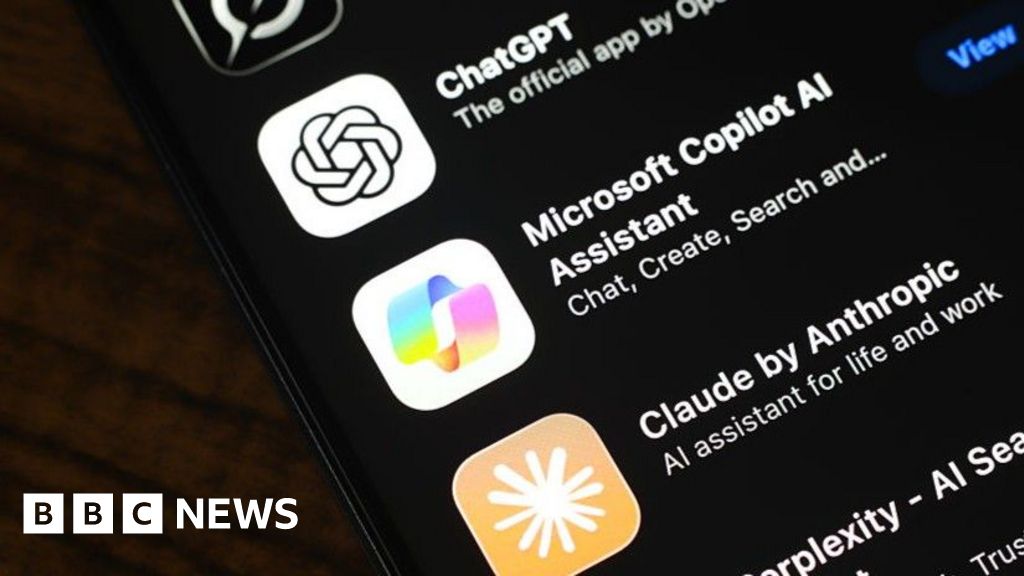
While Anthropic fought ideological battles, OpenAI seized the opportunity to strengthen cooperation with the US defense sector. According to available information, the creators of ChatGPT finalized an agreement with the Pentagon that industry observers describe as "opportunistic and sloppy." This strategy allowed OpenAI to almost completely dominate the attention of military decision-makers, pushing ethical dilemmas to the sidelines.
- OpenAI decided on an aggressive entry into the defense sector, abandoning previous restrictions regarding the use of their technology for military purposes.
- The contract with the Pentagon is said to involve not only logistical support but also deeper integration of models into operational structures.
- Critics point out that the rush to implement AI in the military could lead to unpredictable system errors.
Mass user exodus and street protests
The reorientation of AI giants toward weapons contracts has not gone without a social response. ChatGPT has recently recorded an unprecedented drop in popularity—users have begun leaving the platform "in droves." Although the reasons may be complex (from market saturation to a decline in answer quality), the context of military cooperation builds negative sentiment around a brand that was supposed to be an everyday work assistant and is becoming a component of the war machine.
The tension has moved from the web to the real world. London hosted the largest protest to date against the uncontrolled development and militarization of artificial intelligence. Thousands of people marched through the UK capital, expressing opposition to the direction the industry is heading. This is a clear signal to technology company boards: the credit of public trust is running out faster than analysts predicted.
Risk analysis: AI safety in the face of war
From the perspective of the Pixelift editorial team, the current situation is a turning point. For years, Anthropic built its image on a foundation of responsibility, but in a clash with the US defense budget and the aggressive stance of OpenAI, the company has found itself on the defensive. If "safe AI" loses the fight for influence to models deployed in a "sloppy" manner, we risk the creation of systems over which no one will have full control in critical situations.
The current AI Hype Index shows clearly: the phase of fascination with generating images and writing poems has come to an end. We are entering an era where the most important parameters of AI models will not be their creativity, but their precision in operational activities and ability to integrate with command systems. This is a brutal lesson for all who believed that artificial intelligence would remain an exclusively civilian tool.
In the coming months, it will be crucial to observe whether Anthropic maintains its ethical standards or is forced into full capitulation to the Pentagon's requirements to survive in a market dominated by OpenAI. The line between a productivity assistant and a battlefield tool has finally blurred.