The Download: reawakening frozen brains, and the AI Hype Index returns

Foto: MIT Tech Review
Scientists from China's Fudan University have achieved a breakthrough in cryogenics, successfully restoring the vital functions of human brain tissue after 18 months of frozen storage. The use of a novel chemical mixture called MEDY allowed for the thawing of organoids without damaging the neuronal structure, which had previously been an impassable barrier. This discovery opens entirely new possibilities in the study of neurological diseases, allowing researchers to "stop time" in research samples for later detailed analysis. In parallel, the technology industry is facing new data from the AI Hype Index, which indicates a clear shift in the center of gravity within the artificial intelligence sector. Although interest in generative models remains strong, investors and developers are increasingly questioning real profitability and practical applications, moving away from pure fascination with novelty. For global users, this means market stabilization and a greater emphasis on tools that actually solve everyday problems instead of merely generating impressive demonstrations. The combination of advances in biotechnology with a maturing AI market suggests that we are entering an era where the most fantastic science-fiction visions are becoming measurable engineering projects. The successful freezing and thawing of brain tissue could soon revolutionize how we test drugs for Alzheimer's or Parkinson's.
In a world where the boundary between science fiction and technological reality is constantly blurring, the process of cryopreservation of human organs is becoming one of the most fascinating and controversial topics. The latest reports from the MIT Technology Review shed new light on attempts to "awaken" frozen brain tissue, which could represent a breakthrough in research on immortality and regenerative medicine. At the same time, the technology industry is returning to a hard assessment of reality through the AI Hype Index, attempting to separate real innovation from marketing noise.
The brain in liquid nitrogen and scientific curiosity
At the center of this extraordinary story is the brain of L. Stephen Coles, which rests in a special tank at a research facility in Arizona. Stored at extremely low temperatures, it has become the subject of a unique experiment. A scientist, who was a close friend of the deceased, undertook an attempt to rewarm fragments of this cryopreserved tissue to examine its condition at the cellular level. This action goes beyond standard laboratory procedures, touching on fundamental questions about what happens to the human neuronal structure after the vitrification process.
Research into "thawing" Coles' brain aims to verify whether the preservation processes used by companies like the Alcor Life Extension Foundation actually protect delicate synaptic connections from irreversible destruction. Although the vision of full restoration of consciousness remains in the realm of distant speculation, the structural analysis of the warmed tissue provides invaluable data on the durability of the biological record of information in the human mind. For scientists, it is crucial to determine whether ice or cryoprotective substances cause micro-damage that would make any future "reanimation" impossible.
Read also
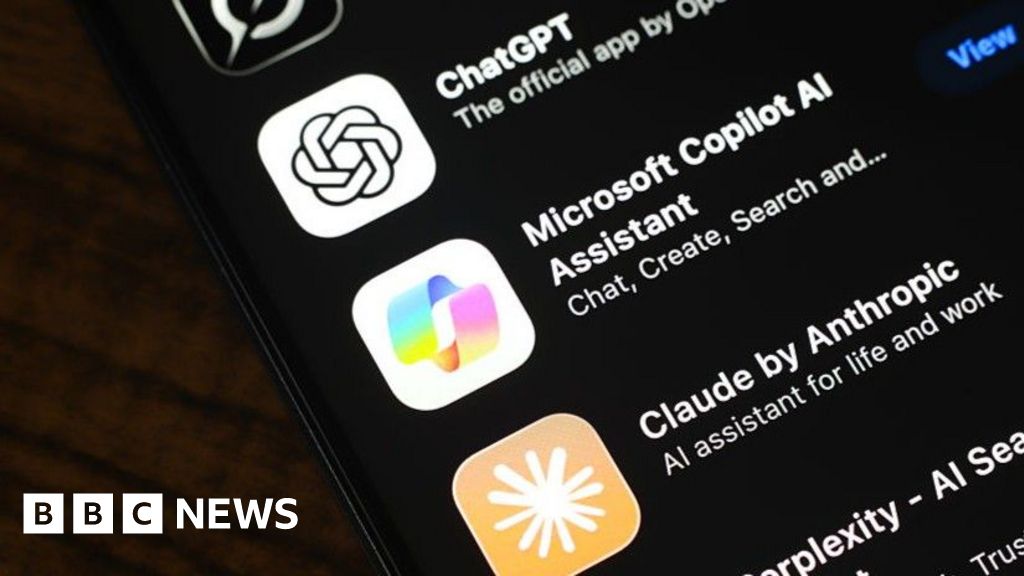

AI Hype Index: A return to hard data
While some researchers look into the distant biological future, the digital sector is struggling with its own challenges regarding realism. The return of the AI Hype Index is a signal that the tech industry needs tools to verify promises made by giants such as OpenAI, Google, or Anthropic. This index serves as a sentiment barometer, juxtaposing real implementations and productivity growth against the media hype that often accompanies the launches of new language models.
- Utility verification: Analysis of whether Generative AI tools actually solve business problems or are merely expensive toys.
- Operating costs: The clash of investor enthusiasm with the massive demand for energy and computing power necessary to maintain GPT-4 and newer models.
- Legal regulations: The impact of upcoming regulations on the pace of innovation and the actual possibilities of implementing AI in critical sectors.
From the perspective of the Pixelift editorial team, the current phase of artificial intelligence development resembles a "reality check" moment. After a period of uncritical fascination with the capabilities of Large Language Models (LLM), the market is beginning to demand concrete evidence of return on investment. The AI Hype Index clearly shows that although this technology has transformative potential, the road to its full maturity is much bumpier than last year's marketing presentations suggested.
Boundaries between biology and technology
Experiments with cryopreservation and the development of advanced AI algorithms share a common denominator: an attempt to go beyond the current limits of human capability. In the case of brain tissue reanimation, the challenge is to preserve the integrity of the biological "hardware." In the case of AI, we strive to create digital "software" that could mimic or support this biology. Both fields, however, encounter barriers that cannot be overcome by Venture Capital funds alone.
"Studying frozen brain fragments is not just biology; it is an attempt to read a record we assumed was lost. It is neural archaeology in the most literal sense."
It is worth noting the technical aspects of the tissue warming process. The use of modern imaging methods allows us to state that the cellular structure after thawing can retain an astonishing amount of detail, yet the functionality of these cells remains questionable. Similarly, in the world of AI—we have models with billions of parameters that "look" intelligent, but still lack the deep understanding of context and causality that is characteristic of the human brain, even one in a state of cryostasis.
Perspectives and technological pragmatism
Analyzing both of these trends, one can hypothesize that in the coming years, a great unification of biological and computer sciences will occur. Success in "awakening" frozen tissues will require support from AI in mapping damage nanostructures, while the development of AI will draw inspiration from increasingly accurate research into the architecture of the human brain. This is not, however, a fast or guaranteed process.
Technological pragmatism suggests that instead of waiting for spectacular "resurrections" or the birth of AGI (Artificial General Intelligence), the industry will focus on smaller but measurable steps. In medicine, these will be better methods for storing organs for transplantation, and in technology—the optimization of existing AI models for specific industrial applications. The tech industry is learning that the greatest innovations are born not from hype, but from painstaking work on the details that the AI Hype Index and research into Stephen Coles' brain are trying to redefine today.