BRINC's new police drone uses Starlink, carries Narcan, chases vehicles at 60mph
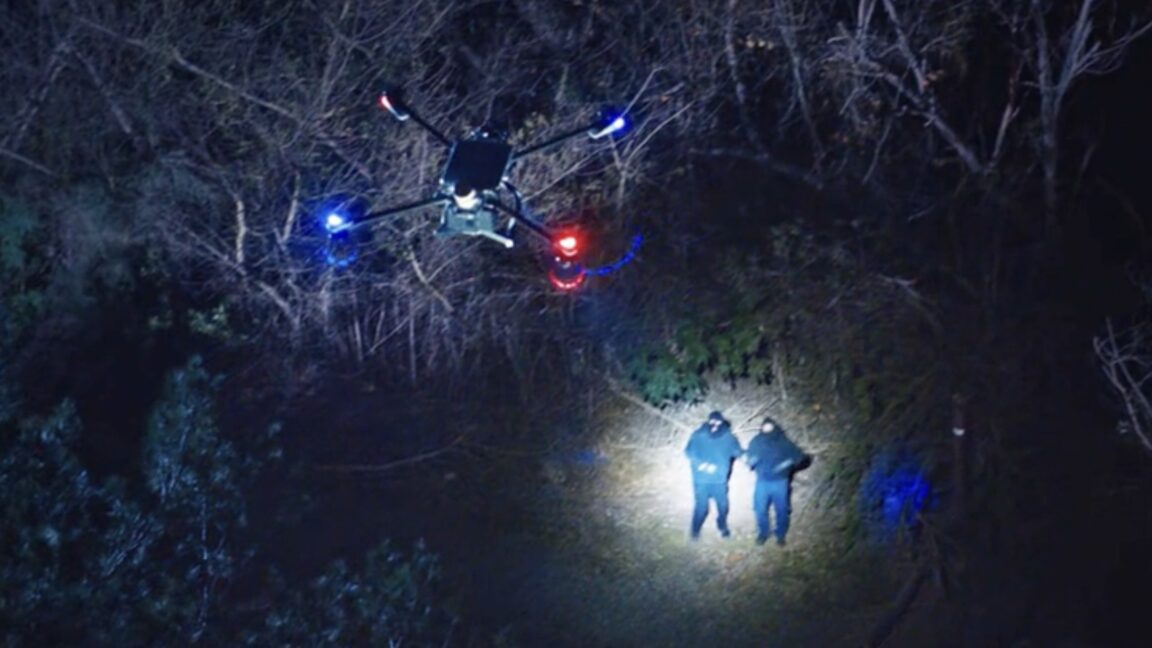
Foto: BRINC
More than 95 kilometers per hour – this is the speed reached by Guardian, the latest drone from BRINC, becoming the first commercial unit capable of conducting vehicle pursuits. However, it is not just speed that defines this hardware, but primarily its integration with the Starlink system, which guarantees stable connectivity in all terrain conditions. Guardian was designed as a direct, lower-cost competitor to police helicopters, offering over an hour of flight time and a powerful 130 dB siren, matching the noise level of a jet taking off. Multitasking is key for emergency services: operating from a specialized "nest," the drone can automatically replace its battery in one minute and deliver life-saving equipment to the scene, such as a defibrillator, overdose reversal agents (Narcan), EpiPens, or rescue gear for drowning victims. Thanks to dual 4K sensors and a 640x zoom, operators can obtain crystal-clear images from a distance of over 300 meters. In practice, this means reducing response times in critical situations to an absolute minimum, where the drone reaches the scene faster than any ground vehicle, providing real medical assistance even before paramedics arrive. This technology pushes the boundaries of Digital First Responders, making unmanned aerial vehicles a cornerstone of modern public safety.
In the world of public safety technology, moments that can be called a true breakthrough are rare. However, the latest announcement from the startup BRINC is changing the rules of the game in a way the drone industry hasn't seen in years. The new model, named Guardian, presented as the "most advanced 911 response drone in history," is not just another flying camera. It is an autonomous support unit that, thanks to integration with the Starlink system and the ability to pursue vehicles, poses a direct challenge to traditional police helicopters.
The key to the Guardian model's dominance is its unprecedented connectivity. As the first commercially available drone in the world, every unit will be equipped with a Starlink terminal. This solution eliminates the biggest pain point of unmanned operations — signal loss in difficult terrain or beyond the operator's line of sight. Thanks to SpaceX's satellite constellation, Guardian can operate practically anywhere, transmitting critical data in real-time, regardless of local telecommunications infrastructure. This is a strategic move that positions BRINC as a leader in the crisis segment, where link reliability determines the success of a rescue mission.
Pursuit at 60 Miles Per Hour
The technical specifications of Guardian are impressive even to aviation industry veterans. The machine is capable of reaching speeds exceeding 60 miles per hour, allowing it to actively participate in road pursuits. Blake Resnick, founder of BRINC, emphasizes that this is the first drone capable of real vehicle pursuit, which until now was reserved exclusively for expensive manned units. This capability, combined with a flight time of over one hour, makes Guardian an incredibly effective tool for monitoring dynamic events in the urban fabric.
Read also


Support for uniformed services, however, is not just about speed, but primarily about precise observation. Guardian is equipped with dual 4K visual sensors and an impressive 640x total zoom. According to the manufacturer's assurances, this system allows for crystal-clear images from a distance of over a thousand feet. Such operational capability enables discreet observation and evidence gathering without the need for the drone to directly approach the target, which increases operational safety and minimizes the risk of the machine being detected by bystanders.
- Maximum speed: over 60 mph.
- Flight time: over 60 minutes on a single charge.
- Connectivity: integrated Starlink terminal in every unit.
- Optics: dual 4K sensors and 640x zoom.
- Audio: 130 dB siren.
A Flying First Aid Kit and Robotic Nest
One of the most innovative aspects of the Guardian system is its versatility regarding carried payloads. The drone is not limited to the role of an observer; it can deliver critical life-saving supplies directly to the scene before ground services arrive. The drone's special "nest" allows for the quick attachment of various modules, such as a defibrillator, flotation devices for drowning victims, EpiPens, or Narcan — a medication used in cases of opioid overdose. This approach changes the drone paradigm from a surveillance tool to an active responder.
To ensure operational continuity, BRINC has developed an advanced docking station. The "nest" not only protects the drone from weather conditions but also features a robotic battery swapping function. This process takes only about one minute, allowing the machine to return to the air almost immediately. In crisis situations where every second counts, eliminating long charging times is crucial for maintaining constant surveillance over an operational area. Additionally, the drone is equipped with an extremely loud siren generating 130 dB — a sound comparable to a working jackhammer or a jet taking off, which can be used to warn the population or disorient suspects.
The introduction of the Guardian model into production later this year heralds a new era in rescue logistics. Blake Resnick openly speaks about the fact that their product is the most serious competitor to police helicopters ever created. Given a fraction of the operating costs of a drone compared to a manned aircraft, many security agencies may soon revise their budget strategies. Guardian is proof that the integration of a global satellite network with advanced aerial robotics is ceasing to be the domain of the military, becoming real support for civilian emergency services worldwide.
"Guardian is more than a drone — it is a direct competitor to police helicopters, offering capabilities that the unmanned industry has not been able to deliver until now" — Blake Resnick, founder of BRINC.
It can be expected that the success of Guardian will force the competition to quickly adapt to satellite standards. Starlink cloud broadband connectivity is becoming the foundation for autonomous systems of the future. In a world where 911 response time is a critical metric, a drone capable of pursuit and delivering medication within minutes of a report ceases to be a gadget and becomes an essential element of modern security infrastructure. BRINC has set the bar very high, redefining what public services should expect from Drones as First Responders technology.
More from Tech



Related Articles

After court loss, RFK Jr. gives himself more power over CDC vaccine panel
Apr 6
Steven Spielberg Still Wants to Make a Horror Film ‘Someday’
Apr 6New Jersey has no right to ban Kalshi's prediction market, US appeals court rules
Apr 6