Ogoron
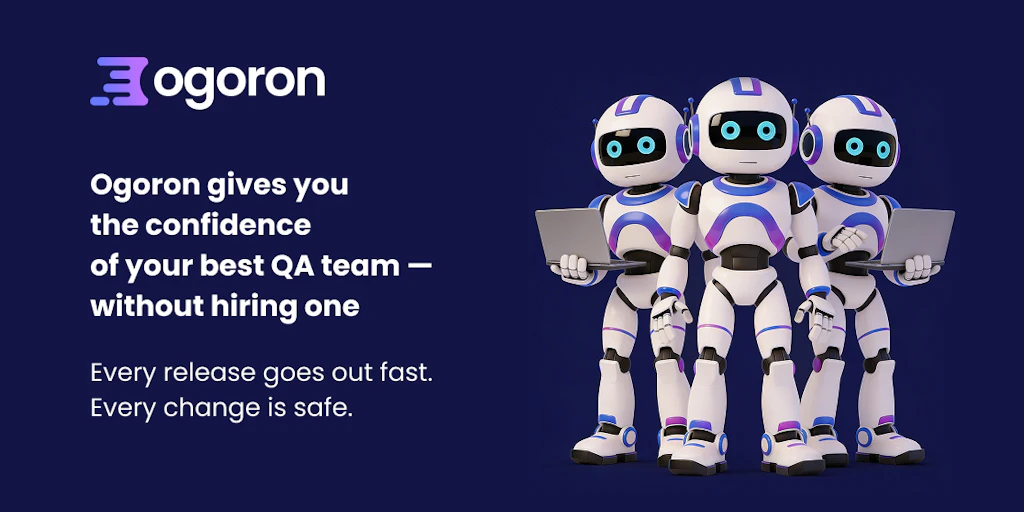
Foto: Product Hunt AI
Nine times faster software testing with a simultaneous cost reduction of up to 20 times – these are the parameters marking the debut of Ogoron, a new AI Engineer-class tool set to revolutionize the Quality Assurance process. The system takes full responsibility for the end-to-end QA process, eliminating the need to involve system analysts and test engineers in repetitive manual tasks. Ogoron stands out for its ability to deeply understand product specifics, allowing it to independently generate, maintain, and continuously validate test scenarios with every code change introduced. For the global developer community and software houses, this marks the end of the "breaking things" era during rapid deployments. Instead of manual script writing, teams receive full test coverage and predictable release cycles without the risk of regression. The practical implications for users are clear: a shortened Time-to-Market coupled with a drastic lowering of financial barriers to professional testing. The tool addresses the problem of technical debt in the QA area, allowing developers to focus on creating new features while artificial intelligence ensures the stability of the entire ecosystem. In a world where release speed determines market success, automation at this level is becoming a standard rather than a luxury. This is a direct hit to the traditional QA outsourcing model, shifting the weight of quality control to intelligent algorithms working in real-time.
The software development industry has been struggling with the same bottleneck for years: testing. In a world where the "ship fast or die" paradigm forces daily deployments, traditional Quality Assurance (QA) departments often cannot keep up with the pace of developers. Today's launch of the Ogoron tool on Product Hunt challenges this status quo, promising automation of testing processes that is 9 times faster and up to 20 times cheaper than classic human teams. This is not just another library for automated testing, but a comprehensive system positioned as an autonomous AI Engineer.
The end of the era of manual test script writing
The main problem with modern QA is not the execution of tests itself, but their tedious creation and even more difficult maintenance. Every change in the user interface (UI) or business logic usually causes existing test scenarios to "crash." Ogoron approaches this problem holistically. The tool is designed to deeply understand the product structure, allowing it to independently generate and – crucially – automatically update tests as the application evolves. This allows developers to focus on writing code instead of wasting hours fixing outdated assertions in Selenium or Cypress.
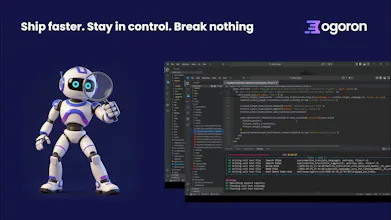
This system effectively replaces roles that previously required the involvement of at least three specialists: a systems analyst, a test analyst, and a QA engineer. Ogoron takes over the process end-to-end, meaning it can identify critical user paths, create validation for them, and constantly monitor every change introduced to the repository. In the era of Continuous Deployment, where production environment stability is the highest priority, such autonomy gives technical teams a rare luxury: predictability of releases without the need to increase headcount.
Read also


Scalability and cost-efficiency in an AI-first model
The figures presented by the creators of Ogoron are ruthless toward traditional QA outsourcing models. A cost reduction of 2000% (20x cheaper) while simultaneously accelerating the test cycle by 900% changes the mathematics of running a tech startup. Instead of building extensive structures of manual testers, companies can implement a Software Engineering model supported by artificial intelligence that does not sleep, does not make mistakes resulting from fatigue, and scales instantly as the user base grows.
Key features of the Ogoron platform include:
- Full coverage without manual effort, encompassing even the most complex interfaces.
- Continuous validation of every code change, minimizing the risk of regression.
- Autonomous test maintenance, which intelligently adapts to changes in the source code.
- Predictable releases, providing certainty that a new version of the application will not "break" critical functionalities.
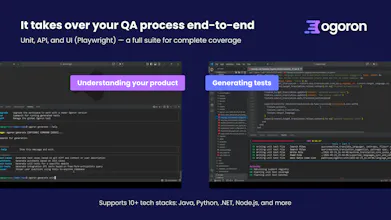
As a tool classified in the Developer Tools and Artificial Intelligence categories, Ogoron fits into the broader trend of "AI Agents" in software engineering. It is no longer just an assistant suggesting syntax, but an executive agent that takes responsibility for a specific segment of the Software Development Life Cycle (SDLC). For technical leaders (CTOs), this means the ability to drastically shorten Time-to-Market, which in today's global digital economy is often the only sustainable competitive advantage.
Industry perspective: Is this the end of the tester profession?
The emergence of solutions like Ogoron raises natural questions about the future of QA specialists. Analyzing the specifications of this tool, one can conclude that the role of the tester is evolving from a "procedure executor" toward a "supervisor of AI systems." Instead of clicking through forms, engineers will configure boundary parameters for algorithms like Ogoron, dealing with aspects that AI does not yet fully understand – such as subtle User Experience nuances or specific legal requirements in niche industries.
"Releasing fast shouldn’t mean breaking things" – this guiding motto of the Ogoron creators perfectly targets the biggest fear of modern product teams.
It is worth noting that Ogoron also offers Free Options, allowing smaller teams to test this technology without financial risk. In a world dominated by complex enterprise tools, the democratization of access to advanced AI-driven QA could prove to be a turning point for thousands of small development companies that have previously neglected testing due to a lack of budget.
In my opinion, Ogoron not only optimizes costs but, above all, changes the culture of working on a product. Shifting the burden of validation onto the shoulders of an autonomous AI Engineer allows for a return to the roots of programming – to pure creation, where a bug is not a paralyzing threat, but merely feedback that the repair system will process in a fraction of a second. In the coming months, I expect that having a "digital QA team" will become an industry standard, and solutions like Ogoron will be the foundation of the modern tech stack for every self-respecting engineering organization.
More from Tech



Related Articles

After court loss, RFK Jr. gives himself more power over CDC vaccine panel
Apr 6
Steven Spielberg Still Wants to Make a Horror Film ‘Someday’
Apr 6New Jersey has no right to ban Kalshi's prediction market, US appeals court rules
Apr 6