CBP facility codes sure seem to have leaked via online flashcards
Joe Raedle/Getty Images
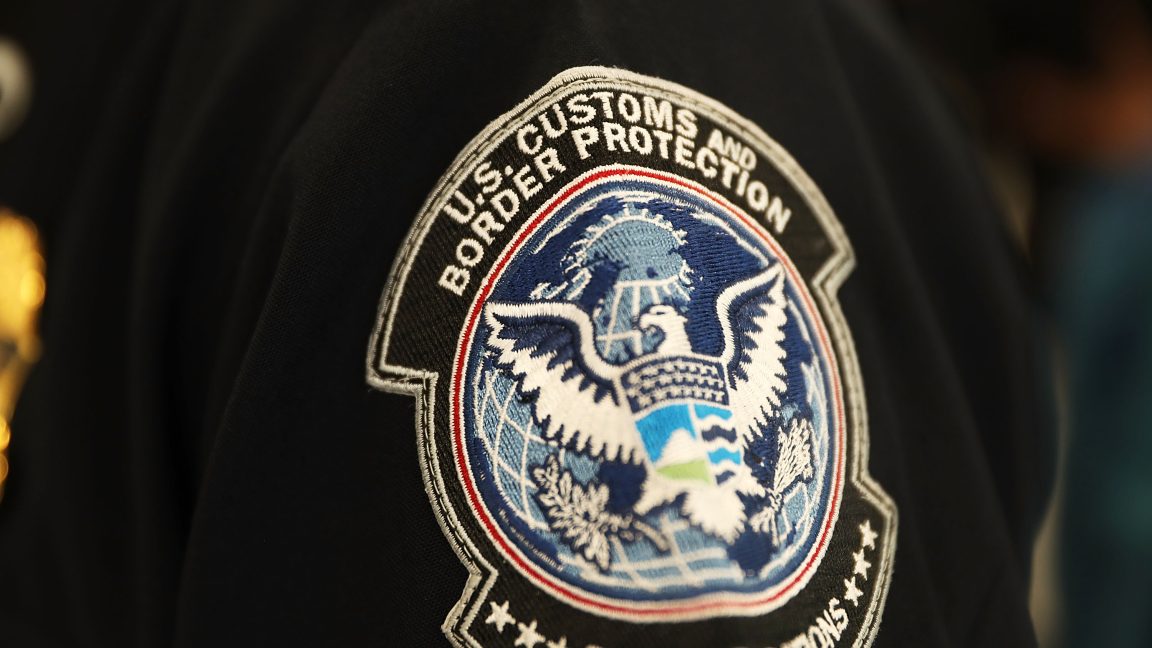
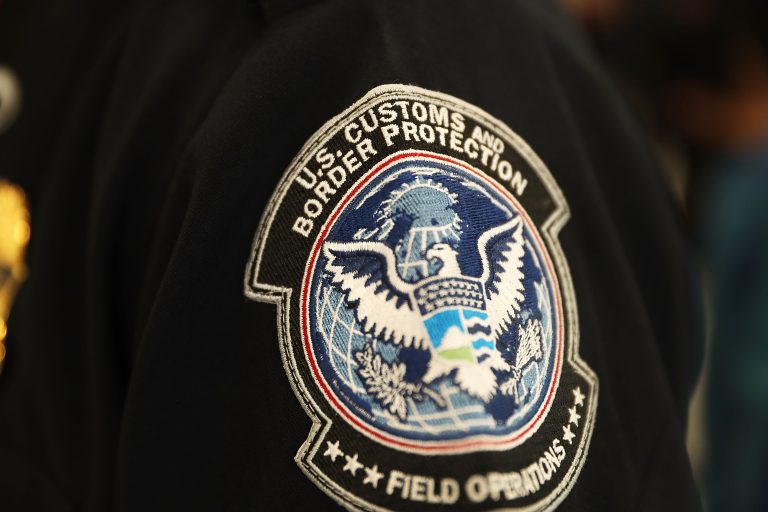
Four-digit access codes to gates and doors at US Customs and Border Protection (CBP) facilities became publicly available through a set of digital flashcards on the popular educational service Quizlet. The collection titled "USBP Review," shared by an anonymous user, contained detailed instructions regarding security procedures at facilities near Kingsville, Texas. This data remained visible to any internet user until March 20, when it was hidden just half an hour after journalists attempted to contact an individual linked to the profile. Although CBP has already launched an investigation through the Office of Professional Responsibility, the incident highlights the critical issue of "human error" in the era of digital learning tools. The leak of sensitive combinations to checkpoints and entrance gates demonstrates how easily routine preparations for internal exams can escalate into a real threat to critical infrastructure. For users and tech sector employees, this serves as a clear warning: ed-tech platforms, despite their convenience, lack mechanisms for the automatic detection of classified data, making the unaware employee the weakest link in the cybersecurity chain. Professional asset protection today requires not only firewalls but, above all, rigorous education on where and how official information can be processed.
In the world of cybersecurity, the weakest link is almost always the human, and the most dangerous tools are—paradoxically—the ones that make our lives easier. This time, the educational platform Quizlet, used by millions of pupils and students to learn through digital flashcards, became an involuntary intermediary in a data leak that should never have reached the public domain. A publicly available set of flashcards named "USBP Review" contained detailed access codes for gates and doors at US Customs and Border Protection (CBP) facilities in the Kingsville, Texas area.
This is not a scenario from a spy movie, but a reality where an employee or contractor of a government agency, likely wanting to make it easier to memorize operating procedures, uploaded them to the cloud without any security measures. This incident exposes a critical gap in the security culture of one of the most important institutions responsible for border protection. The data had been publicly available since February and only disappeared from the web on March 20, just half an hour after the WIRED editorial team attempted to contact a person associated with the user account.
Digital flashcards as a key to physical barriers
The set of flashcards that caused the stir was not limited to general definitions or legal regulations. It contained specific questions and answers regarding the daily security mechanics at CBP facilities. For example, to the question about the checkpoint door code (Checkpoint doors code?), the answer provided a precise, four-digit combination. Similar entries concerned specific entrance gates to the facilities, giving their names and assigned access codes.
Read also


The scale of this leak, although geographically limited to the Kingsville region, has a systemic dimension. If codes for critical infrastructure are stored on commercial ed-tech platforms, it means that standard OPSEC (Operational Security) training has failed across the board. For security analysts, this situation is a textbook example of shadow IT—a phenomenon where employees use unauthorized external tools to process official, often confidential information.
- Leak location: CBP facilities in the Kingsville area, Texas.
- Nature of data: Four-digit codes for gates and internal doors.
- Platform: Quizlet (publicly available "USBP Review" set).
- Exposure time: From February to March 20.
Reaction of the services and procedural paralysis
The official position of CBP is conservative, which is typical for federal agencies in the face of compromised procedures. An agency spokesperson confirmed that the Office of Professional Responsibility is handling the matter, while noting that the initiation of a review is not equivalent to an admission of guilt or confirmation of a regulatory violation. The silence from the Department of Homeland Security (DHS) and Immigration and Customs Enforcement (ICE) only reinforces the impression that the scale of the problem may be broader than one unfortunate set of flashcards.
From a technological perspective, the problem is not the Quizlet platform itself, which provides useful educational tools, but the lack of control mechanisms over what public sector employees upload to the web. In an era of ubiquitous remote work and digitalization of training processes, the line between a private learning tool and an official knowledge repository is dangerously blurred. The fact that the user associated with the leak lived in the immediate vicinity of a CBP facility suggests that we are dealing with gross negligence on the part of an individual with direct access to the infrastructure.
The new face of social engineering and OSINT intelligence
This incident is a gold mine for OSINT (Open Source Intelligence) specialists. It shows that in the search for sensitive data, one does not need to hack into government servers or use advanced malware. It is enough to monitor popular services where users—often unknowingly—publish fragments of their professional lives. Flashcards on Quizlet, notes in Evernote, or public repositories on GitHub are becoming modern vectors for information leaks that can be used to plan physical intrusions.
It is worth noting several key aspects of this threat:
- Lack of content encryption: Data entered into flashcards is indexed by search engines and available to anyone who enters the right keywords.
- False sense of privacy: Users often assume that their niche notes will not interest any outsiders.
- Data persistence: Even after a set is deleted, copies may remain in search engine caches or internet archives.
The Kingsville case should serve as a wake-up call for all organizations operating with sensitive data. Traditional firewalls and EDR (Endpoint Detection and Response) systems will not protect an institution if its employees copy access codes into public mobile apps for easier learning. It is necessary to implement rigorous policies for the use of third-party tools and, more importantly, to educate employees that "convenience" in learning cannot take precedence over national security.
In the era of AI and automated web searching, the detection of such leaks by malicious actors will take seconds, not months. CBP must now not only change access codes at all facilities in the region but, above all, revise how their agents and contractors are trained in digital hygiene. This incident proves that state-of-the-art biometric systems and fences are useless if the key to them can be found with a simple Google query.
More from Tech


Related Articles
After court loss, RFK Jr. gives himself more power over CDC vaccine panel
Apr 6
Steven Spielberg Still Wants to Make a Horror Film ‘Someday’
Apr 6New Jersey has no right to ban Kalshi's prediction market, US appeals court rules
Apr 6