Databricks bought two startups to underpin its new AI security product
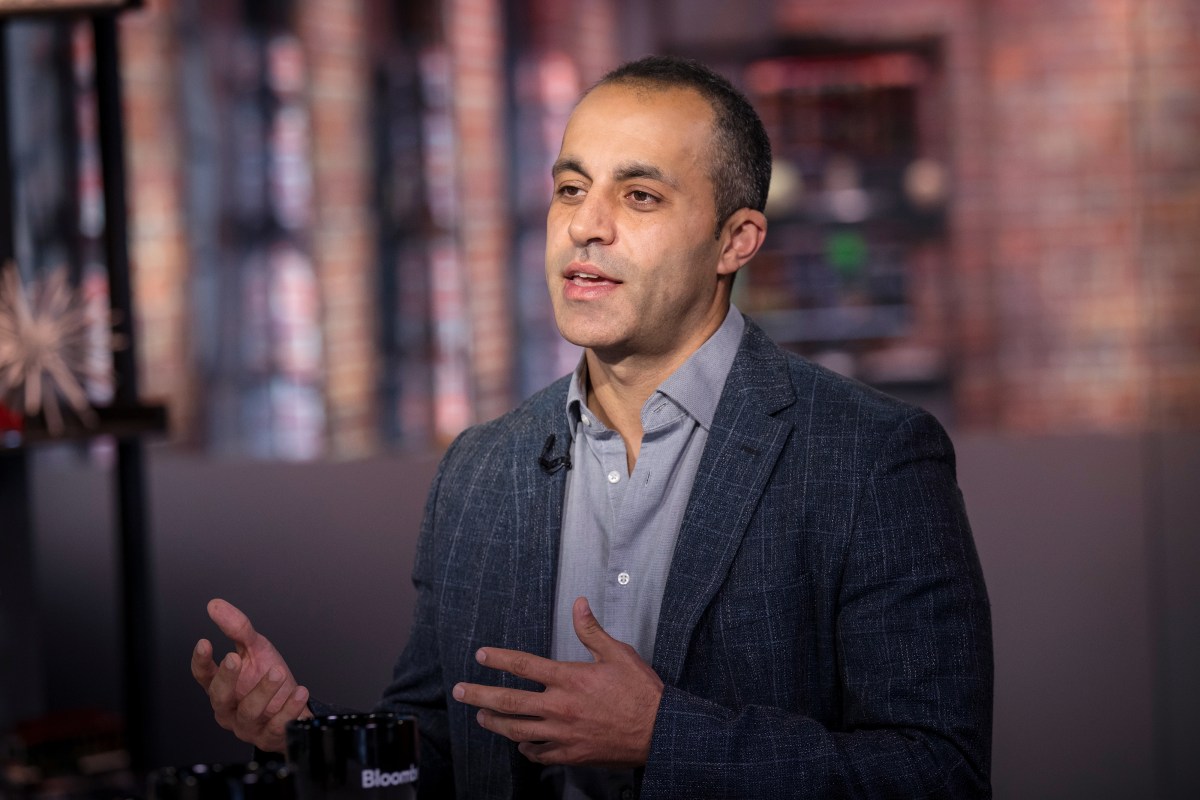
David Paul Morris/Bloomberg / Getty Images
The $5 billion raised in its latest funding round has allowed Databricks to pursue aggressive expansion, resulting in the acquisition of two startups and the launch of the breakthrough tool, Lakewatch. The new product is a SIEM (Security Information and Event Management) class system that leverages the platform's powerful analytical resources to detect and investigate threats in real time. A key differentiator of Lakewatch is the integration of advanced AI agents powered by Anthropic's Claude model, taking security automation to an entirely new level. For the global creative and enterprise technology market, this marks the end of the era of tedious, manual log searching. By utilizing generative artificial intelligence, the system not only collects massive datasets but can independently draw conclusions and identify anomalies that might escape traditional algorithms. The practical implications for users are clear: shorter incident response times and lower security infrastructure maintenance costs, coupled with increased operational precision. With this move, Databricks proves that the future of cybersecurity belongs to autonomous agents capable of interpreting data in a manner similar to a human expert, but at a speed unattainable by humans. This is a clear signal that AI is ceasing to be just an add-on and is becoming the foundation of modern digital asset protection.
The aggressive expansion strategy of Databricks is gaining momentum, and the company is proving that it does not intend to keep its record capital in the freezer. Just a month after closing a massive funding round of $5 billion, the cloud analytics giant has gone on the offensive in the M&A market. The choice of targets is no coincidence – the acquisition of startups Antimatter and SiftD.ai forms the foundation of a new security architecture designed to revolutionize how corporations protect their data assets in the era of generative artificial intelligence.
This move comes at a time when traditional security systems are failing to keep pace with the rate of data generation in Data Lakehouse architectures. Databricks, generating billions of dollars in revenue, has ceased to be merely a provider of data processing tools. Today, the company aspires to the role of a comprehensive ecosystem where security is not an optional add-on, but an integral layer powered by the most advanced language models available on the market.
Lakewatch: A New Definition of SIEM Systems
A key element of the new strategy is a product called Lakewatch. This is a SIEM (Security Information and Event Management) class solution that leverages Databricks' unique position as a repository for massive datasets. Traditional SIEM systems often struggle with latency and costs associated with transferring logs between different platforms. Lakewatch eliminates this barrier by performing threat detection and investigation operations directly where the data is stored.
Read also


What sets Lakewatch apart from the competition is its deep integration with AI agents. Instead of relying solely on static rules and simple algorithms, the system utilizes Claude models from Anthropic. These agents are capable of autonomously analyzing anomalies, correlating events from various sources, and providing security engineers with ready-made reports containing context that would take a human hours to reconstruct. The choice of models from Anthropic suggests that Databricks is prioritizing precision and data security, which are hallmarks of the Claude model family.
The introduction of Lakewatch is a direct strike at established players in the cybersecurity market. By using AI to automate investigations, Databricks addresses one of the industry's biggest problems: the deficit of qualified SOC (Security Operations Center) analysts. AI agents not only speed up incident response but also drastically lower the entry barrier for companies wanting to monitor their cloud environments in real-time.
Foundations in the form of Antimatter and SiftD.ai
The success of Lakewatch would not be possible without the technologies acquired through recent acquisitions. The takeover of Antimatter and SiftD.ai is a strategic strengthening of competencies in areas that have historically been the Achilles' heel of large data systems. Antimatter specializes in advanced data security infrastructure, allowing for the application of restrictive access policies without impacting the performance of analytical processes. In a world where regulations such as GDPR or the AI Act enforce rigorous control over information flow, this technology becomes essential.
In turn, SiftD.ai brings a unique approach to intelligent filtering and signal analysis to the Databricks portfolio. In the flood of millions of logs generated every second by corporate systems, distinguishing a real threat from information noise is a critical challenge. SiftD.ai optimizes this process, allowing the Lakewatch platform to focus computing resources on the highest-priority events. The combination of these two technologies creates a cohesive technology stack capable of handling the most demanding AI and Big Data workloads.
- Scalability: Utilizing Lakehouse architecture for security analysis without the need to copy data.
- Intelligence: AI agents based on Anthropic Claude models for automated incident triage.
- Compliance: Advanced privacy control mechanisms thanks to Antimatter technology.
- Efficiency: Reduction of false alarms thanks to SiftD.ai algorithms.
Ecosystem War for Data
Databricks' move is a clear signal to the market: the fight for cloud dominance is shifting from the level of pure computing power to the level of risk management. Having $5 billion in cash allows the company to aggressively plug gaps in its portfolio and acquire innovative teams before they can grow into real competition. The integration of Lakewatch with the existing platform means Databricks customers receive an "all-in-one" solution, which significantly complicates life for providers of specialized security tools.
It is worth noting the choice of Anthropic as a partner. In an era of OpenAI dominance, betting on Claude models shows that Databricks is looking for alternative paths and opting for solutions that are considered more "predictable" and safe for corporate applications in tech circles. This is crucial in the context of Lakewatch, where AI model hallucinations could lead to overlooking critical security vulnerabilities or paralyzing a company's operating systems through false alerts.
The acquisitions of Antimatter and SiftD.ai are just the beginning of Databricks' buying spree. With such a massive financial backing, the company will likely continue market consolidation, targeting startups involved in data quality management and AI infrastructure cost optimization. The line between a data platform and a security platform is blurring before our eyes, and Databricks intends to become the center of this new, unified world.
Dominance in the AI security segment will become the main differentiator between cloud leaders and generic service providers in the coming years. By integrating Anthropic AI agents directly into its analytics engine, Databricks is setting the bar incredibly high. The industry must prepare for a scenario where data protection is no longer a reactive process managed by humans, but a proactive, autonomous layer that learns from every byte of information flowing through the system. These acquisitions are not just a purchase of technology – they are a purchase of time and a technological advantage that competitors may not be able to close this decade.


