Why Wall Street wasn’t won over by Nvidia’s big conference

Benjamin Fanjoy / Getty Images
Shares of the $4 trillion company began to decline at the exact moment Nvidia CEO Jensen Huang took the stage during the annual GTC conference. Despite a two-and-a-half-hour, optimism-filled keynote by the leader in his signature leather jacket, Wall Street reacted coldly, highlighting a deep rift between Silicon Valley enthusiasm and investor caution. While the tech world buzzes with consecutive breakthroughs in GPU architecture and generative artificial intelligence, financial markets are increasingly focusing on the risk of a speculative bubble bursting and uncertainty regarding the long-term profitability of the AI sector. For global users and creators, this situation serves as a signal that the industry is entering a phase of verifying the real value of the tools provided. Although Nvidia's technological foundation remains unrivaled, pressure from investors may force giants to transition more quickly from the phase of spectacular announcements to presenting concrete, measurable profits generated by AI implementations. The discrepancy in sentiment between engineers and financiers suggests that the pace of development for creative technologies will now be dictated not only by innovation but, above all, by market discipline and the necessity to prove that artificial intelligence is a lasting foundation of the new economy, rather than just a costly trend.
When Jensen Huang, dressed in his signature leather jacket, stepped onto the stage during this year's GTC (GPU Technology Conference), the tech world held its breath. Expectations for the company that is almost single-handedly driving the bull market in capital markets and the revolution in data centers were pushed to the limit. However, at the moment the Nvidia leader was presenting further breakthroughs in GPU architecture, the monitors of Wall Street brokers turned red – the giant's stock price began to fall, exposing a deep disconnect between technological optimism and financial pragmatism.
This phenomenon is not just a stock market correction, but a fascinating study of two parallel realities. On one side, we have Silicon Valley, which sees the Blackwell processors as the foundation of a new industrial revolution; on the other, New York skyscrapers where whispers of an "AI bubble" are growing louder. Nvidia has become a victim of its own success: the market has stopped reacting to excellent results and innovations, expecting miracles to justify a valuation exceeding $2 trillion. Wall Street is no longer just looking for the next fast chip, but for a guarantee that their clients' massive capital expenditures will translate into real profits in the foreseeable future.
Blackwell and the limits of silicon engineering
The heart of Huang's presentation was the new Blackwell architecture, designed to replace the immensely popular H100 systems. The technical specifications impress even the biggest skeptics: the new B200 processor offers up to 20 petaflops of computing power for AI tasks, a staggering result. Nvidia is no longer just building chips; it is designing entire computing ecosystems, combining two GPUs and one Grace CPU into powerful GB200 NVL72 systems. This is infrastructure tailored for training models on a scale of trillions of parameters—the successors to today's GPT-4.
Read also

However, investors noticed a certain gap in this technological monolith. While performance is increasing, so are costs and energy demands. Key parameters of the new generation include:
- 208 billion transistors in a single Blackwell module, manufactured using the TSMC 4NP process.
- Reduction in costs and energy consumption for training LLM models by up to 25 times compared to the Hopper generation.
- Implementation of the second-generation Transformer Engine, which optimizes calculation precision for neural networks.
- System bandwidth at 1.8 TB/s thanks to the fifth generation of NVLink.
Despite these numbers, Wall Street reacted coldly because most of this information had been "priced in" long before the conference. The lack of a "wow effect" for financial analysts stems from the fact that Nvidia is no longer treated as a hardware manufacturer, but is being evaluated as a barometer of the global data-driven economy. Any detail that isn't a leap by an order of magnitude is interpreted as a signal of a slowdown.
Silicon Valley builds, Wall Street calculates
The disconnect between the mood in San Jose and the mood in Manhattan stems from a fundamental difference in time perception. Engineers and tech leaders view Generative AI as a paradigm shift comparable to the invention of the steam engine or electricity. For them, GTC was a show of strength and proof that the hardware barriers to the development of artificial intelligence have just been pushed several years forward. In the tech world, there is a conviction that we are only at the beginning of an exponential growth curve.
From a financial perspective, the situation looks different. Analysts see that Nvidia's largest customers – such as Microsoft, Alphabet, and Meta – are spending tens of billions of dollars on infrastructure, but their own revenues directly from AI services are not growing at the same rate. There is a real risk that demand for GPU units will drop sharply at some point once tech giants saturate their data centers. Wall Street fears an "over-provisioning" scenario, where excess computing power leads to a price war and a collapse of margins, which are currently at record levels for Nvidia.
"Nvidia's problem is not a lack of innovation, but the fact that the market has begun to treat their processors as a commodity rather than a premium product. And commodity prices are always subject to cyclicality, which investors are terrified of in the context of AI."
Ecosystem instead of silicon as a survival strategy
Jensen Huang perfectly understands these concerns, which is why during GTC he placed enormous emphasis on software and services. The NVIDIA AI Enterprise platform and NIM (Nvidia Inference Microservices) are intended to be a way to tie customers to the brand for years, regardless of the hardware replacement cycle. This is an attempt to move from a "boxed" sales model to a subscription and platform model. Nvidia wants to become the operating system for artificial intelligence, which theoretically should reassure investors looking for stable revenues.
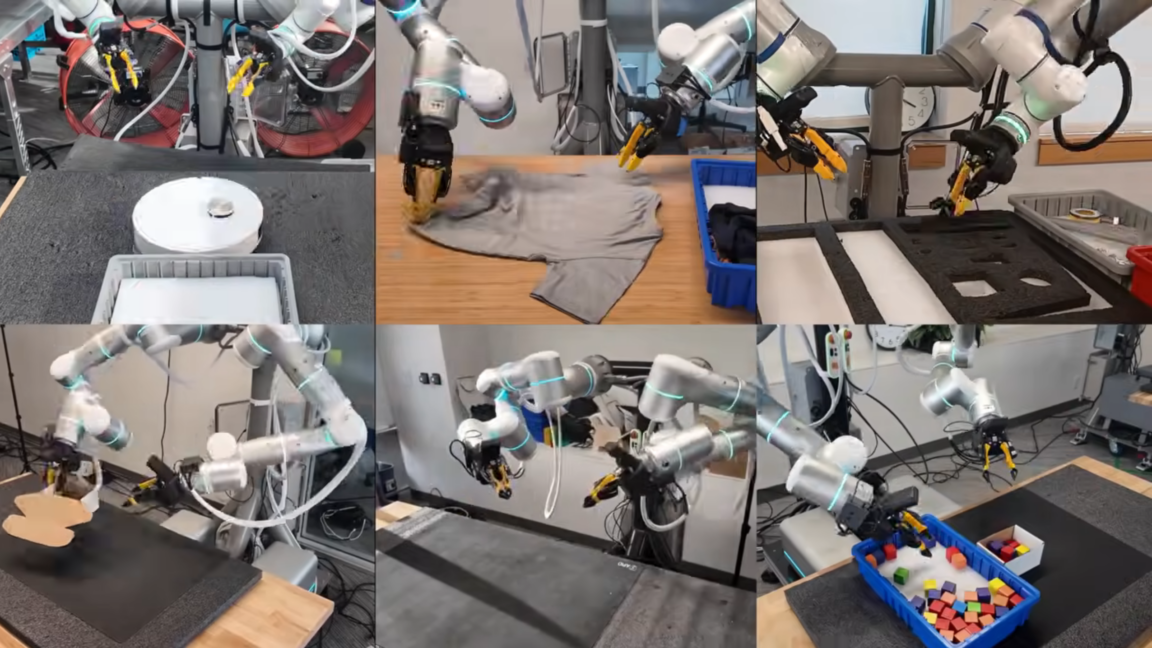
The introduction of Omniverse and integration with robotics (Project GR00T) are further steps toward diversification. Nvidia is showing that its chips will control not only chatbots but also humanoid robots and digital twins of factories. This is the vision of Embodied AI—artificial intelligence that possesses a body and interacts with the physical world. For engineers, it’s another Holy Grail; for Wall Street, it’s another promise that will take years to realize and requires risky investments today.
Key challenges cooling investor enthusiasm include:
- Supply chain constraints: Dependence on TSMC and the complex CoWoS chip packaging process limit actual supply, regardless of demand.
- Internal competition: Major customers (Amazon, Google) are designing their own ASIC chips (e.g., TPUs) to become independent of Nvidia's high margins.
- Geopolitics: Export restrictions to key Asian markets cut the company off from a significant portion of potential revenue.
The paradox of success in the post-hardware era
Nvidia currently finds itself at a unique point in economic history. The company has become too large for its successes to be judged solely through the lens of technology, yet too innovative for financial markets to fully understand it. The drop in stock price after the GTC conference is not a signal of product weakness, but a manifestation of fear of the unknown. Wall Street needs proof that Generative AI is more than just an expensive toy for programmers and an image generator.
My forecast is clear: Nvidia will survive the current turbulence and market skepticism because it is the only one providing the complete "shovel" for the digital gold rush. However, the period of uncritical enchantment with every new chip has come to an end. Now the burden of proof shifts from Nvidia to its customers – they are the ones who must prove they can turn Blackwell's computing power into real GDP growth. Until that happens, every subsequent Huang conference, no matter how technically groundbreaking, will be met with the cold calculation of analysts for whom the profit and loss balance is more important than the number of transistors per square millimeter.