David Sacks is no longer the White House AI and Crypto Czar

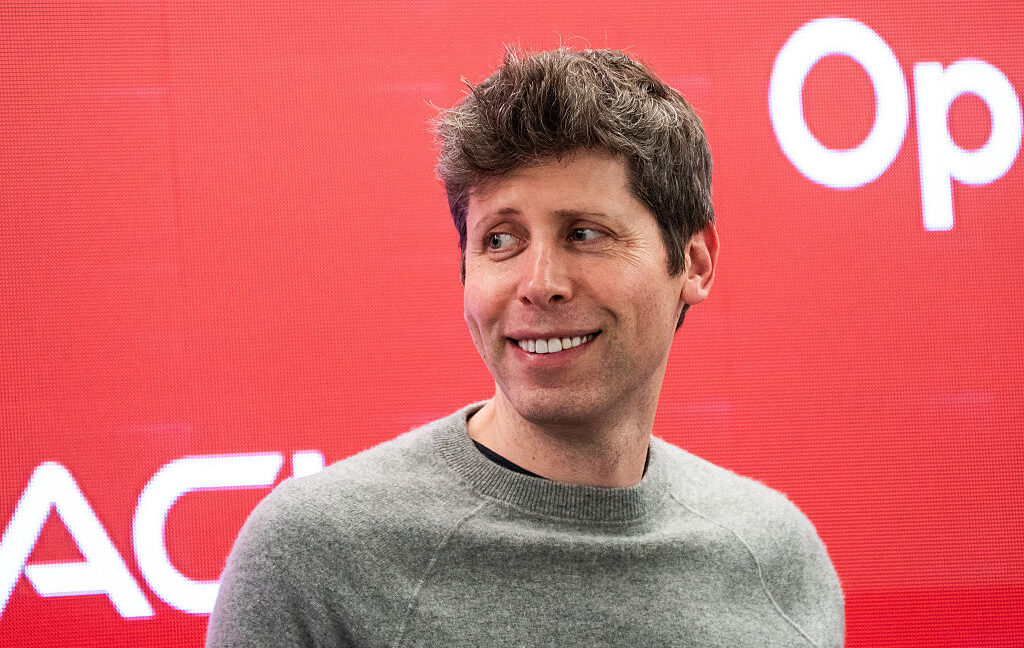
Foto: Digital photo illustration of David Sacks with crypto coins.
Exactly 130 days – this is the precise limit for serving as a Special Government Employee (SGE), which David Sacks has reached, thereby concluding his mission as the White House "AI and Crypto Czar." The billionaire and venture capital investor, who until now served as the chief architect of technology policy for the Donald Trump administration, has been moved to the President’s Council of Advisors on Science and Technology (PCAST). Although Sacks declares that the change will allow him to provide broader counsel, his departure from the direct decision-making center occurs amid political controversy and criticism from conservative circles. The personnel reshuffle brings industry giants such as Jensen Huang, Mark Zuckerberg, and Marc Andreessen into PCAST, signaling a new phase in shaping global technical standards. For technology users and creators, this signifies a shift from aggressive attempts at centralizing rules—which Sacks pushed for by attempting to block state-level AI regulations—toward an advisory model based on cooperation with Big Tech leaders. This change may weaken previous radical efforts to unify law across the U.S., opening space for more diverse local regulations. The new balance of power in Washington shows that the direct influence of individuals on AI policy is giving way to the collective voice of the world’s largest technology corporations.
In the world of technology and high politics, personnel changes are rarely a matter of chance, especially when talking about positions meant to shape the future of artificial intelligence. David Sacks, billionaire, venture capital investor, and one of Silicon Valley's most influential voices in Washington, has officially stepped down from his role as President Donald Trump's special advisor on AI and crypto. This change, though framed in the rhetoric of "exhausting the work time limit," carries much deeper implications for the direction of American digital policy.
Sacks, a key architect of the administration's aggressive legislative initiatives in the AI space, revealed his new role in an interview with Bloomberg Television. His status as a Special Government Employee (SGE) allowed him to combine private sector work with government advisory, but with a clear time limit of 130 days. The fact that Sacks remained in the position for over a year raised numerous questions about the legal basis of his activity. Now, however, the "AI czar" is moving to the President’s Council of Advisors on Science and Technology (PCAST), where, as co-chair, he is expected to handle a broader spectrum of technological issues.
A new role in the shadow of tech giants
Sacks' move to PCAST is not a demotion in the traditional sense, but a clear shift in emphasis. This council, recently bolstered by names such as Mark Zuckerberg, Marc Andreessen, Jensen Huang (head of Nvidia), and Sergey Brin (Google co-founder), is becoming a sort of advisory "super-body." The other co-chair of the council is Michael Kratsios, head of the White House Office of Science and Technology Policy.
Read also


Sacks emphasizes that his new role will focus on formulating recommendations directly for the president and executive offices, rather than coordinating federal agency actions. "We will study problems and present recommendations," Sacks stated, suggesting a transition from direct management of legislative processes to the role of a strategic thinker. However, for the AI industry, this is a signal that the previous, highly centralized model of managing technology policy through a single "czar" is being dispersed in favor of a broader circle of Big Tech leaders.

The political costs of an aggressive agenda
While the official reason for leaving the special advisor position is the limit on working days, it is difficult to ignore the political baggage Sacks has accumulated in recent months. As "AI czar," he sought to introduce a top-down federal ban on state-level artificial intelligence regulations. This attempt to impose so-called preemption (the primacy of federal law) met with fierce resistance not only from Democrats but, above all, from Republican governors and the populist wing of the MAGA movement.
Critics, such as Michael Toscano of the Institute for Family Studies, have not spared Sacks harsh words. They accuse him of dragging the administration into an unnecessary culture war with its own electorate and blocking simple legislative victories, such as those concerning child safety online. The aggressive pushing of Silicon Valley interests at the expense of local state autonomy has made many of the White House's technological initiatives "politically toxic."
- Failed attempt to introduce federal primacy over state law in the area of AI.
- Conflict with the populist wing of the party over Big Tech regulation issues.
- Accusations of prioritizing venture capital investor interests over social safety.
- Public criticism of the president on foreign policy issues (Iran) on the All In podcast.
The strategy of shifts in the Trump administration
Analyzing Sacks' departure requires looking at the broader personnel context of the second Trump administration. The president has developed a specific model of crisis management: instead of dismissing controversial officials, he moves them to other, less exposed or more theoretical positions. Examples include Mike Waltz, who was sent to the UN after the "Signal-gate" scandal, or Kristi Noem, moved to the "Shield of the Americas" initiative after controversy at the Department of Homeland Security.

For Sacks, PCAST may be a safe harbor that allows him to maintain influence over the president while removing the responsibility for daily clashes in Congress. However, the fact that the industry's biggest players, like Jensen Huang or Zuckerberg, will now sit on the same council means that Sacks' voice will no longer be the only one reaching the Oval Office on technology matters. This is the end of the era of the "czar" and the beginning of the era of collective advisory by giants.
From the perspective of the global technology market, this change means that American AI policy may become less predictable but more susceptible to the corporate influence of various interest groups. David Sacks, despite the change in business card, remains in the game; however, his "aggressive framework" for AI will now have to pass through the filter of a much broader group of advisors who do not always share his vision of total deregulation and federal dominance over the states.