Elon Musk loses big in court; X boycott perfectly legal
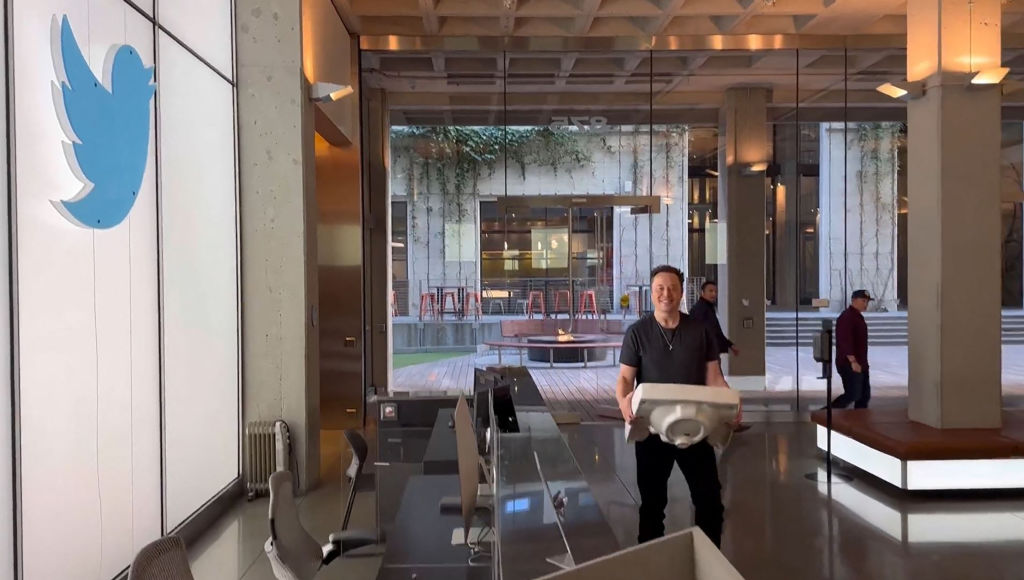
Contributor | AFP
The advertising boycott of the X platform was fully legal, and advertisers had the right to withdraw their budgets following Elon Musk's takeover of the service. Federal Judge Jane Boyle dismissed the billionaire's lawsuit against brands accused of antitrust conspiracy, ruling that Musk failed to provide evidence of consumer harm, which is crucial in such cases. The court emphasized that antitrust law protects the market rather than specific players, and companies' decisions to avoid a controversial environment for their content do not violate regulations. For Musk, this is a painful defeat in his "thermonuclear" legal war, launched after a massive exodus of advertisers concerned by cuts to content moderation teams and the dissolution of the Trust and Safety Council. The verdict is of great significance for the global digital advertising and creative technology market—it confirms that brands have full autonomy in deciding where to allocate their funds based on brand safety standards. Users and creators must reckon with the fact that social media platforms cannot legally compel funding from advertisers, which calls into question the financial stability of ad-dependent services in the face of radical changes in moderation policy. This decision cements the right of companies to actively shape their image by choosing communication channels without fear of accusations of illegal agreements.
Elon Musk's legal battle with advertisers, whom the billionaire accused of an illegal boycott of the X platform, has come to an abrupt end. US District Judge Jane Boyle dismissed the lawsuit, ruling that the actions of brands withdrawing budgets from the service after Musk's takeover were fully compliant with the law. This verdict not only buries the platform's hopes for billions in damages but also calls into question the entire legal strategy of "thermonuclear war" that the Tesla owner declared against his critics and business partners.
The case originated from the drastic changes Musk introduced to the former Twitter. Mass layoffs in content moderation teams and the dissolution of the Trust and Safety Council sparked concern among global corporations, who feared for their brand safety in the vicinity of controversial content. Musk attempted to convince the court that the mass withdrawal of advertisers was the result of a conspiracy violating antitrust laws, aimed at hitting X's revenue and censoring conservative voices.
Lack of evidence of consumer harm key to failure
In her opinion, Judge Jane Boyle left no stone unturned in dismantling the arguments of Musk's lawyers. She emphasized that the lawsuit was dismissed because X failed to present facts demonstrating a violation of antitrust law. The foundation of such claims must be a showing that the actions of the alleged cartel harmed consumers, and not merely a specific competitor in the market. In this case, according to the court, the interests of consumers did not suffer.
Read also

In Judge Boyle's opinion, the very nature of the alleged conspiracy did not meet the requirements of an antitrust claim. The court found that advertisers had the right to decide where to allocate their funds, especially in light of radical changes to the platform's moderation policy. Musk's argument that companies acted against their own economic interest by avoiding advertising on X was deemed insufficient to initiate proceedings. The decision to dismiss the lawsuit "with prejudice" means that X cannot bring the same case again in an amended form.
This is a severe image blow for the billionaire, who publicly called for the "criminal prosecution" of advertisers. Musk based his narrative on a report from allies in Congress, claiming there was an organized effort to stifle free speech by cutting off the platform's funding. However, the court clearly separated political rhetoric from hard legal facts, pointing out that antitrust law protects competition, not specific market players from the consequences of their own business decisions.
Domino effect in the "thermonuclear" legal war
This ruling could have far-reaching consequences for other proceedings Musk has initiated recently. The most significant of these is the case against the organization Media Matters for America. Musk accused the group of manipulating data to trigger an advertising boycott, which became the flashpoint for a conflict he himself described as "thermonuclear." While that proceeding is ongoing, Judge Boyle's recognition of the boycott as "entirely legal" significantly weakens X's line of attack.
Industry lawyers point out that attempting to force companies to advertise on a platform whose standards they disagree with was a risky move from the start. Freedom of association and the choice of business partners are prioritized in the legal system. X's failure in the Texas court sends a clear signal to the market: social media platforms cannot use antitrust laws as a tool to coerce clients into cooperation when they opt out of services due to brand image concerns.
- The lawsuit was dismissed without the possibility of refiling (dismissed with prejudice).
- The court found that the lack of evidence of consumer harm makes it impossible to establish a violation of antitrust law.
- The advertising boycott was recognized as a legal market action by private entities.
- The verdict weakens X's position in the parallel dispute with Media Matters.
Confrontation strategy instead of dialogue
Instead of trying to regain advertiser trust through platform stabilization and investment in safety, Elon Musk chose a path of legal threats and public invective. This strategy, while gaining applause from some of his supporters, is proving ineffective in the face of the American justice system. Judge Boyle's dismissal of the lawsuit confirms that the advertising market follows its own rules, and "free speech" does not imply an obligation for private corporations to fund every platform.
For X, the financial situation is becoming increasingly difficult. Advertising revenue historically constituted the lion's share of the service's budget, and its drastic decline following Musk's takeover has not been fully compensated by X Premium subscriptions. The lack of success in court means the company will have to find another way to convince brands to return, which, after months of harsh rhetoric and accusations of "conspiracies," may prove to be a Herculean task.
“The question at the heart of antitrust injury is whether consumers have suffered, not competitors,” Judge Boyle emphasized, hitting the very core of Musk's flawed litigation strategy.
It can be assumed that X will decide to appeal, given Elon Musk's past persistence in legal matters. However, the reasoning presented by the district court is so solid and grounded in free-market precedents that the chances of overturning this verdict seem slim. The tech industry has just received a clear lesson: in B2B relationships, the right to refuse cooperation is just as essential as the freedom to conduct business, and attempts to penalize market withdrawal through the courts rarely end in success for the plaintiff.
More from Tech




Related Articles
After court loss, RFK Jr. gives himself more power over CDC vaccine panel
Apr 6
Steven Spielberg Still Wants to Make a Horror Film ‘Someday’
Apr 6New Jersey has no right to ban Kalshi's prediction market, US appeals court rules
Apr 6