Ice Age dice show early Native Americans may have understood probability
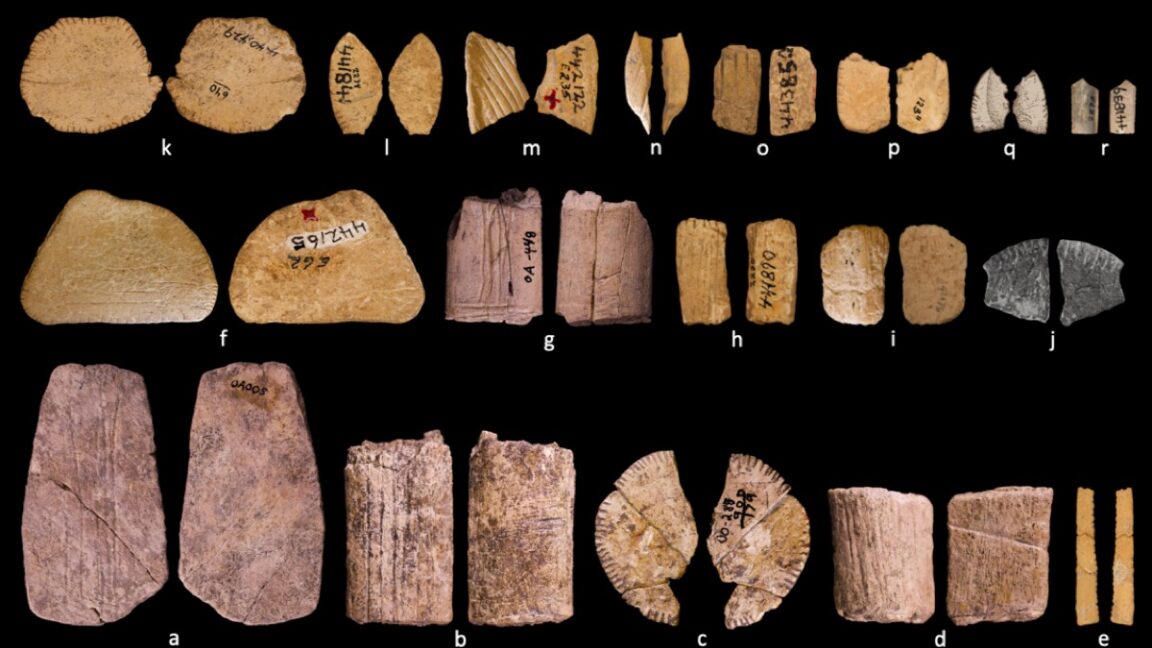
Foto: Robert Madden
More than 12,000 years of gambling history in North America is overturning previous beliefs about the origins of probability theory. The latest research by Robert Madden of Colorado State University, published in "American Antiquity," proves that Native Americans used dice thousands of years before the inhabitants of the Old World. Analysis of Ice Age artifacts indicates the widespread use of so-called "binary lots"—two-sided dice made from bone, wood, or fruit pits, which served to generate random outcomes in structured games. The scientist developed rigorous morphological criteria to distinguish ordinary everyday objects from gambling tools. Key features include a clear differentiation of sides (through color or shape), appropriate size for throwing, and specific geometry: ranging from flat sticks to convex plum pits. This discovery redefines our knowledge of the cognitive abilities of early societies, suggesting that an intuitive understanding of chance and risk was not a European or Asian innovation, but a universal element of human culture. For modern game designers and AI researchers, it is a signal that the mechanics of randomness and the algorithmic approach to outcomes have roots much deeper than technology history textbooks would suggest. Ancient communities did not just throw dice; they designed systems that became the foundation of today's game theory.
Traditional historical narrative has for decades attributed innovations in the field of probability calculus and games of chance to the civilizations of the Old World. The latest archaeological discoveries, published in the prestigious journal American Antiquity, completely overturn this Eurocentric paradigm. Research conducted by Robert Madden of Colorado State University proves that the indigenous inhabitants of North America were using gaming dice as early as 12,000 years ago, at the end of the last Ice Age.
This discovery pushes the known history of games of chance back by entire millennia. Until now, it was believed that the foundations of probabilistic thinking were born in the Bronze Age, about 6,000 years ago. Meanwhile, artifacts found in Folsom culture deposits in the areas of present-day Wyoming, Colorado, and New Mexico testify that Ice Age hunter-gatherers not only understood randomness but were able to harness it within structured, rule-based games.
Revision of the Theory on the Genesis of Probability Calculus
Madden's work sheds new light on how early societies perceived the mathematical regularity of random events. Although one cannot speak of a formal theory of probability in the modern sense, the evidence points to the deliberate creation of objects designed to generate random outcomes. The study's author emphasizes that these communities intentionally relied on repeatable processes that exploited mathematical regularities, such as the law of large numbers.
Read also


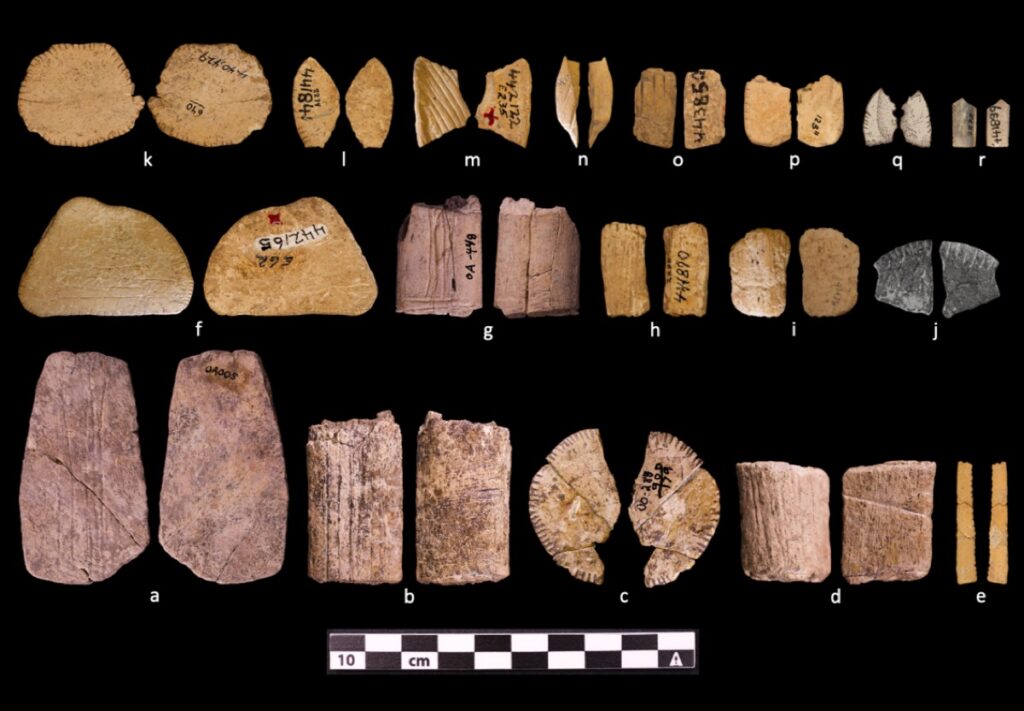
Madden's analysis is based on a rigorous methodology that allowed for the isolation of authentic gaming implements from thousands of other artifacts. The researcher developed four diagnostic criteria that objects must meet to be considered dice (so-called binary lots). They must have two clearly distinguishable sides (through color, markings, or shape), fit in the palm of the hand, and belong to one of four morphological categories: flat, plano-convex, concavo-convex, or biconvex. Thanks to this test, 565 dice from 45 different archaeological sites were definitively identified.
Gambling as a Foundation of Social Relations
Unlike modern gambling, dominated by commercial casinos and the mathematical "house edge," early Native American games served a crucial social function. Madden notes that these were one-on-one games in which each participant had equal odds. The absence of a central organizer made the gameplay a form of fair exchange and a way to build bonds between groups that did not maintain constant contact.
Games of chance served as a mechanism for creating lasting, reciprocal relationships through a system of gift-giving. Instead of one-off commercial transactions, playing together allowed for the building of trust between stranger groups of hunter-gatherers. It was a sophisticated way to manage resources and relationships in the unpredictable environment of the Ice Age, where cooperation with neighboring clans could determine survival.
- Types of dice: The research distinguishes bone dice, stick dice, as well as processed peach and plum pits.
- Geographic range: Artifacts were found across a vast area of North America, suggesting the ubiquity of the gaming culture.
- Chronology: The oldest specimens date back 12,000 years, making them several thousand years older than finds from the Old World.
Ethnographic Heritage and Research Standards
The breakthrough in Robert Madden's research would not have been possible without reference to the work of Stewart Culin, who in 1907 published the monumental report "Games of the North American Indians." Culin described 239 sets of dice from 130 different tribes, creating the foundation for modern analysis. Madden used this data to create a standard for identifying gaming objects, which had previously been lacking in continental archaeology.
Many artifacts had sat in museum storage for years, misclassified or overlooked due to a lack of clear guidelines. A key element was the exclusion of items with holes, which could have served as beads, and those whose sides could not be clearly distinguished without signs of deliberate processing. This approach allowed for the separation of everyday objects from tools used to generate "probability streams."
Shifting the Boundaries of Human Ingenuity
This discovery forces historians to rethink the global timeline of human intellectual development. Since Native Americans were designing and using tools for games of chance 6,000 years earlier than the inhabitants of Mesopotamia or Egypt, we must recognize that probabilistic thinking is much more deeply rooted in human nature than previously assumed. It was not a result of the development of agriculture or the rise of great cities, but accompanied us as early as nomadic times.
The use of binary lots (two-sided dice) shows that early peoples were able to reduce the complexity of the world to simple, binary outcomes, which were then interpreted within complex scoring systems. This is evidence of a high capacity for abstract thinking and the creation of structures where pure chance prevails. The history of mathematics and technology thus gains a new, fascinating chapter that begins not in the cradle of Middle Eastern civilization, but on the frozen plains of Ice Age America.
One can hypothesize that the need to understand randomness and the attempt to structure it was one of the first drivers of human cognitive development. If as early as 12,000 years ago we were able to create game rules based on statistical repeatability, then our modern advanced AI algorithms and predictive models are merely an evolutionary continuation of the same instincts that guided the hand of a hunter throwing a die made of bison bone.
More from Tech




Related Articles

After court loss, RFK Jr. gives himself more power over CDC vaccine panel
Apr 6
Steven Spielberg Still Wants to Make a Horror Film ‘Someday’
Apr 6New Jersey has no right to ban Kalshi's prediction market, US appeals court rules
Apr 6