Lloyds bank reveals IT glitch affected almost half a million customers
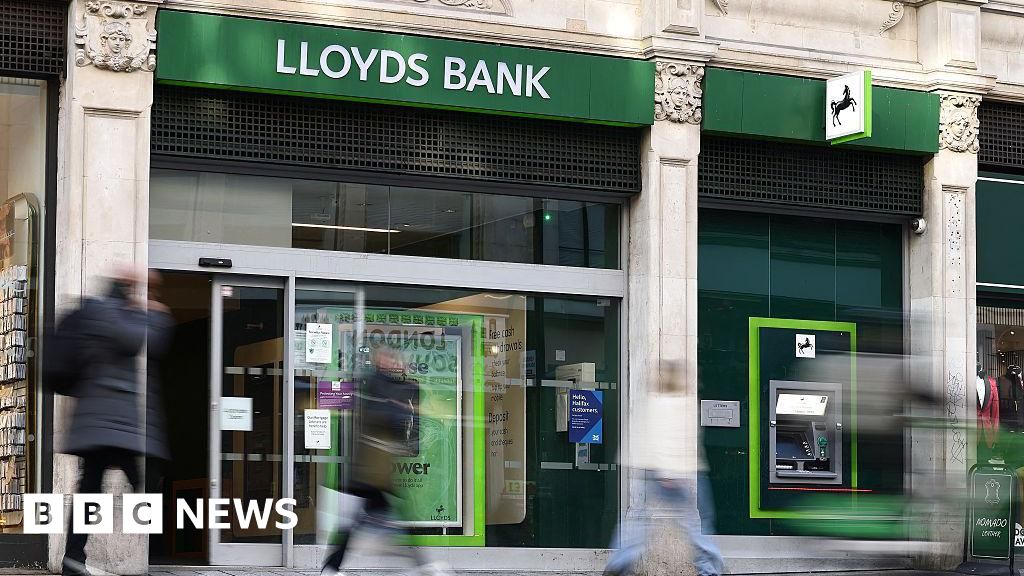
Foto: BBC Tech
As many as 447,936 customers of Lloyds Banking Group fell victim to a system error that led to an uncontrolled leak of financial data. During the incident, which occurred on March 12, mobile app users of Lloyds, Halifax, and Bank of Scotland gained access to the transaction histories of strangers, seeing their National Insurance numbers, account details, and payment information. As revealed in a report to the Treasury Select Committee, over 114,000 individuals actively clicked on others' data, sparking a wave of panic among customers fearing identity theft or loss of funds. The cause of the failure was a software defect introduced during a routine overnight IT system update. Although the bank has so far paid out £139,000 as a "gesture of goodwill," compensation was granted to only 3,625 of the most affected individuals, averaging just £38 per person. This incident exposes the fragility of modern digital banking, where the convenience of operations performed in seconds is coupled with significant technological risk. For users worldwide, it serves as a signal that even the largest financial institutions are not immune to coding errors that can instantly turn private data into publicly accessible information. The scale of the problem necessitates a revision of deployment procedures for critical systems, as in the digital-first era, trust is built over years but lost with a single flawed update.
In the world of digital finance, where trust is the hardest currency, a single error in code can shake the foundations of the largest institutions. Lloyds Banking Group, a giant of the financial sector, has officially admitted that a system error led to an unprecedented data breach affecting nearly half a million customers. This incident was not merely a temporary service interruption, but a critical privacy breach where users saw other people's social security numbers, transaction details, and even account balances, sparking mass panic among depositors.
The scale of the problem came to light in an official letter addressed to the Treasury Select Committee. The group, which includes Lloyds, Halifax, and Bank of Scotland, revealed that the incident affected exactly 447,936 customers. This event sheds new light on the risks associated with the progressive digitalization of banking, where the convenience of mobile payments stands in direct conflict with personal data security in the face of complex system updates.
A failure that exposed the privacy of thousands
The mechanism of the error was exceptionally unfortunate. Instead of standard application unavailability, users saw interfaces filled with the data of strangers upon logging in. Jasjyot Singh, Consumer Relationships Director at Lloyds Banking Group, confirmed that 114,182 customers actually clicked on transactions that did not belong to them, gaining access to detailed information. Among these were account details, National Insurance numbers, and payment references, which in the hands of unauthorized persons constitutes a ready-made kit for identity theft.
Read also

The cause of the entire turmoil turned out to be a software defect introduced during a routine overnight IT system change on March 12. Although the bank ensures that the flaw was fixed immediately after detection, the psychological effects on customers are long-term. Some users, seeing foreign charges of thousands of pounds on their accounts—for example, for a car purchase—were convinced they had fallen victim to a hacking attack or that their identity had been cloned.

The price of peace, or symbolic compensation
The bank's financial response has met with mixed opinions from experts and the public. By March 23, the group had paid out a total of £139,000 in so-called "goodwill payments." This amount was distributed among 3,625 customers, resulting in an average of just £38.34 per person. Given the scale of the incident and the fact that it affected nearly 450,000 people, the current number of compensated users represents only a fraction of the affected group.
The bank argues that these payments are a form of compensation for the stress and inconvenience customers encountered during the failure. However, for people like Asha, one of the customers quoted in the report who described her experience as "traumatic" after seeing an £8,000 transaction for someone else's car on her account, the symbolic amount may not be enough to rebuild trust in the institution that manages their life savings.
Resilience architecture under the regulatory microscope
The incident has alerted major supervisory bodies. The Financial Conduct Authority (FCA) and the Information Commissioner's Office (ICO) are conducting intensive investigations. The FCA emphasized that it expects financial sector firms to be fully resilient to disruptions and to guarantee that customers do not suffer losses as a result of technical errors. From a technological perspective, the Lloyds problem is a warning signal for the entire industry about how dangerous monolithic system updates can be on such a massive scale.
Krista Griggs, a director at digital consultancy GFT, notes that this incident exposes the need for deep structural changes. In her view, banks cannot focus solely on rapid recovery after a failure, but must design systems with native resilience and trust protection in mind (resilience by design). When a single update affects half a million people, it means that error isolation mechanisms within the IT infrastructure have failed across the board.

The fragile balance between convenience and security
The committee chair, Dame Meg Hillier, rightly noted that modern banking is a constant trade-off. For the ability to make a transfer in seconds from anywhere in the world, we pay with the risk of unpredictable technological errors. The problem is that customers are rarely aware of how thin the line is separating their private data from another user's interface at the moment of a software failure.
It is worth noting that the error affected not only the group's internal customers. The system also revealed information about people who are not customers of Lloyds, Halifax, or Bank of Scotland, but were merely making transfers to accounts at these banks. This shows that an IT failure in one large institution is systemic in nature and can violate the privacy of third parties who never signed a contract with that entity.
In digital banking, even a minor technical glitch instantly becomes a critical issue of security and trust. This is not just about systems not working, but about protecting the data that has become the foundation of the daily lives of millions of people.
Analyzing this case, one can conclude that the banking sector is entering a phase where the traditional approach to software testing is becoming insufficient. With 26 million customers managed by Lloyds Banking Group, every change in code must be treated like open-heart surgery. The March 12 incident proved that even the biggest players are not immune to errors that, in the age of mobile apps, spread at the speed of light, turning a routine update into a global image crisis.
The evolution of banking systems toward microservices and isolated data environments seems to be the only way to avoid similar compromises in the future. However, as long as banks base their operations on complex, interdependent systems where an error in one module "leaks" data into another, customers will have to accept that their privacy is dependent on the quality of the last midnight code patch. Transparency in communicating such failures, as demanded by Dame Meg Hillier, is only the first step—the real challenge remains building systems where such a leak would be technically impossible.