Luke Littler applies to trademark his face to combat AI fakes
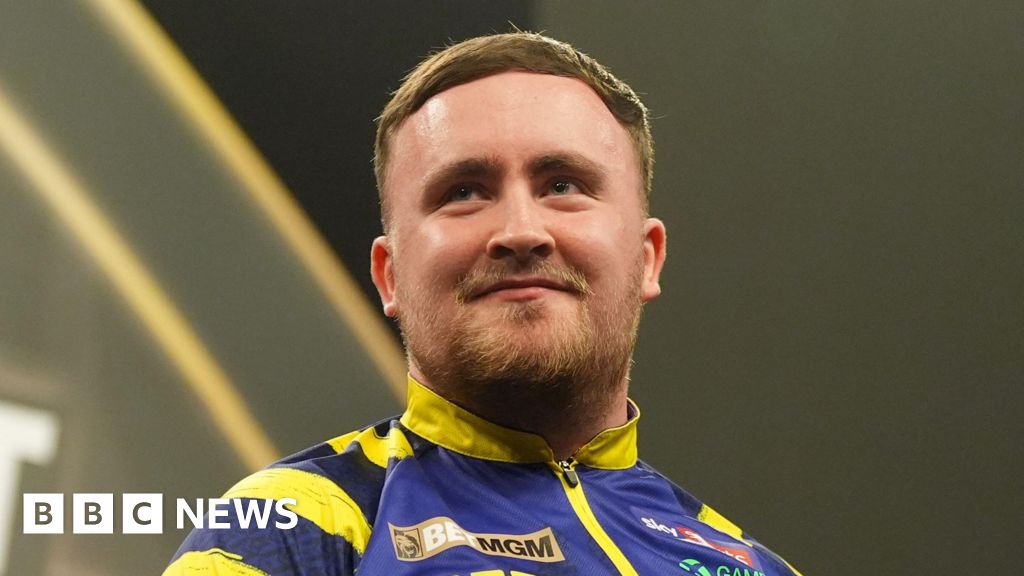
Foto: BBC Tech
Luke Littler, the youngest world champion in darts history, has filed an application to register a trademark of his face with the Intellectual Property Office. The nineteen-year-old wants to protect his image from unauthorized use, including by generative AI. Littler joins celebrities such as Matthew McConaughey and Cole Palmer, who have taken similar steps in recent months. The lack of dedicated image rights law in the United Kingdom has made trademarks a practical protection tool. Experts emphasize that while registration will not completely stop similar images, it signals a serious approach to rights and may deter commercial use. Trademarks remain the most effective tool for controlling commercial use of an image until legal frameworks around AI and copyright are established. Littler's application is currently under review.
Luke Littler, barely 19-year-old darts phenomenon, has taken a step that could become a precedent for the entire sports industry — he filed an application to register his face as a trademark. The decision of the young world champion has a clear objective: protection against unauthorized use of his image, particularly by generative AI tools. This is not an ordinary administrative procedure. It is a signal that even stars of the young generation are aware of the threats posed by technologies capable of creating convincing forgeries.
Littler joins a growing group of celebrities who treat their face as an asset requiring legal protection. Matthew McConaughey, Cole Palmer from Chelsea, and before them Taylor Swift and Scarlett Johansson — all realized that in the age of AI, traditional methods of image protection prove insufficient. But is trademark registration really a solution, or merely a game of appearances in the face of a technological tsunami?
Littler's phenomenon runs deeper than just sports. In just two years, he went from a teenager playing in local tournaments to a figure appearing on the stages of the Brit Awards and attracting millions of fans worldwide. His image became a commodity — it appears on KP Nuts packaging, on t-shirts, in advertisements. Except now this commodity can be duplicated, manipulated, and distributed without his consent thanks to technology that Littler never had to understand to become its victim.
Read also

Why face became a value to protect
Copyright traditionally protected works of art, music, literature — things invented and created. But a face? That was always a personal sphere, an inalienable part of identity. However, the moment a person becomes a brand, their physiognomy transforms into commercial assets. Littler earns millions not only because he plays darts brilliantly, but because people want to look at him, buy products with his image, identify with him.
The problem arises when this face — this precise combination of proportions, features, expression — can be reproduced digitally at lightning speed. Generative AI can create fake video in which Littler promotes a product he never supported. It can generate a deepfake in which he does compromising things. It can reproduce his voice. An entire identity can be copied like a PDF file.
Louise Popple, copyright expert from Taylor Wessing law firm, points to a fundamental problem of the legal system: in the United Kingdom, there is no image rights law in the traditional sense. This means that a person does not have automatic protection against their face appearing on products or in advertisements without their consent. This right exists in some countries, but not everywhere — and the internet knows no borders.
In this situation, trademarks become a kind of legal workaround. They are not an ideal solution, but in the absence of better tools, they are better than nothing. Trademark registration means that Littler can legally prohibit other companies from using his image for commercial purposes, especially if it could mislead consumers about the product's origin.
Limitations of trademark — what really protects?
Here a problem appears. Registering a face as a trademark alone is not a panacea. Popple openly admits that even with a registered trademark, Littler will have difficulty stopping anything other than a very similar image of his face. Trademark law mainly protects against commercial confusion — against a situation where a consumer might confuse a product with a counterfeit. But what about a deepfake that is not intended to sell anything, but merely to spread deceptive information?
Trademarks also have another weakness: they must be registered in each country separately. Littler has already registered "the Nuke" — his nickname — in the United States. But his face? That will require separate applications in the European Union, Australia, Japan — everywhere he earns money and where his image has value.
Joe Doyle-Ward from Abion law firm, specializing in intellectual property rights, sees this more pragmatically. In his opinion, it is "a smart marketing decision" that signals serious treatment of his rights. Even if trademark registration is not ideal for fighting AI, it will act as a deterrent. Companies thinking about "opportunistic merchandising" — that is, selling products with Littler's image without his permission — will think twice upon seeing a registered trademark.
Additionally, registration opens the door to licensing. Littler can now formally license the use of his face, charging brands that want to use it. This is not just protection — it is also a new source of income. Trademarks give "something" to sell, as Popple put it. They have commercial value.
Precedent for athletes — will everyone defend themselves?
Littler is not the first. Cole Palmer from Chelsea registered not only his face and signature, but even the term "Cold Palmer" — a play on his name. This shows how quickly this practice is spreading. But does this mean that in five years every Premier League player will have a registered face?
Probably not everyone. Trademark registration is a costly process requiring the work of lawyers. For young athletes with minimal income, this may be unrealistic. But for stars — for those who actually earn millions from merchandising — it will become standard. Littler, being a 19-year-old phenomenon with enormous earning potential, simply has reasons to invest in such protection.
What is interesting is that it is athletes, not actors or musicians, who are at the forefront of this trend in the United Kingdom. Why? Perhaps because sport is a world where a face has concrete, measurable market value. A sponsor pays to see an athlete's face on a shirt. Every pixel has value. That is why athletes are more susceptible to threats related to digital counterfeiting.
AI — threat or just an excuse?
It is worth asking a difficult question: is Littler really afraid of deepfakes, or is this rather a preemptive move in a world where everyone wants to secure their position? The answer is probably "both".
The threat of deepfakes is real. Taylor Swift struggled with fake images generated by AI. Scarlett Johansson had to publicly protest the use of her image. These are not hypotheticals — these are real incidents that occurred in recent months. But there is also an element of prevention — protecting oneself against threats that may appear before they actually do.
The law regarding AI and copyright is still taking shape. Governments around the world are debating how to regulate generative AI, what is allowed and what is not. In this legal uncertainty, trademarks become one of the few tools that actually work. Doyle-Ward sums this up perfectly: "The legal framework around AI and copyright is still evolving, but trademarks remain one of the most effective tools for controlling commercial use for now."
This is not a solution for the future — it is a solution for today, at a moment when the future is uncertain.
Global phenomenon or specifically British problem?
What is interesting is that most cases of registering a face as a trademark come from the United Kingdom. Why? The answer lies in the lack of formal image rights law. In the United States, there is a right of publicity, which gives people more direct protection. In Germany or France, personal rights are better grounded in law. But in the United Kingdom — a country with a rich common law tradition — this gap remains.
This creates a strange situation: British celebrities must be more creative in protecting their rights because the legal system does not give them that automatically. Trademarks thus become a typically British solution, an adaptation of an existing system to new threats.
But it also shows how inconsistent the global system of image protection is. Littler can register his face in the United Kingdom, but in the United States he has greater protection thanks to right of publicity. In China, there is almost no protection. This means that his image is protected in different ways in different parts of the world — a legal patchwork that makes little sense in the age of the internet.
Future — will trademarks be enough?
Littler's trademark registration is a symptom of a bigger problem: existing legal systems are not prepared for the era of generative AI. Trademarks were designed for a world where counterfeiting required physical effort — you had to print t-shirts, produce packaging, distribute them. Now counterfeiting takes a few seconds and requires only access to a computer.
The real solution would be a law specifically devoted to protecting images in the age of AI. A law that clearly prohibits creating deepfakes without consent, distributing false materials, commercial use of digitally reproduced faces. Several countries are already working on such laws, but the process is slow.
In the meantime, Littler does what stars can do — use available tools. Trademarks, contracts with social media platforms, agreements with image protection agencies. It is not ideal, but it is something. It is a signal that protecting one's rights is possible, even if the legal system is not catching up.
The irony is that Littler himself is a product of the modern media world — his popularity grew thanks to the internet, live streaming, social media. Now he must defend himself against threats that this same ecosystem brings. This is the reality for every celebrity of the 21st century: being famous means being vulnerable to digital threats.