Microsoft’s new ‘superintelligence’ game plan is all about business

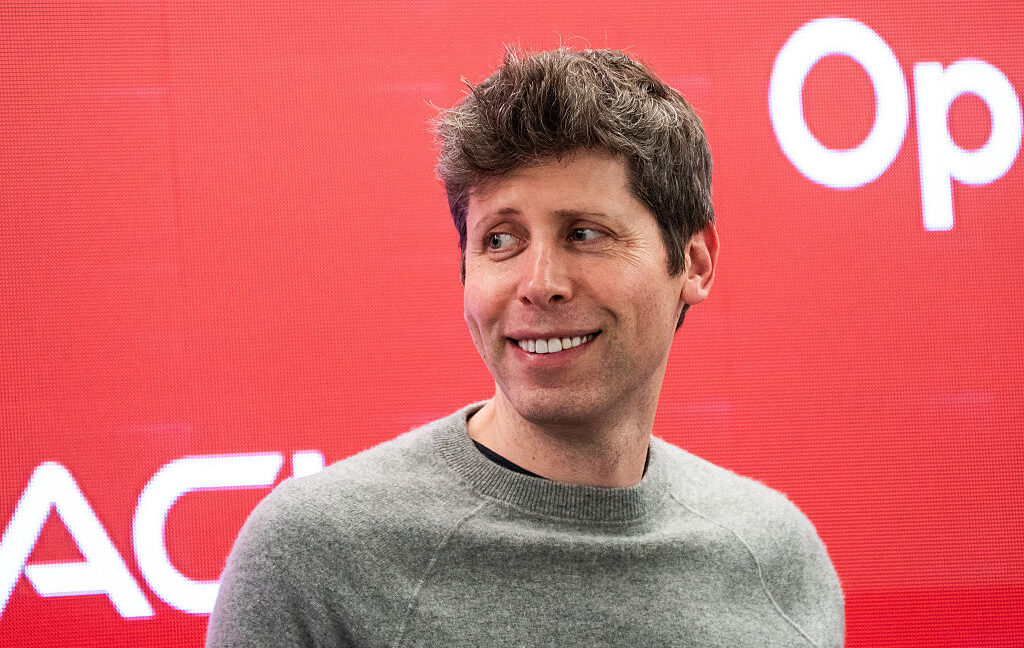
Foto: A photo showing Mustafa Suleyman during the World Economic Forum 2024
Nine months of preparation and a strategic renegotiation of the contract with OpenAI were enough for Microsoft to officially launch its pursuit of "superintelligence," which, in the Redmond giant's version, takes the form of pure business. Mustafa Suleyman, CEO of Microsoft AI, is abandoning existing bureaucracy to focus on creating frontier models designed to bring real value to millions of enterprises. The first tangible evidence of this strategy is MAI-Transcribe-1—a new transcription model that offers state-of-the-art performance at GPU costs half those of the competition. The tool handles 25 languages and extremely difficult acoustic conditions, such as street noise or overlapping voices. For the global market, this signals a new era in call center automation, video subtitling, and meeting documentation. Following the lead of Meta and Amazon, Microsoft is betting on small, 10-person engineering teams "freed from corporate procedures," aimed at accelerating the implementation of innovation within the Copilot ecosystem. The practical implication for users is clear: superintelligence is ceasing to be a theoretical science-fiction concept and is becoming a matter of cost optimization and access to assistants that provide real relief to corporate operating budgets. The race for dominance in the AI sector has shifted from the level of promises to the level of hard cost efficiency.
In the world of big tech, the term "superintelligence" is often associated with visions straight out of science-fiction literature or distant theoretical threats to humanity. However, for Microsoft and its first-ever CEO of AI, Mustafa Suleyman, this concept is taking on a brutally pragmatic, business-oriented character. The Redmond giant is currently undergoing a fundamental restructuring that shifts the focus from general experimentation toward delivering tangible product value for millions of enterprises.
The changes that took place in mid-March were not a matter of chance or a sudden impulse. Suleyman admitted in an interview with The Verge that he had been preparing for this transformation for nine months. The key moment that allowed Microsoft to officially "unlock" the path toward superintelligence was the renegotiation of its contract with OpenAI. Although this agreement is the foundation of the company's strategy, Suleyman was planning his next steps long before the ink was dry on the documents. Today, his sole focus is the pursuit of models that not only understand language but can realistically increase business efficiency.
A New Definition of Superintelligence According to Redmond
For Mustafa Suleyman, superintelligence is not an abstract entity, but a set of tools capable of generating real profits. "Superintelligence comes down to the question: are these models able to provide product value to the millions of enterprises that rely on us to deliver world-class language models?" – explains the head of Microsoft AI. This approach challenges existing definitions of AGI (Artificial General Intelligence), bringing them down to the level of commercial utility.
Read also

As part of the restructuring, Microsoft merged its consumer and corporate teams under the unified banner of Copilot AI. While Suleyman focuses on high-level strategy and the development of frontier models, the operational reins have been taken over by Jacob Andreou. As the new Executive Vice President, Andreou oversees engineering, growth, and product design. This division of roles is intended to allow Suleyman to fully engage in the technological race, where the pressure to monetize AI is greater than ever before.

MAI-Transcribe-1: Performance at Half the Price
The first evidence of Microsoft's new strategy is the launch of the MAI-Transcribe-1 model. This tool was designed for one of the most mundane yet crucial tasks in business: precise speech transcription. The model can analyze meetings, create subtitles for videos, and process conversations in customer service centers in 25 languages. What sets it apart from the competition is a drastic reduction in operational costs.
According to Suleyman, MAI-Transcribe-1 generates half the load on graphics processing units (GPUs) compared to other leading models in its class. On Microsoft's operational scale, this translates into massive savings. The model's technical specifications include:
- Support for MP3, WAV, and FLAC formats.
- Resilience to difficult acoustic conditions, such as street noise or overlapping voices.
- Training based on data from professional voice actors and vast resources of the open internet.
- Availability within Microsoft Foundry and the new Microsoft AI Playground.
This model joins the existing family of tools, which includes MAI-Voice-1 (voice generation) and MAI-Image-2 (image generation). For the first time, Microsoft is making these solutions so widely available for commercial use, challenging players like Anthropic and Google.

Small Teams, Big Ambitions
An interesting aspect of the work on MAI-Transcribe-1 is the structure of the team that created it. Behind the model's success is a group of just 10 engineers. Suleyman claims that the key was "liberation from bureaucracy." Developers could focus exclusively on modeling, while a separate team handled data provider management and administrative issues.
This approach is not isolated. Microsoft is copying a strategy that other giants like Meta, Amazon, and Google are also beginning to use, aiming to "flatten" organizational structures. Even startups like Anthropic are experimenting with giving small teams significant freedom in allocating computing power. In Microsoft's case, this is intended to lead to the creation of "humanistic superintelligence" – AI assistants that are not only powerful but, above all, loyal to the user and their interests.
Suleyman's vision assumes that every employee and consumer will receive a world-class personal assistant acting on their behalf. The transition from theoretical considerations of AGI to concrete transcription and analytical models shows that Microsoft does not intend to wait for a scientific breakthrough. The company simply intends to build it, optimizing costs and scaling solutions that already provide a real return on investment. Superintelligence in Microsoft's version is not a machine rebellion, but a perfectly optimized spreadsheet and an assistant that never makes mistakes in meeting notes.