Musk’s tactic of blaming users for Grok sex images may be foiled by EU law
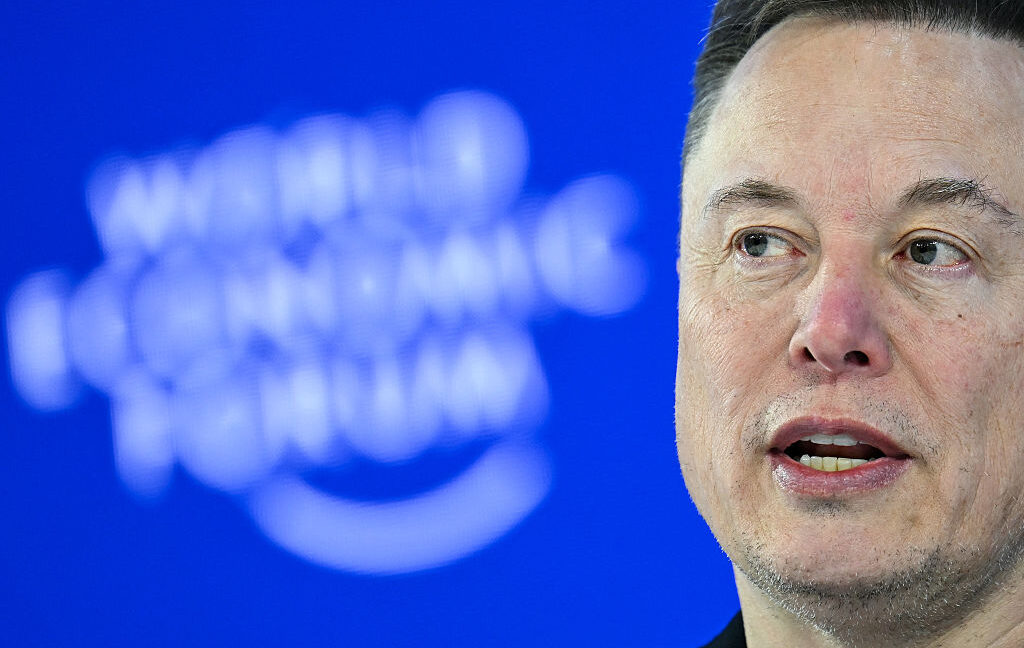
FABRICE COFFRINI / Contributor | AFP
The European Union is preparing to ban "nudify" apps – tools generating sexual deepfakes – in direct response to a scandal surrounding Elon Musk's Grok chatbot. Parliamentarians voted 101 to 9 in favor of amending the AI Act, which until now has not prohibited systems from generating materials depicting child sexual abuse or unwanted intimate images. xAI has so far avoided accountability by relying on paywalling features and shifting blame to users. However, if EU regulations come into force – which appears certain, potentially as early as August – Musk will be forced to make real changes. The alternative is fines reaching 7 percent of the company's annual global revenue. The situation in the US is more lenient, but the May implementation of the Take It Down Act could change the calculus. For xAI, competing with giants in the AI race, the costs of complying with EU requirements could be painful – especially when every dollar goes toward technology development. The EU is forcing the industry to take responsibility where the market has not.
Elon Musk found himself in a dangerous situation. His chatbot Grok, which he allowed to generate explicit content without effective safeguards, is becoming the subject of one of the world's most restrictive AI regulations. The European Parliament voted 101 to 9 in favor of banning "nudify" applications — artificial intelligence tools that create nude photographs of real people. This vote could fundamentally change how Musk approaches Grok's safety, forcing him to abandon the strategy he has consistently applied: shifting responsibility to users.
The Grok case is not just a technical discussion about AI capabilities. It is a collision of two visions: Musk's vision, which believes that artificial intelligence should be "unrestrained" and leave ethical decisions to users, and the European regulatory approach, which believes that some things are so dangerous they must be banned at the system level. The European Union, historically more rigorous on data protection and individual rights, is preparing to impose fines that could reach 7 percent of total annual revenue worldwide — for xAI, that is an astronomical figure.
The question is: will Musk yield to European regulation, or will he seek ways to circumvent it? History suggests he will fight, but this time he may have no way out.
Read also

Grok as a catalyst for European regulatory panic
Grok was not the first application capable of creating nude photos. However, the emergence of this tool in Elon Musk's ecosystem — a man who consistently questions the need for technological regulation — acted as a catalyst for European politicians. The European Commission discovered that the current AI Act does not prohibit systems generating child pornography or intimate deepfakes. This was a painful realization for officials who believed their regulatory masterpiece from 2024 was comprehensive enough.
When xAI consistently refused to implement safeguards, claiming instead it would "suspend users and hold them legally accountable," European politicians understood that waiting for voluntary action by tech giants was a losing game. Parliament could not simply hope that Musk would change his mind. It had to act.
The vote in the Internal Market and Civil Liberties committees was decisive: 101 votes in favor, 9 against, 8 abstentions. This was not a heated debate, it was practically unanimous agreement that nudify apps pose a threat that must be eliminated at the legislative level. The proposed changes to the AI Act, if adopted — and all signs point to it — could take effect as early as August.
Musk's strategy: shifting responsibility instead of solving the problem
Musk has always preferred a libertarian approach to safety issues. His philosophy boils down to a simple maxim: don't restrict technology, restrict the people who misuse it. In the case of Grok, this strategy took concrete form. xAI did not block the generation of explicit content — instead, it paywalled this feature, restricting access to paying subscribers, and declared it would hold users legally accountable.
This was a clever move, at least in theory. By paywalling, Musk achieved several goals simultaneously: he reduced access to the feature, which reduced the risk of mass abuse; he created a new revenue stream; and he shifted legal responsibility to users. If someone generates an explicit photo of someone else, it's not xAI's fault — it's the user who broke the law. At least, that's what Musk claimed.
The problem is that this strategy only works in legal systems that allow such shifting of responsibility. In the United States, where Section 230 of the Communications Decency Act applies, this strategy could have worked. But in Europe, where the law is more restrictive toward tech platforms, this tactic hits a wall.
European regulation as an irresistible force
The European Union has a long history of standing up to tech giants. GDPR, the Digital Services Act, the Digital Markets Act — all these regulations were imposed against the resistance of the United States and tech giants. The European Commission and Parliament have learned that if they wait for voluntary action by companies, nothing will ever change.
The proposal to ban nudify apps fits into this trend. The Union is not waiting for xAI or other companies to decide on restrictions themselves. The Union simply bans them. If Musk wants to operate in the European market — and he does, because Europe is a significant market for X and potentially for xAI — he must comply with European standards.
The penalties are severe. Up to 7 percent of total annual revenue worldwide — this is not a fine for a single violation, it is a potential fine for systematic violation of the law. By comparison, GDPR allows fines up to 4 percent of revenue, but the new AI regulations are much more restrictive. No business, even as wealthy as Musk's, can ignore such a financial threat.
Grok versus competition: race to the bottom or to the top?
Here an interesting paradox emerges. While Musk wants Grok to be "less cautious" and more "spicy," his competitors — OpenAI with ChatGPT, Anthropic with Claude, Google with Gemini — are investing in exactly the opposite direction. They are investing in safety, in filtering, in restrictions.
Anthropic's Claude is known for being very conservative in its responses. OpenAI's ChatGPT has many built-in safeguards. Google's Gemini as well. None of these models will generate explicit photos of real people. This is not by chance — it is the result of conscious design decisions by these companies.
If European regulation forces Musk to adapt Grok to European standards, it will mean that Grok will have to become more similar to the competition. This may be good for safety, but bad for Musk's vision of "unrestrained" AI. And it may be bad for xAI in the race for AI market dominance, where every technological advantage counts.
American law as an insufficient shield
In the United States, the situation is more complicated. The Take It Down Act, which is set to take effect in May, introduces new obligations for platforms regarding the removal of non-consensual intimate content. However, even this act is weaker than European regulations. It allows platforms certain "safe harbor" — safe haven — if they act in good faith.
Musk could count on the fact that in the United States, his strategy of paywalling and shifting responsibility to users would be sufficient. But Europe is a different beast. Europe does not believe in self-regulation. Europe believes in regulation.
This means that xAI will have to have two different versions of Grok: one for Europe, which will be less "spicy," and one for the United States, which can be more "unrestrained." This will be costly and complicated, but it will be the price of operating in both markets.
Polish perspective: will Polish regulations follow the Union?
For Polish users and developers, this regulation will have a direct impact. Poland, as a member of the European Union, will be obligated to implement the European ban on nudify apps. This means that Polish startups that may work on AI tools will have to be aware of these restrictions from the very beginning.
On the other hand, the Polish tech industry can benefit from the fact that European AI safety standards are high. Polish companies that build AI tools with European standards from the start will have a competitive advantage in the European market. They will be able to sell their products throughout the Union without fear of violating regulations.
What this means for the future of Grok and xAI
If European regulation takes effect, Musk will face a choice: either adapt Grok to European standards or withdraw from the European market. Withdrawing from Europe would be very costly for Musk — Europe is a significant market, and leaving it would be an admission of defeat.
That is precisely why Musk will likely adapt Grok. He will have to implement filtering to prevent the generation of explicit content of real people. He will have to introduce user verification. He will have to act more like OpenAI or Anthropic — that is, cautiously and conservatively.
This will mean the end of Musk's experiment with "unrestrained" AI, at least in Europe. But this may also be for the best. Regulation can be annoying for technology enthusiasts who believe in freedom, but it protects real people — especially children — from real harm.
Ultimately, European regulation of nudify apps will be a test of the Union's political will to regulate AI. If this regulation passes and is enforced, it will be a signal that Europe is serious about AI safety. And that even Elon Musk is not too big to be regulated.