Nothing CEO Carl Pei says smartphone apps will disappear as AI agents take their place

Foto: Nothing
Carl Pei, Nothing's CEO, believes that traditional mobile applications face the end. AI agents that will perform tasks directly without the need to install separate programs will take their place instead. According to the CEO, the future of smartphones is devices managed by artificial intelligence, not by an app ecosystem. Pei warns entrepreneurs and startups whose business is based solely on traditional apps — disruption awaits them regardless of their will. This change will have enormous consequences for the entire business model of App Stores and the way users interact with mobile devices. For ordinary users, this means potentially simpler operation — instead of switching between applications, they will issue commands to AI agents. However, the change also threatens centralization of control and a transformation of the ecosystem that the industry has grown accustomed to over the last 15 years.
Carl Pei, CEO of Nothing, recently made quite a radical statement that should interest anyone making money from mobile applications. According to him, apps will disappear. Not in a year, not in five years, but as part of the natural evolution of the mobile ecosystem. This is not typical futuristic speculation — it's the view of someone leading a company designing the hardware future of smartphones. Pei leaves no doubt: if your company is based on an app, you will be forced to change, whether you like it or not.
Of course, one could say this is hype. That every tech leader says something shocking to grab media attention. But before you dismiss this thesis as another clickbait from Silicon Valley, it's worth understanding exactly what Pei means and why his vision isn't completely absurd. This change won't be about the App Store disappearing tomorrow — it will be a slow transformation of how we interact with mobile devices.
From clicking icons to understanding intent
The current mobile model is based on an architecture we've known since the 2007 iPhone: an icon on the screen, a click, opening an app, navigating through menus. It's surprisingly primitive when you think about it. To send money to a friend, you open a banking app, look for a transfer button, enter data. To book a hotel, you open Booking, entering destination, dates, preferences. Every task requires opening the appropriate app and going through its interface.
Read also
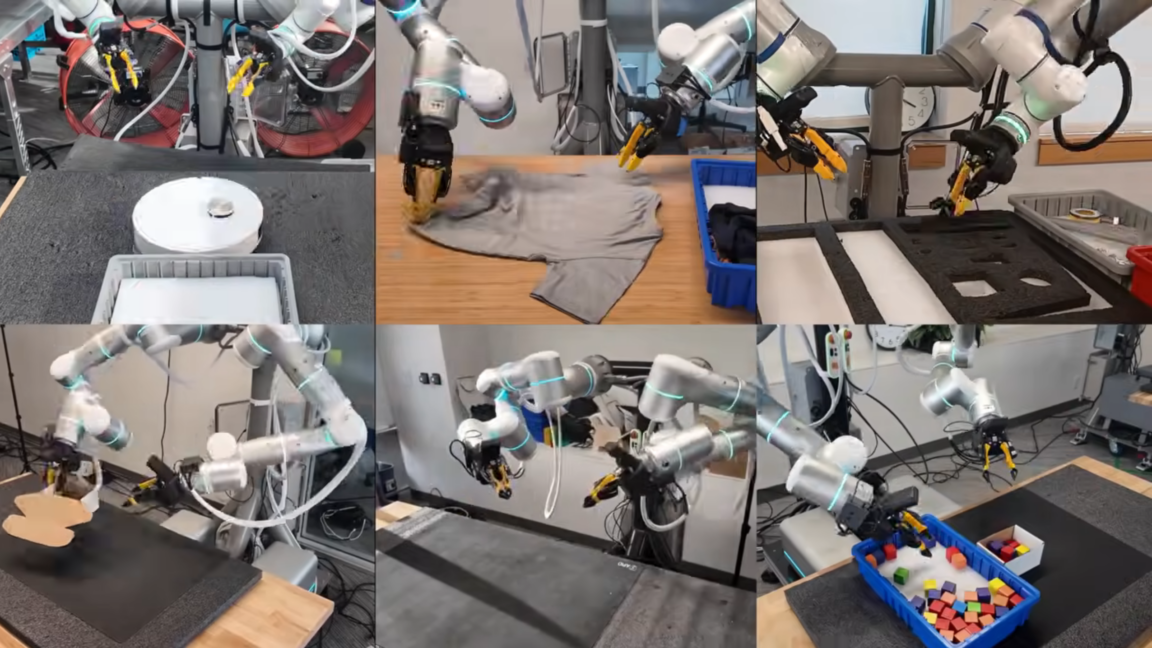

AI agents fundamentally change this logic. Instead of clicking and navigating, you'll tell your device: "Send 100 zlotys to Janusz" or "Book me a hotel in Warsaw for the weekend in a month, close to the metro, with a pool". The device will understand the intent, analyze available options, consider your preferences and previous choices, and then complete the task. There won't be an intermediary in the form of an app interface — there will be direct interaction between you and a system that knows what you want to achieve.
This isn't an abstract vision. We're already seeing the beginnings of this approach today. Claude from Anthropic can analyze screenshots and click through interfaces. ChatGPT with vision API understands complex instructions. Systems like AutoGPT or AgentGPT show that AI can not only talk but also act. They still lack integration with the entire mobile ecosystem, but that's a matter of time and engineering.
Why apps are outdated (according to Pei)
Pei's argument isn't new, but it makes sense. Every app is a closed ecosystem — Facebook doesn't know what you're doing on Instagram, Spotify doesn't see what you're watching on Netflix. Users must be aware of which app to find a given function. This causes fragmentation of experience and inefficiency. If you want to plan a trip, you have to open Skyscanner, then Booking, then Google Maps, then Uber. That's five apps for one task.
An AI agent can integrate this. It will say: "Based on your preferences, budget, and work schedule, here's the best trip plan". It will analyze flights, hotels, transportation, attractions — all in one process. You won't have to jump between apps. This is drastically more efficient.
The second issue is distribution. For an app to be popular, it must be downloaded from the App Store or Google Play, it must be promoted, it must compete with millions of other apps. This costs money. For an AI agent, it's enough that it's available directly in the operating system — no separate installation needed, no separate interface. This changes the entire economics of mobile software development.
Nothing and Pei's vision against the competition
It's worth noting the context from which Pei makes these statements. Nothing is a company positioning itself as an innovator in the smartphone space — a manufacturer of devices with unique design and ambition to be an alternative to Apple and Samsung. Pei previously worked at OnePlus, where he participated in building a brand that emphasizes "bourgeois minimalism" and authenticity. He's doing the same with Nothing now.
When Pei talks about apps disappearing, he's speaking as someone whose business could gain from the transformation. If apps really do disappear and AI agents become the dominant form of interaction, devices like the Nothing Phone could be among the first to implement this. This gives them a chance to redefine what a smartphone means. It's no longer a device for downloading apps — it's an intelligent assistant in your pocket.
By comparison, Apple and Google have less motivation to transform quickly, because they earn from the App Store and Google Play Store. Both Apple and Google take a commission from every in-app purchase. AI agents could threaten these business models. Pei doesn't have this problem — Nothing makes money from selling devices, not from an app ecosystem. This gives him greater intellectual freedom.
Technical obstacles on the path to an app-free future
However, Pei's vision faces serious technical and practical challenges. First, AI agents require significantly more computing power than traditional apps. For an agent to operate on a mobile device in real time, it would need to be installed locally, which means huge neural networks on a smartphone. Currently, even flagship smartphones struggle to run larger models. This is changing thanks to advances in model compression and edge computing, but we're still far from every smartphone being able to locally run a GPT-4-level agent.
Second, there's the issue of security and privacy. If an AI agent has access to all your data — browser history, messages, preferences, location — to operate effectively, that means an unprecedented level of access to your information. Who controls this agent? Is data sent to the cloud? Is it stored locally? These are questions we don't yet have good answers to.
Third, integration. For an AI agent to work, it must have access to the API of every service it might need — banks, hotels, airlines, restaurants. Companies will have to open their systems to AI agents, which means changing their business and security models. Not all will be willing to take this step.
Polish users and domestic startups in the new world
For Poland, this transformation has concrete implications. Polish startups building mobile apps will have to prepare for change. If apps really do disappear, the business model of many Polish companies — from food delivery apps to language learning applications — will be threatened. They can't count on being downloaded from the App Store — they'll have to integrate with AI agents.
On the other hand, this opens new possibilities. Polish fintech companies like Wise or Revolut could be more flexible than traditional banks. If an AI agent can directly execute transactions, such companies could be among the first to integrate with this ecosystem. This could give them a competitive advantage over traditional banking.
For ordinary users, the change could be positive. Instead of managing dozens of apps, you'll have one intelligent assistant. Instead of remembering passwords for every app, you'll have one access point. This could simplify smartphone use, especially for older users or those less tech-savvy.
Transition scenarios: from apps to agents
The transition from apps to AI agents won't be sudden. It will likely be a process lasting several years, similar to the transition from desktops to mobile. Possible scenarios include:
- Hybrid apps — Apps will act as interfaces for AI agents. Instead of traditional menus, you'll be able to talk to the app in natural language.
- AI as an intermediary layer — The new operating system will have a built-in AI agent that will handle traditional apps in the background, hiding their complexity.
- Full transformation — New devices, like the Nothing Phone, will run AI agents as the base layer, with traditional apps being just an optional add-on for those who need them.
Realistically, it will probably be a mix of all three scenarios. Some companies will transition quickly, others will resist. Users will have a choice. But the trend will be clear — the direction is set.
What this means for tech giants
Apple and Google will have to face this challenge. Apple has one advantage — it controls both hardware and software, which means it can integrate AI agents much faster than competitors. We're already seeing this with Siri, which is evolving. But Siri is still far from replacing apps — it's more of an assistant that opens apps.
Google has a bigger problem. Android is an open system, which means it can't impose AI agents as easily. But Google has access to enormous amounts of data, which gives it an advantage in training models. Gemini, Google's model, is already integrated with Android. This could be the first step.
For Nothing and Pei, this is a chance to be a pioneer. If the Nothing Phone is the first smartphone to operate fully through AI agents, it could change how the brand is perceived. It won't be just "an alternative to the iPhone" — it will be "the future of smartphones".
When will this really happen?
The question everyone asks: when? Pei didn't give a specific timeline, but considering the pace of AI progress, one can speculate. GPT-5 should appear in 2025 and will be much more capable of acting as an agent. Open source models like Llama are becoming more accessible. Mobile hardware is becoming more advanced. All of this suggests the transition could begin in the second half of the decade.
But "transition" is not the same as "complete replacement". Apps will probably exist for another ten years, just as desktop websites still exist despite mobile becoming dominant. However, AI agents will be the dominant model. This is the key distinction.
Pei's vision is ambitious, but it's not crazy. Technological change of this caliber takes time, but the direction is set. If you have a startup based on a mobile app, it's worth starting to think about how to prepare for a world where that app might become unnecessary. This doesn't mean you should stop developing your app — it means you should start thinking about how to integrate with AI agents. Because this future is already beginning.