Playing Wolfenstein 3D with one hand in 2026
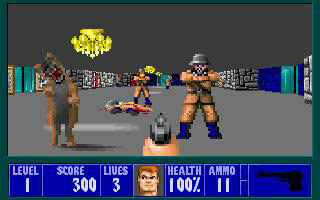
Foto: id Software
Thirty-five years after its premiere, Wolfenstein 3D—the game that defined the FPS genre—resembles a ride in a Model T Ford in a world of modern racing cars in 2026. While the smooth first-person scrolling was considered technological magic in 1992, a contemporary perspective exposes the rawness of id Software’s foundations. The greatest challenge for today’s player is not the enemies, but the lack of an in-game map and the claustrophobic architecture based entirely on right angles, which, combined with repetitive wall textures, makes navigation nearly impossible without constant wandering. From today’s point of view, combat mechanics based on hitscan (instant projectile hits from enemies) without a cover system force a specific, aggressive tactic of stunning opponents with continuous fire. For users and creators of creative technologies, a return to the roots of Wolfenstein is a lesson in minimalism and proof of the immense progress made in User Experience and Level Design. It serves as a reminder that today’s standards, such as dynamic lighting or non-linear geometry, evolved from desperate attempts to deceive the human eye using "flat" walls. The legacy of Wolfenstein 3D is not just nostalgia, but above all, a foundation for understanding how technical limitations can stimulate creativity in building entire entertainment genres.
The early 90s in the tech world resembled the Wild West, and the release of the shareware version of Wolfenstein 3D was the moment id Software showed everyone digital magic. The smoothly scrolling first-person perspective was something unheard of at the time, causing the jaw of every PC owner to drop. Although from a technical standpoint the game was ironically two-dimensional — it even lacked the simulated height that Doom introduced a year later — the sense of depth offered by this title defined an entire generation of gamers.
Returning to Wolfenstein 3D in 2026, nearly 35 years after its premiere, is however a completely different experience. The magic of the original trick has evaporated under the influence of thousands of shooters inspired by this title. Today's perspective exposes id Software's archaic design decisions, making interacting with the game feel like visiting an automotive museum and trying to take a Model T for a spin. It is a fascinating history lesson that, despite the passage of decades, can still surprise with its specific, raw edges.
Right-Angle Architecture and Lack of Orientation
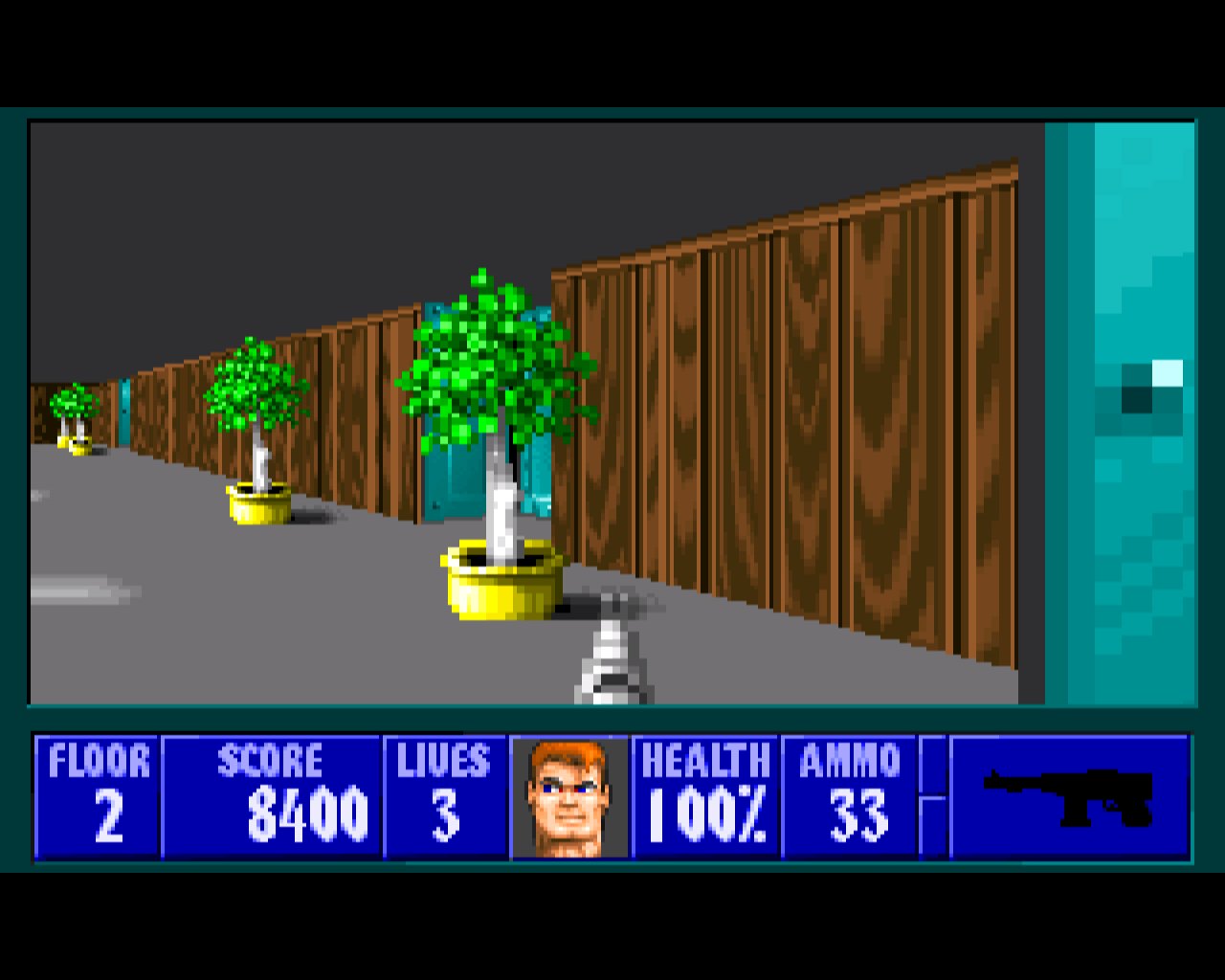
The greatest limitation of Wolfenstein 3D hits you immediately upon starting the first level: all walls are set at 90-degree angles to each other. This results in monotonous architecture consisting of huge, rectangular rooms and perfectly straight corridors with sharp turns. Although the designers worked tirelessly to create labyrinths, zigzagging walls imitating diagonals, or low barriers allowing a peek into inaccessible sections, today's audience perceives this "blockiness" as an almost insurmountable barrier.
Read also


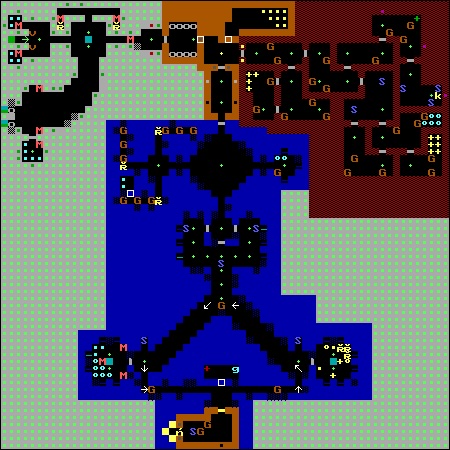
The problem is compounded by the lack of an in-game map, which is now a standard in almost every FPS. In 2026, it is easy to get lost in identical-looking corridors, unconsciously returning to the same points. Even the varied wall textures or decorations intended to serve as landmarks fail when, after an intense firefight, we try to remember which of the three identical doors we just walked through. The result? Level completion times drastically exceeding the "par time" set by the creators due to wandering in circles.
Combat Dynamics: Offense as the Only Shield
The combat mechanics in Wolfenstein 3D differ drastically from modern standards. Most encounters are characterized by an almost total lack of cover, and enemies using firearms utilize "hit-scan" mechanics — their bullets hit instantly, making effective dodging in open spaces impossible. In this reality, the best defense becomes constant attack; hitting an enemy causes a brief stun, which interrupts their firing sequence and allows for a safe elimination.
Players are forced to use specific tactics, such as using doors as improvised cover. The standard pattern involves quickly opening a passage and immediately retreating to lure enemies out one by one into the open. It lacks the fluidity known from modern movement shooters or the planning typical of cover-based games. The exceptions are the bosses — true "bullet sponges" whose fights boil down to tedious circling around pillars and avoiding their predictable attacks.
Design Anachronisms and Difficulty Balance
In retrospect, the game's difficulty system seems unbalanced. The lowest level, "Can I Play, Daddy?", is absurdly easy for anyone who has had contact with modern FPS games — enemies react with a huge delay and deal minimal damage. On the other hand, the default "Bring ‘em On!" can be brutal; a few accurate shots from a guard can take half the health bar in a fraction of a second. Furthermore, the arsenal progression is disappointing — new weapons are essentially the same models, just with a higher rate of fire.
- Point system: The game archaically calculates a numerical score, which in 2026 has little significance for gameplay satisfaction.
- Limited lives: Death means losing weapons and having to use spare lives, unless the player practices "save-scumming."
- Save game: The ability to save at any moment makes the lives and points mechanics practically irrelevant.
- Lack of continuity: After completing an episode, the game forces a start from scratch, without carrying over equipment to the next part of the campaign.
One-Handed Revolution: The Mouse as a Segway
The most surprising discovery while replaying Wolfenstein 3D is how brilliantly the game works with a mouse, allowing for full one-handed control. In 1992, few people could effectively use a mouse for aiming, but today this system shows its strength. The mouse acts as a replacement for the directional keys: forward-backward movement handles walking, while the sides handle turning. The mouse buttons take over the rest of the functions:
- Left button: Shoot
- Right button: Activate strafe mode (moving sideways)
- Middle button: Opening doors and interaction
With sensitivity set to maximum, such controls allow for moving through the castle with speed and precision that cannot be achieved on a keyboard. The player "zips" through corridors like on a Segway, which gives the gameplay a freshness and dynamics lacking in the traditional approach. It is this element, alongside hunting for hidden passages behind sliding walls, that makes returning to the roots of the genre still capable of providing authentic fun, despite all the archaisms and simplifications.
Wolfenstein 3D in 2026 is not just a game, but above all a testament to the birth of a powerful trend in pop culture. Although its mechanics are raw and its visuals blocky, it was here that the foundations were crystallized upon which modern gaming empires were built. Looking at the clash with Mecha-Hitler, it is hard not to appreciate id Software's courage in blazing trails that seem so obvious to us today.
More from Tech


Related Articles

After court loss, RFK Jr. gives himself more power over CDC vaccine panel
Apr 6
Steven Spielberg Still Wants to Make a Horror Film ‘Someday’
Apr 6New Jersey has no right to ban Kalshi's prediction market, US appeals court rules
Apr 6