Polygraphs have major flaws. Are there better options?
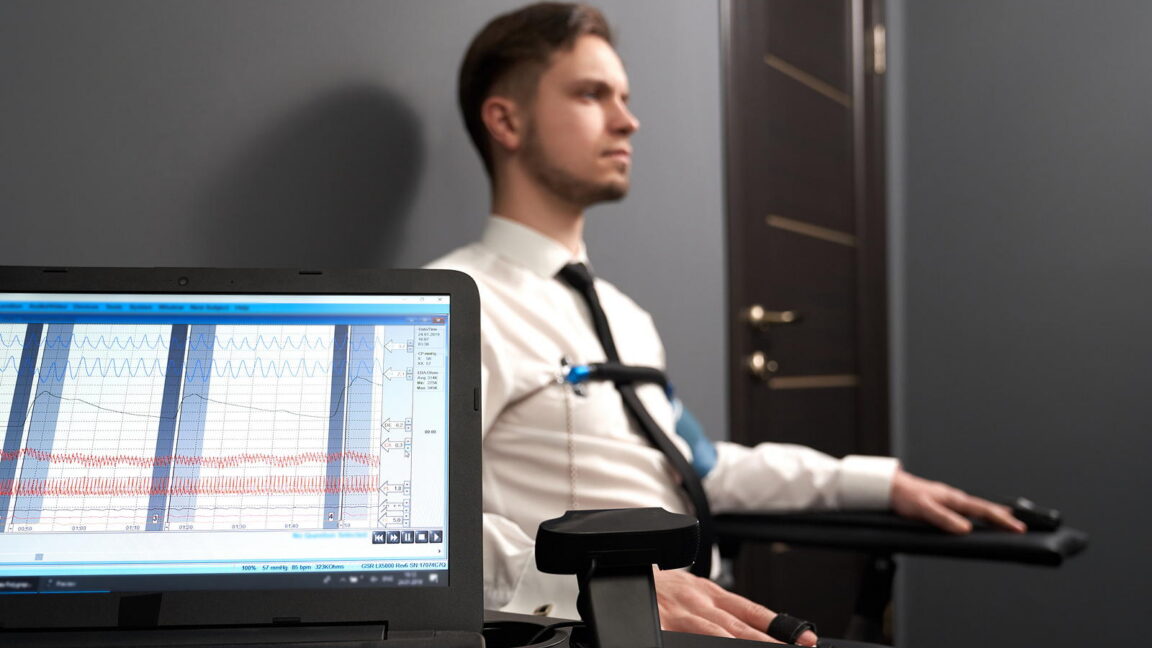
Foto: SerhiiBobyk via Getty
As many as 11 years of impeccable military service were not enough for George W. Maschke to pass FBI vetting – all due to a single polygraph error that falsely indicated a lie. This case vividly illustrates a fundamental flaw in technology used since 1921: measuring physiological reactions, such as heart rate or blood pressure, is not synonymous with detecting the truth. Modern science is increasingly sounding the alarm that traditional "lie detectors" generate too many false positive results, which in the security clearance sector leads to the destruction of innocent people's careers, and in law enforcement can result in coerced confessions. Although polygraph results are inadmissible in most courts, uniformed services and intelligence agencies still rely on them. In response to these shortcomings, the technology industry is developing alternatives based on Eye Tracking (analysis of involuntary eye movements) and brain activity monitoring. For users and public sector employees worldwide, this signifies an upcoming paradigm shift – a transition from archaic stress measurements toward advanced biometrics. However, experts warn that human nature may be too complex for any form of algorithmic quantification of sincerity. Effectively distinguishing stress from deception remains the greatest challenge for modern creative and investigative technology.
The Legacy of the "Lasso of Truth" and the Mechanics of Stress
The modern polygraph is largely a device whose concept has not changed for over a hundred years. Its father is considered to be **John Augustus Larson**, a police officer with a PhD in physiology, who in 1921 combined measurements of heart rate, blood pressure, and respiration into a single diagnostic tool. Interestingly, he drew inspiration from the work of **William Moulton Marston**, a psychologist who not only experimented with lie detection but also became the creator of the character Wonder Woman and her legendary "lasso of truth." This literary and pop-culture rooting of the polygraph still casts a shadow over its perception by the public today.
The device's principle of operation is based on a simple assumption: lying causes stress, and stress manifests in measurable physiological reactions. During a test, the subject answers neutral questions (e.g., about their name) and critical questions (e.g., "Did you kill Sally?"). The examiner looks for sharp spikes in the charts for blood pressure, heart rate, respiration rate, and skin conductance, which is a measure of perspiration. The problem is that the polygraph does not detect a lie in the strict sense, but only the arousal of the nervous system. As **Ben Denkinger**, a psychology professor at Augsburg University, notes, it is a "zombie technology" that persists despite the lack of solid scientific foundations.
The Statistical Trap of Innocence
The biggest criticism against polygraphs is their low precision in identifying people telling the truth. According to data cited by Prof. **William G. Iacono** from the University of Minnesota, polygraphs are able to correctly identify about 75% of guilty individuals. However, in the case of innocent people, the effectiveness drops drastically – the device issues a correct verdict in only about **57% of cases**. This means that for a person telling the truth, the test result is little better than a coin toss.
Read also


In 2003, the **National Academies of Sciences, Engineering, and Medicine** published a breakthrough report that remains a reference point for critics of this method to this day. Researchers stated then that the theoretical explanation of the polygraph's operation is inadequate, and the number of false-positive results – that is, identifying the truth as a lie – is at a level unacceptable for justice systems. Despite this, the polygraph remains deeply rooted in the culture of uniformed services and intelligence agencies, which experts say makes state institutions more vulnerable to security threats instead of protecting them.
The Polygraph as a Tool for Coercing Confessions
Although polygraph results have generally not been admissible as evidence in American federal courts since 1998, their role in investigations remains crucial. Police and federal agencies use the device as a psychological tool during interrogations. Often, the mere information about "failing" the test serves to exert pressure on a suspect, leading to false confessions. Although the result from the machine will not enter the court records, the confession obtained through it is full-fledged evidence.
An analysis conducted by Denkinger and Iacono in 2023 based on data from the **National Registry of Exonerations** sheds a terrifying light on this practice. Researchers identified 56 cases in which individuals later exonerated were subjected to a polygraph test and subsequently gave a false confession. In a group of 36 cases where there was an unambiguous verdict from the examiner, the polygraph indicated the innocence of the person being questioned in only eight cases. In the remaining cases, this technology became a catalyst for judicial errors and years of imprisonment for innocent people.
In Search of a Technological Successor
In the face of the obvious flaws of the traditional polygraph, the world of science and business is looking for alternatives that could offer higher reliability. Modern approaches include a wide spectrum of methods: from monitoring involuntary eye movements and pupil dilation to advanced brain activity imaging (fMRI). Theoretically, instead of measuring the effects of stress (heart rate, sweat), newer technologies try to look directly into the "command center" – where the lie is formed.
However, even these advanced methods face resistance from part of the scientific community. **Kyriakos Kotsoglou**, a legal researcher at Northumbria University, describes attempts to quantify truth as "somewhat unscientific." According to him, the belief that there is a strict, parallel relationship between our thoughts and the measurable behavior of the body may be a simplification that ignores the complexity of the human psyche. Humans are beings too complicated for their honesty to be enclosed in an algorithm or a simple chart.
The End of the Era of Mechanical Detection?
Currently, standards for admitting scientific evidence in courts, such as the **Daubert Standard**, require that a method enjoys general acceptance in the scientific community and is based on reliable data. The polygraph does not meet these criteria, and yet it still decides the fate of thousands of job candidates in strategic sectors and the direction of criminal investigations. This is the paradox of modern technology: we use tools that we know are imperfect only because we have nothing better that would give us the illusion of objective control over human nature.
The future of lie detection will probably not belong to a single device, but to multidimensional behavioral analysis supported by artificial intelligence. However, until we understand that stress is not synonymous with guilt, and calmness with innocence, every new technology will replicate the mistakes of the old polygraph. The real challenge is not building more sensitive sensors, but accepting the fact that in human relations and the justice system, the margin of error of technology can be more costly than the lack of technology itself. The prospect of a machine becoming the ultimate arbiter of truth remains a tempting but dangerous pipe dream.
More from Tech




Related Articles

After court loss, RFK Jr. gives himself more power over CDC vaccine panel
Apr 6
Steven Spielberg Still Wants to Make a Horror Film ‘Someday’
Apr 6New Jersey has no right to ban Kalshi's prediction market, US appeals court rules
Apr 6