Publisher cancels horror novel's release over AI claims
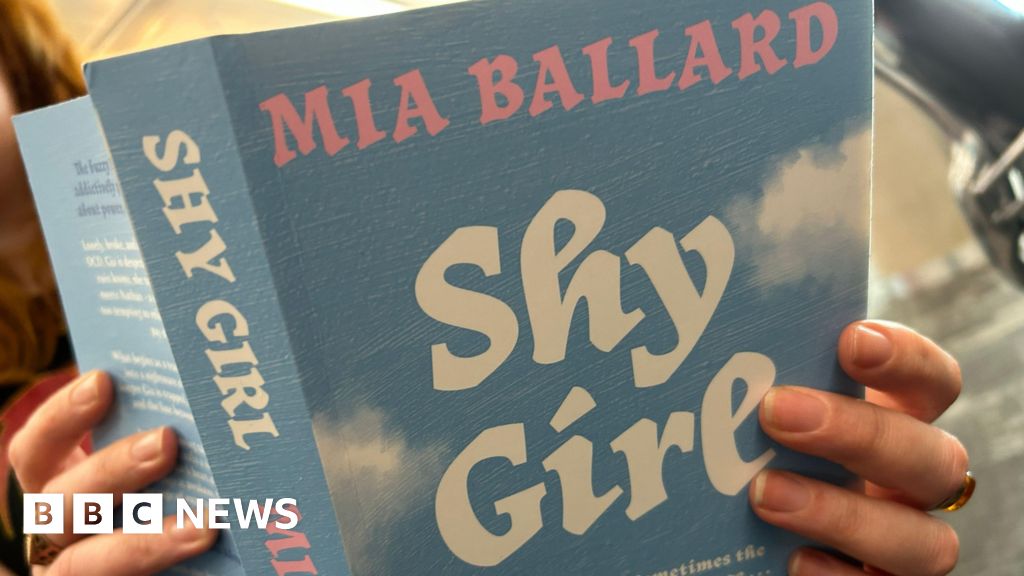
Foto: BBC Tech
Hachette publishing house withdrew the horror novel "Shy Girl" from distribution in the United States and Great Britain, suspecting AI was used in its creation. The book by author Mia Ballard, which sold nearly 2,000 copies in the UK following its November release, was scheduled to enter the American market next month. Ballard denies personal use of AI, claiming that the editor hired to edit the original self-published version used artificial intelligence independently. The author emphasizes the negative impact of the controversy on her mental health and announces legal action. This is likely the first case in which a major publishing house has withdrawn a commercial novel due to evidence of AI use. Goodreads reviewers pointed out unusual formatting, typographical errors, and repetitive phrases characteristic of ChatGPT-generated texts. The case illustrates growing tensions in the publishing industry — publishers must balance protecting creative authenticity against market pressure, while authors resist the automation of writing.
When publisher Hachette announced this week the cancellation of the American edition of the novel Shy Girl by Mia Ballard, it was not just about a single case of a book being withdrawn from the market. This incident marked a breakthrough moment in the publishing industry — for the first time, a major publisher withdrew a commercially published novel due to suspicions of AI use. This is no longer just a theoretical discussion on internet forums or in opinion pieces. This is a reality that affects authors, publishers, and the reading public here and now.
The story of Shy Girl began quite innocently — in February 2025, Mia Ballard self-published her horror novel online. The book gained popularity, especially on BookTok, a social media platform where users share literary recommendations. In November of that same year, the novel reached the British market thanks to publisher Wildfire, and was then supposed to be published in the United States by Orbit. But as questions about the authenticity of the text began to multiply, the entire plan fell apart. Today the book is being withdrawn from both markets, and its author is grappling with a ruined reputation — all because of technology that, according to her own words, she did not use.
Who actually used AI?
This is the key question that divides opinions in this matter. Mia Ballard categorically denies that she personally used AI tools while writing the novel. Instead, she points to a person she hired to edit the original, self-published version of the text. According to Ballard, it was this editor who proposed using AI to improve the manuscript — without her full awareness of the consequences of this action. In an interview with the New York Times, the author emphasized her frustration, saying: "I didn't do it, and my life has changed, my mental health has hit rock bottom, and my name is ruined". She also added that she is taking legal action in this matter.
Read also

However, the matter is not as simple as it might seem. The question of responsibility for AI use in the creative process has no clear answer. Is an author responsible for every stage of production of their work, even if they delegate work to an editor? Should an editor have obtained explicit consent before applying AI? Should a publisher have conducted more rigorous research before publication? These issues will be of enormous importance to the entire publishing industry in the years to come.
Traces of AI in the text — what readers noticed
The thing is, many people noticed something suspicious in the text of Shy Girl before the publisher officially made a decision. Reviewers on the GoodReads platform posted comments suggesting that the book might have been written by ChatGPT. One of them pointed out "strange formatting, spelling errors and repetitive phrases". These are classic signs that may indicate the involvement of generative tools — characteristic of them are precisely repetitive sentence structures, certain logical inconsistencies, and unnatural transitions between paragraphs.
As for the actual signs of AI in the text, they are not always obvious to the average reader, but experienced editors and literary scholars can spot them. Text written by AI tends to be too "smooth" — it lacks the authentic nerve, the peculiarities of style that are characteristic of a human writer. Moreover, language models such as GPT tend to generate certain phrases and sentence structures that repeat themselves in various texts. This is a kind of "fingerprint" of AI — impossible to completely hide, though it can be disguised.
The publisher's position — between protection and responsibility
Hachette, one of the world's largest publishers, faced a difficult decision. A company spokesperson stated that the publisher "remains committed to protecting original creative expression and storytelling". This statement is important because it shows that major publishers are beginning to take the issue of AI in literature seriously — not as a marginal problem, but as a fundamental threat to the integrity of the publishing process.
The decision to withdraw both the American and British editions is significant. This is not a case where a publisher simply apologizes and promises to "do better". This is both a business and ethical decision. Hachette chose to bear the reputational cost of withdrawing the book, rather than risk being perceived as a publisher that publishes works potentially generated by AI. In today's times, when readers and critics are increasingly aware of the AI problem in creative works, such a reputation could be devastating for a publisher.
The first major failure of AI in commercial literature
The New York Times described this situation as "the first commercial case of a major publisher withdrawing a novel due to evidence of AI use". This is an important distinction — there have been cases before where people published AI-written books on self-publishing platforms, but never before has a major publisher withdrawn a novel for this reason. This marks a breakthrough in industry awareness.
The case of Shy Girl will likely become a point of reference for future disputes over AI in literature. It will be cited in articles, discussed at publishing conferences, and may become a legal precedent for future lawsuits. For authors, it means they must be extremely careful about who edits their work and what tools are used. For publishers, it means the need to implement more rigorous procedures for verifying the authenticity of texts.
Broader context — AI and the creative industry
The story of Shy Girl does not take place in a vacuum. It unfolds against the backdrop of growing tension between creators and AI technology. Authors such as Philip Pullman publicly call on governments to act on what he calls "malicious" AI scraping — the practice in which machine learning models are trained on large sets of text without the authors' consent. At the same time, some industry players, such as the head of the Waterstones bookstore chain, openly say they would be willing to sell books written by AI if they were clearly labeled as such.
This shows deep divisions in the industry. On one hand, we have traditionalists who believe AI poses a threat to authentic creativity. On the other hand, we have pragmatists who see AI as a tool that can be useful if applied transparently and ethically. The problem with Shy Girl is that there was no transparency — the reader did not know that the text contained AI-generated elements, and neither did the publisher.
Implications for the future of publishing
The withdrawal of Shy Girl from the market will have far-reaching consequences for the publishing industry. First, publishers will need to invest in new tools to detect AI in manuscripts. Such tools already exist, but none of them are 100 percent reliable. Second, they will need to introduce more rigorous contracts with editors and proofreaders that will require full transparency about the tools used.
Third, they will need to develop industry standards regarding what is permissible and what is not. Is the use of AI for grammar correction permissible? What about using AI to generate scene descriptions? These questions remain open and will require broad discussion among publishers, authors, and readers. Without clear guidelines, each case will generate controversy, as happened with Shy Girl.
Personal drama behind the business
It is easy to focus on the business and technical aspects of this story, but one should not forget about the personal drama of Mia Ballard. Regardless of whether she personally used AI or not, her reputation has been seriously damaged. Her book, which she wrote and which people read, was withdrawn from the market. Her name is now synonymous with controversy over AI in literature. This is an enormous personal cost for an error that — according to her words — she did not commit.
This part of the story is important because it shows that in the era of AI, every creative profession becomes more risky. One mistake, one person in the production chain who makes the wrong decision, can destroy an author's career. This creates pressure on the entire industry to develop clear standards and procedures that will protect both authors and readers. Without this, we will see more cases like Shy Girl — controversies that could be avoided through better communication and transparency.