Roku's ad-free streaming service was already a great deal - now it's adding Disney movies

Foto: ZDNet
Roku expands its ad-free streaming service with Disney content. The platform, which already offered an attractive proposition for users, now adds films belonging to one of the world's largest entertainment studios to its library. This move significantly strengthens the service's competitiveness against traditional VOD platforms. For viewers, this means access to a broader catalog of film productions without having to pay additional fees to remove ads — a feature that has become a key differentiator for Roku in the market. The integration of Disney films fits into the trend of content consolidation on streaming platforms, where users expect increasingly rich libraries as part of a single subscription. Roku's decision shows how content producers are changing their distribution strategy, seeking new channels to reach audiences. For the streaming industry, this means growing pressure on other platforms to maintain competitiveness through similar partnerships and expanding their offerings. This is another step in the market's evolution, where the quality and range of available content are becoming key factors in choosing a service.
The streaming services market is undergoing a transformation that would have been difficult to predict just a few years ago. While giants like Netflix and Disney+ battle for dominance through price increases and the introduction of ad-supported plans, a new player has emerged offering something completely different: Howdy from Roku, a free ad-supported streaming service, and now also a premium ad-free version for less than $3 per month. Add to this the recent decision to include Disney content in the catalog, and we have a scenario that fundamentally changes what we considered normal in the streaming industry.
Howdy is not an ordinary platform. It is a combination of Roku's business strategy — a manufacturer of televisions and streaming devices — with an understanding that consumers are tired of rising subscription costs. The service existed earlier, offering free access to movies and series with ads, but its market position has changed significantly. Now that you can get rid of ads for just a few dollars a year, and the catalog has been enriched with Disney productions, Howdy becomes a proposition that is hard to ignore for those seeking value for their money.
When Free Became Premium — Howdy's Economics
To understand the Howdy phenomenon, one must go back to fundamental changes in the streaming business model. For years, Netflix maintained its position as a leader, offering content without ads at a relatively high price. However, as competition intensified and the number of available services exploded, consumers began making painful choices — which subscriptions to keep and which to drop. The average viewer in the United States now pays over $50 per month for all their streaming services, which represents a significant portion of a household's entertainment budget.
Read also


Howdy steps into this gap with a proposition that seems almost too good to be true. The free ad-supported version offers access to a rich catalog at no cost. The premium version, eliminating ads, costs less than $2.99 per month — that's less than a coffee in most cities. For comparison, Netflix's cheapest ad-supported plan costs $6.99, and Disney+ Premium without ads is $13.99. The economics are therefore clear: Howdy positions itself as an alternative for those who want content without the sticker price shock.
Of course, Roku's business model allows for such aggressive pricing. Roku earns primarily from the sale of televisions and streaming devices, as well as from user data and advertising. Howdy is a tool to attract people to the Roku ecosystem — if someone uses Howdy, there is a greater likelihood they will use Roku devices. This is a long-term strategy, not a game about maximizing profit from the streaming service itself.
Disney in the Catalog — Game Changer or Marketing Move?
Adding Disney content to Howdy is a qualitative leap that deserves deeper analysis. Disney is not just The Lion King or the latest Marvel production — it is a brand that represents value and prestige in consumer consciousness. For years, Disney guarded its content like a dragon guards gold, preferring distribution channels that could pay a premium. The fact that Disney content appears on a platform for $2.99 per month indicates either a shift in strategy or that Disney sees value in access to Roku's user base.
However, one must be cautious in interpreting this move. We do not have access to the full Disney+ catalog on Howdy — rather, it is a collection of selected titles that Disney wants to distribute through this platform. This is similar to the model other studios have used for years: distributing older, less profitable titles through cheaper channels, while new blockbusters go to premium platforms. Disney+ will still be the main channel for new content and exclusive productions.
For Roku, however, this is a huge marketing success. The ability to tell potential users "You have access to Disney for $2.99" changes the narrative around the service. Howdy stops being perceived as a "cheap alternative" and starts being seen as a smart choice. It is no longer just a platform for those who cannot afford Disney+ — it is an option for those who want value and are willing to accept ads or pay a minimal amount to get rid of them.
Content Catalog — Can Quantity Replace Quality?
One of the biggest concerns about Howdy concerns the depth and quality of its catalog. The platform draws content from various sources, including libraries that did not find a place on more prestigious platforms. In this sense, Howdy is similar to Pluto TV or Tubi — services that earn from ads and offer access to old, tacky, and sometimes quite good content.
However, adding Disney content changes this equation. Even if these are older productions, they are still movies and series that have entertainment value. A family can find something to watch, children can watch Disney classics, and adults can discover older productions they missed. Howdy's catalog will not compete with the full resources of Netflix or Disney+, but for someone looking for something to watch for less than three dollars, it may be entirely sufficient.
It is also important that Howdy is not trying to be everything to everyone. The platform positions itself as part of the media ecosystem, not its replacement. A user can have Howdy for $2.99, Netflix for $6.99, and be happy spending less than $10 per month on two services. That is significantly below what consumers are currently spending on an average combination of services.
Ads — Are They Bearable?
The biggest obstacle for users accustomed to free content on YouTube or ad-free paid services will be the question of the quantity and intrusiveness of ads on Howdy. An ad-supported platform must earn from something, and if not from subscriptions, then from ads. This means that ads will appear before, during, and after movies.
However, an interesting proposition emerges here: for less than three dollars per month, you can completely eliminate ads. This is much more reasonable than previous models, where ads were the "price" of using the service. Now ads are optional — if you want, you can accept them and pay zero dollars, or pay a small amount and get rid of them. This gives consumers a real choice, not artificial limitations.
It is also worth noting that the amount of advertising on Howdy is likely less than on competing ad-supported platforms. Netflix with ads has about 4-5 minutes of ads per hour of content, which is comparable to traditional television. Howdy, being a less well-known service, may have more ads, but also less pressure to optimize user experience, since the entry price is so low.
Who Should Use Howdy and Why
The ideal Howdy user is someone who does not want to engage in complicated combinations of subscriptions but wants access to some content. This could be a student with a limited budget, a retiree who does not want to pay for all services, or a family looking for an additional option beyond their main subscriptions. For these groups, Howdy is unbeatable — where else can you find such value for so little money?
The second segment consists of people who are tired of the subscription model and want to return to a more traditional television experience, where ads are simply part of the package. For them, the free version of Howdy offers exactly that — something to watch, without financial commitment. If they like it, they can always upgrade to the premium version.
The third segment consists of power-users who already have several subscriptions but are looking for additional content that would complement what they already have. Adding Howdy to their mix for $2.99 is practically a cost-free expansion of their options. They can find a Disney movie on Howdy instead of waiting for it to appear on Disney+, or discover something new that they would not have a chance to find on their main platforms.
Challenges and Limitations of the Howdy Model
Despite its appeal, Howdy faces significant challenges. The first is the question of brand awareness. Howdy is not a household name, and Roku, while known in the device industry, does not have the marketing reach of Netflix or Disney. Building brand awareness takes time and money, and the competition does not wait. Every day Howdy does not grow is a day competitors can strengthen their position.
The second challenge is the question of content exclusivity. While Howdy has access to Disney content, it does not have access to new, hot titles that drive subscription growth on Netflix or HBO Max. This means that Howdy will always be a second-choice platform for people looking for the latest releases. However, this can also be an asset — for people looking for content to passively watch, the lack of pressure to stay current may be attractive.
The third challenge is the question of monetization. How many ads can Howdy show before users become dissatisfied? How many users must it have for the business model to be profitable? These questions do not yet have answers, but they represent risks to the platform's long-term success. If ads are too intrusive, users may switch to the paid version. If too many switch to the paid version, ad revenue may fall below the profitability threshold.
A Paradigm Shift in the Streaming Industry
The emergence of Howdy at $2.99 for an ad-free version signals a possible shift in how the industry thinks about pricing and value. For years, we assumed that streaming services should cost at least $8-10 per month to be profitable. Howdy challenges this assumption. If Roku can make money on a service for $2.99, can other platforms do the same? Does this mean that current Netflix and Disney+ prices are inflated?
The answer is complicated. Roku has an advantage that other platforms do not have — access to user data and the ability to earn from device sales. Netflix and Disney+ are pure platforms that must earn their entire margin from subscriptions and ads. However, competition from Howdy will pressure other platforms to be more creative in their approach to pricing. We can expect more experiments with cheaper plans, a more aggressive approach to ads, and more diversified subscription models.
In a sense, Howdy is to the streaming industry what discount airlines were to the airline industry — an innovation that forces the entire industry to reconsider its assumptions. This will not be easy for Netflix or Disney+, but it will be necessary to remain competitive in a world where consumers have more options and less money to spend.
More from Tech


Related Articles
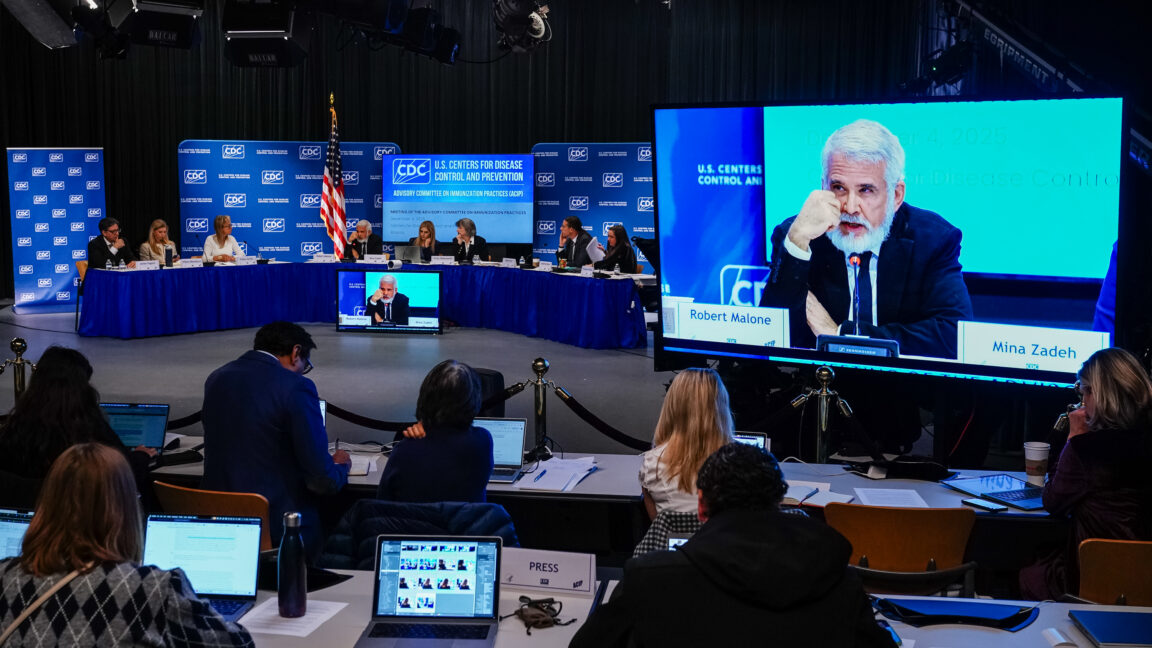
After court loss, RFK Jr. gives himself more power over CDC vaccine panel
Apr 6
Steven Spielberg Still Wants to Make a Horror Film ‘Someday’
Apr 6New Jersey has no right to ban Kalshi's prediction market, US appeals court rules
Apr 6