Suno v5.5
Foto: Product Hunt AI
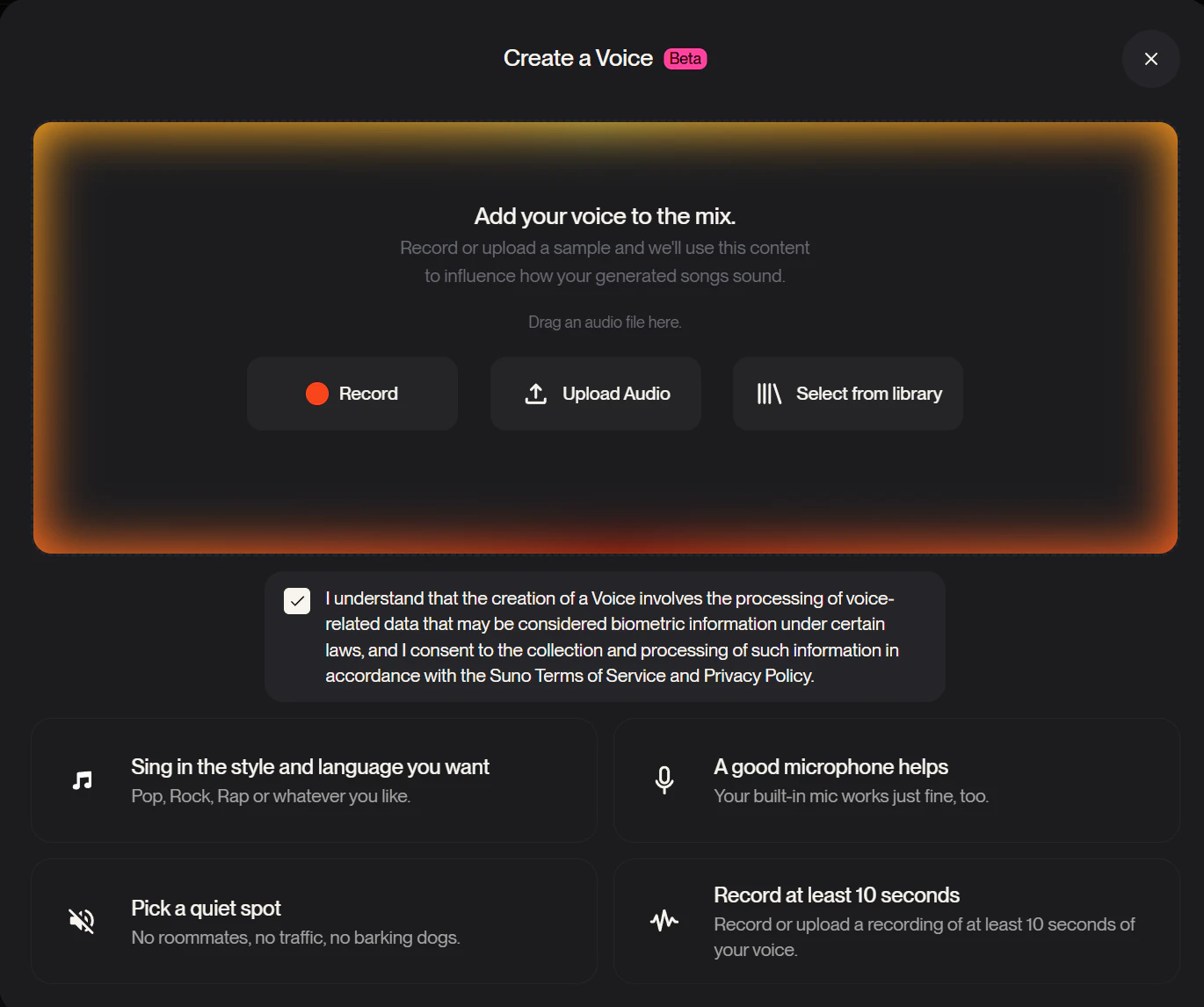
A staggering 100 percent increase in audio resolution and the breakthrough "Personas" feature are the foundations of the latest Suno v5.5 update, which redefines standards in the AI Audio industry. The platform's creators focused on a radical improvement in sound clarity, eliminating the digital artifacts that were previously the Achilles' heel of generative music. However, the key innovation is the Personas system, which allows users to maintain consistency in sound, style, and vocal timbre across different tracks. This solution addresses one of the greatest creative challenges: the lack of repeatability for a "virtual artist" when creating entire albums or coherent audio campaigns. For the global community of creators, v5.5 marks a transition from experimentation to professional production. A new lyric editing tool and an improved composition structure allow for precise planning of transitions between verses and choruses, bringing the workflow closer to that of a traditional recording studio. The practical implications are clear: marketers, podcasters, and independent musicians gain a tool capable of generating broadcast-quality content in real time. Suno v5.5 ceases to be just a generator of individual tracks, becoming a complete environment for building lasting digital musical identities.
The generative AI music market is accelerating at a pace that would make any EDM producer proud. While the industry is still getting used to the capabilities of v4 models, Suno v5.5 is appearing on the horizon. This is not just a simple incremental code fix — it is a manifestation of how deeply artificial intelligence can understand composition structure, voice timbre, and the emotional weight hidden between the notes. Suno has ceased to be a tool for creating curiosities, becoming a real threat to traditional stock libraries and a partner in the creative process for professionals.
The evolution we are observing in version v5.5 focuses primarily on eliminating the biggest pain points of its predecessors: the metallic sound of high tones and the lack of consistency in longer musical forms. The new model operates on much denser training data, which translates into sound clarity that, for the first time, can be compared to professional studio recordings. For content creators building their brands on uniqueness, Suno v5.5 opens the door to audio personalization at a level never before available.
Architecture of clean sound and audio depth
The key to understanding the power of Suno v5.5 is how the model handles instrument separation. In older versions, there was often a "clumping" phenomenon of tracks, where the vocals lost clarity when pitted against a complex rhythm section. In the latest iteration, the algorithms define the acoustic space much more precisely. The drums have weight, the bass is clearly separated from the lower registers of the guitar, and the vocals — both male and female — have gained naturalness, shedding the "jitter" characteristic of AI.
Read also


The engineers behind the project focused on improving the dynamics of the songs. Suno v5.5 no longer generates flat walls of sound. Instead, it can build tension, introduce pauses, and modulate volume in a way that mimics the intentionality of a human performer. It is these small nuances, like a vocalist's breath before entering a chorus or a building reverb, that make the line between "generated" and "written" almost invisible to the average listener.
- High-Fidelity: Significant reduction of compression artifacts in bands above 15 kHz.
- Better song structure: Intelligent management of transitions between verse and chorus (bridge).
- Multilingualism: Improved diction and accent in over 50 languages, eliminating unnatural-sounding words.
- Customization: Expanded style tags allowing for the blending of niche musical genres.
Precise control over the creative process
For the creative industry, the most important change in Suno v5.5 is increased controllability. Earlier models acted somewhat like a "black box" — you entered a prompt and hoped for luck. The new version introduces more advanced mechanisms for interpreting text prompts. If a user requests "lo-fi jazz with a melancholy saxophone and a slightly overdriven Rhodes piano," the model will not only deliver these elements but maintain their proper proportions in the mix.

It is worth noting the Stems feature, which becomes standard in version 5.5. The ability to export vocals, drums, and the rest of the instrumentation separately is a game-changer for music producers. This allows Suno v5.5 to be treated as a generator of high-quality samples that can then be processed in professional DAW (Digital Audio Workstation) software. It is a bridge connecting the world of pure AI generation with the craft of sound engineering.
Another aspect is thematic consistency. Suno v5.5 is much better at maintaining a main theme in longer compositions. The problem where a song would drastically change key or style after two minutes has been minimized. This makes it possible to create coherent soundtracks for films or podcasts that require narrative sound continuity for 5, 10, or 15 minutes.
A new definition of authorship in the AI era
The entry of Suno v5.5 into the market forces a re-discussion of what defines an artist. This technology does not replace talent, but it drastically lowers the barrier to entry into the world of professional audio production. The user becomes a curator and sound director who shapes the final work using precise commands. In a global context, this tool democratizes access to high-quality musical settings for independent game developers, YouTubers, and small film studios that do not have the budgets to license well-known tracks.
"Suno v5.5 is not just an evolution of sound, it is a paradigm shift. Music becomes a plastic medium that responds to text in real-time with a precision we could only dream of a year ago."
Analyzing the development direction of Suno v5.5, one can conclude that we are heading towards full "on-demand" audio personalization. In the near future, streaming platforms may offer songs generated dynamically to suit a specific user's mood, and the v5.5 model is the foundation for such a revolution. The biggest challenges remain legal and ethical issues related to training data, but from a technological standpoint, we are dealing with a complete product that sets standards for the entire AI audio industry.
Suno v5.5 proves that generative audio is no longer just a technological curiosity, but a powerful creative engine. The transition from the experimental phase to the production tool stage has occurred faster than the boldest analysts predicted. In a world where video content dominates social media, access to unique, high-quality music generated in seconds becomes a key competitive advantage, and Suno v5.5 is currently the most effective way to obtain it.
More from Tech




Related Articles

After court loss, RFK Jr. gives himself more power over CDC vaccine panel
Apr 6
Steven Spielberg Still Wants to Make a Horror Film ‘Someday’
Apr 6New Jersey has no right to ban Kalshi's prediction market, US appeals court rules
Apr 6