Trump Says He’ll Sign Order to Pay TSA
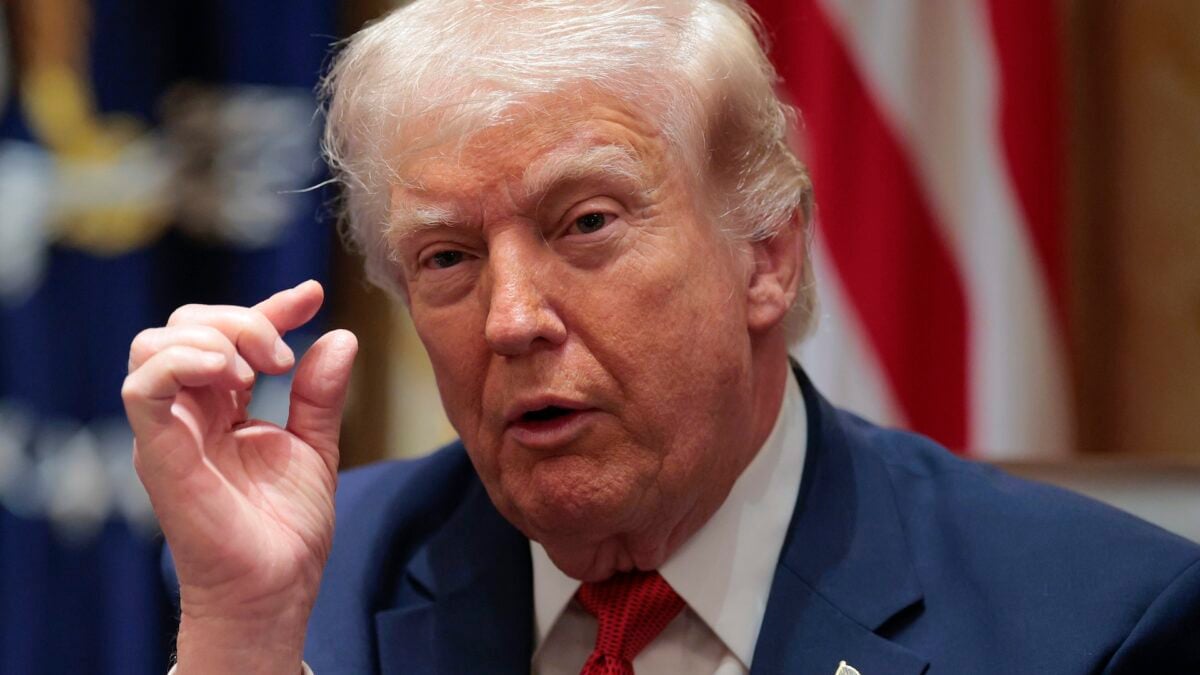
President Donald Trump gestures as he speaks during a Cabinet meeting in the Cabinet Room of the White House on March 26, 2026 in Washington, DC. © Photo by Chip Somodevilla/Getty Images
Donald Trump has announced the signing of an executive order that will instruct the Department of Homeland Security to pay outstanding wages to TSA employees. This decision comes at a critical moment for the functioning of transport infrastructure, and its technical details are currently being finalized by the administration. Republicans are considering utilizing the National Emergency Act as a legal basis, which, according to their analysis, would allow the federal government to flexibly shift previously unused funds directly to the accounts of airport security personnel. For passengers and the global travel industry, this is a signal of stabilization within the Aviation Security sector. The lack of payments for TSA employees often translates into staffing shortages, resulting in massive airport queues and the paralysis of international flight connections. Settling these financial issues is intended to prevent the mass departure of qualified officers, which directly affects the efficiency of checkpoints and security standards in global passenger traffic. The effective implementation of this funding mechanism could become a precedent in federal budget crisis management, ensuring the operational continuity of key transportation hubs regardless of internal political disputes over the budget. Unlocking these funds is not only a social issue but, above all, a guarantee of maintaining the flow of people and goods on a macro scale.
In the face of growing tension within the federal administration, President Donald Trump has declared he will take unprecedented legal steps that are intended to directly affect the financial stability of Transportation Security Administration (TSA) employees. This declaration, published in the president's characteristic, direct style, hits at the heart of the staffing problems facing American airports. "It’s not an easy thing to do, but I’m going to do it!" Trump wrote, signaling a readiness to bypass standard legislative procedures in order to pay back wages.
The decision to sign a special executive order directing the Department of Homeland Security (DHS) to disburse funds to transportation security personnel is a move of significant gravity. The TSA, a key link in the national security system, has long struggled with budgetary uncertainty, which translates into employee morale and operational efficiency at the world's largest transportation hubs. While the technical details of Trump’s proposal remain in the realm of legal analysis for now, the White House's determination suggests that the administration is looking for solutions that go beyond traditional dialogue with Congress.
The National Emergency Act mechanism as a financial skeleton key
The key to understanding the Trump administration's strategy is the potential use of the National Emergency Act. Republicans have previously suggested that triggering this act could give the federal government much greater flexibility in managing frozen or unused funds. In practice, this would mean the ability to shift capital from other federal projects directly into the accounts of TSA employees, which under normal conditions would require a long and arduous parliamentary path.
Read also

Applying the National Emergency Act in a payroll context is a controversial move, but from a technological and logistical perspective – a necessary one. Airport security systems are not just scanners and AI algorithms detecting threats, but primarily the people who operate them. A lack of financial liquidity in this professional group threatens mass resignations, which in turn could paralyze global air traffic, which relies on rigorous screening standards. The use of specific presidential powers is therefore intended to be a "safety fuse" protecting critical infrastructure from collapse.
Market analysts point out that such an approach to funding government agencies could create a new precedent in crisis management. If Donald Trump effectively uses unspent funds to plug budget holes in the DHS, we may witness a permanent shift in how modern states manage human resources in high-risk sectors. It is a signal that a technocratic approach to the budget is giving way to rapid, almost corporate-style operational decisions.
Impact on technological security infrastructure
Stabilizing the financial situation at the TSA has a direct impact on the implementation of modern technologies at airports. The agency is currently in the process of modernizing screening systems, introducing advanced CT scanners and AI-based biometric systems. Disruptions in personnel funding mean not only a lack of people at the gates but also delays in training for new digital tools, which consequently lowers the global level of security.
It is worth looking at the specifics of the proposal, which includes:
- Direct instructions to the Department of Homeland Security regarding the relocation of funds.
- The use of unspent funds, meaning money that has already been allocated to other departments but has not been spent.
- Ensuring operational continuity at airports with international hubs status.
- Minimizing the risk of so-called "sick-outs," or mass medical leaves by employees working without pay.
For the technology industry that provides solutions for the TSA, the agency's stability is crucial. Companies developing image recognition algorithms or passenger flow management systems need an efficient partner on the government side. Trump's decision, though politically and socially motivated, thus has a deep technocratic dimension – it keeps alive an ecosystem where innovation meets national security procedures.
Political and legal barriers to the executive order
Despite the president's confidence, the road to implementing this plan may be rocky. Political opponents and constitutional law experts raise the issue of the executive branch's authority to dispose of funds without explicit Congressional approval. Although the National Emergency Act provides broad room for maneuver, any attempt to shift billions of dollars for payroll purposes will likely be challenged in federal courts. This creates a state of limbo where TSA employees receive a promise, but its fulfillment depends on the outcome of legal battles.
From the perspective of the Pixelift editorial team, the key aspect here is the resilience of state systems to budgetary shocks. In the age of digitalization and automation, the human factor paradoxically gains importance as the weakest link in the supply and service chain. If Trump brings about the disbursement of funds, he will prove that in extreme situations, financial flexibility is more important than rigid legislative frameworks. This is an approach close to startup culture, where a financial "pivot" occurs in response to a sudden threat to liquidity.
Regardless of the final details of the proposal, this move redefines the role of the Department of Homeland Security within the state structure. Instead of being merely an administrator of procedures, the DHS under the new executive order becomes an active dispenser of emergency funds. For global observers, this is a lesson in crisis management in a country with the highest degree of security technology saturation. TSA stability is not just a matter of American salaries; it is the foundation of global trade and tourism liquidity, which cannot afford downtime resulting from a bureaucratic impasse.
The Trump administration's determination to use extraordinary legal measures indicates the end of an era in which security agency budgets were an inviolable monolith. The introduction of a mechanism based on unspent funds could become a standard tool in the hands of future leaders wishing to respond quickly to infrastructure crises. In a world where technology evolves faster than the law, such financial "shortcuts" may become the only way to maintain the pace of modernizing critical systems.
More from Tech




Related Articles
After court loss, RFK Jr. gives himself more power over CDC vaccine panel
Apr 6
Steven Spielberg Still Wants to Make a Horror Film ‘Someday’
Apr 6New Jersey has no right to ban Kalshi's prediction market, US appeals court rules
Apr 6