Anthropic’s Claude Code and Cowork can control your computer

Foto: The Verge AI
Claude can now take full control of your computer to independently perform complex tasks, even when you are away from your desk. Anthropic has introduced this groundbreaking feature as part of a research preview for the Claude Code and Cowork tools, dedicated to programmers and professionals. The system can autonomously open files, operate a browser, and even run developer tools by simulating mouse movements, clicks, and keyboard input. The update is currently available exclusively to macOS users with a Claude Pro or Max subscription. The functionality is based on the Claude 3.5 Sonnet model and works best with the new Dispatch solution, which allows users to assign tasks to a desktop computer directly from the mobile app. While the AI prioritizes direct connectors to services such as Slack or Google Workspace, in their absence, it can "look" at the screen and navigate the interface of any application. For users, this marks the beginning of a new era of AI agents who, instead of just generating text, become digital executive assistants. Although Anthropic maintains that explicit consent must be granted for the bot to act each time, this technology brings significant challenges regarding security and privacy. It is a clear signal that the development of artificial intelligence is shifting from an advisory phase toward full, autonomous integration with operating systems.
The line between an AI assistant and an autonomous agent has just blurred. Anthropic has announced the launch of a breakthrough update for its Claude Code and Cowork tools, which allows artificial intelligence to directly take control of the user's computer. This is no longer just about generating text or analyzing code inside a closed chat window – it is technology that can independently move the cursor, click buttons, and navigate the operating system to perform assigned tasks.
The new feature, released as a research preview, is aimed at Claude Pro and Max plan subscribers. Although Anthropic experimented with the autonomous capabilities of the Claude 3.5 Sonnet model as early as 2024, the current implementation brings these functions directly into the daily workflow of developers and office workers. The system is designed to work with no setup required, which is intended to be a key advantage over complex competitor solutions.
Autonomy under full user control
The operating mechanism of the new agents is based on deep integration with the graphical interface. Claude can automatically open files, use web browsers, and even run advanced developer tools. Importantly, the system can work even when the user is away from their workstation. However, Anthropic places a huge emphasis on safety and transparency: Claude will ask for explicit permission every time before it begins exploring the system, scrolling pages, or clicking on interface elements.
Read also
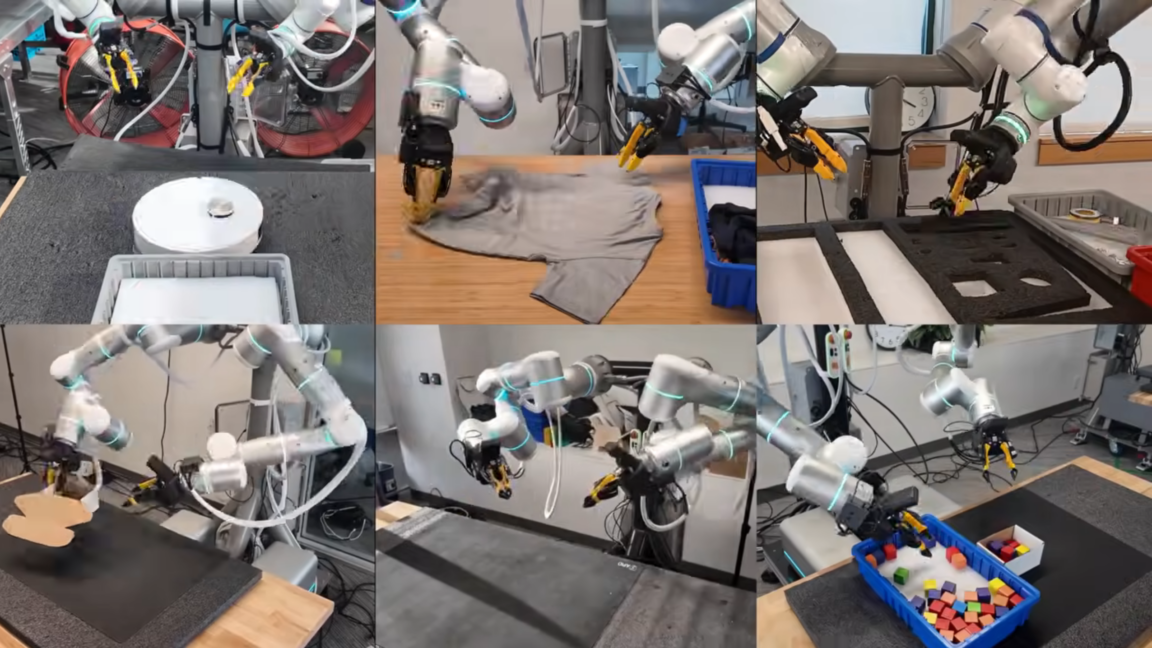


Technically, the priority for the AI is dedicated connectors to popular services such as Slack or Google Workspace. However, if a given application does not have direct integration, Claude switches to direct control mode. In this model, the AI analyzes the image from the display and simulates physical interactions using a virtual mouse and keyboard. This is a brutally effective approach, although – as the manufacturer admits – slower than using an API and sometimes requiring a second attempt for more complex operations.
Apple ecosystem at the forefront
In the current testing phase, the computer control feature is limited exclusively to macOS devices. To use this new feature, the user must have the Claude desktop application installed on a supported Apple computer, which must then be paired with the chatbot's mobile app. This configuration allows for remote task assignment and monitoring of the AI's progress from anywhere in the world.
A key piece of this puzzle is the Dispatch feature. This is a cross-device solution that allows tasks to be delegated to the desktop application directly from a phone. Thanks to this, a developer can task Claude with preparing a test environment or fixing a bug in the code while commuting home, and find the completed results upon opening their laptop. This is a significant step toward the vision of a "digital worker" who operates using the same tools as a human, but with the speed and precision of a machine.

- Availability: Research preview for Claude Pro and Max subscribers.
- System requirements: macOS only (as of March 2026).
- Main applications: Automation of dev tools, file management, browser operation.
- Security: Explicit permission required for each system interaction session.
Challenges and real performance of agents
Despite the impressive capabilities, Anthropic maintains common sense in its marketing communication. The company openly admits that this technology is still in an early stage of development. "We are releasing it early because we want to learn where it works and where it fails," the official statement reads. Speed of operation and flawlessness in multi-step processes, which require constant attention and interpretation of changing on-screen context from the AI model, remain challenges.
It is also worth noting that controlling a computer "through the screen" is a much more resource-intensive process than traditional text queries. Claude must constantly process the visual stream, which generates latency. Nevertheless, for repetitive and tedious tasks such as filling out forms, migrating data between incompatible applications, or initial configuration of programming projects, Claude can become an indispensable support, eliminating "dead time" in creative work.
The introduction of autonomous agents by Anthropic is a clear signal to the industry: the AI arms race has moved from the level of "what the model knows" to the level of "what the model can do." While other giants are still refining multimodality within the chat window, Claude is stepping outside, taking control of the operating system. If the macOS tests are successful, we can expect a rapid expansion of these capabilities to other platforms, ultimately changing the way we define human-computer interaction. The era in which AI asks us for permission to click a "Send" button has just begun.