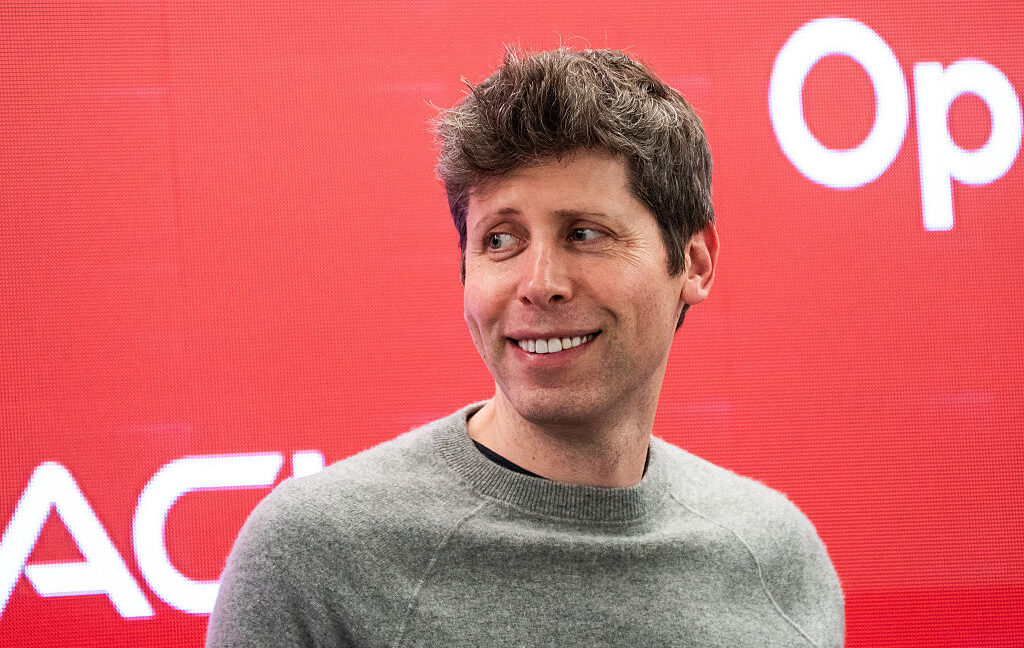
ChatGPT’s ‘Adult Mode’ Could Spark a New Era of Intimate Surveillance

Foto: Wired AI
OpenAI is working on an "Adult Mode" for ChatGPT that would allow more candid conversations on adult topics. However, experts warn that this feature could open the door to a new wave of intimate surveillance. The problem lies in the fact that data from such conversations could be used for user profiling, manipulation, or blackmail. Technology companies traditionally collect data from user interactions to improve algorithms and personalize advertisements. If ChatGPT processes sensitive personal information, the risk of misuse increases dramatically. Potential threats include data breaches, access by third parties, or use of information for manipulative purposes. Experts point to the lack of transparency in OpenAI's privacy policy and how long data is retained. Users should know exactly what happens to their intimate dialogue. Before OpenAI launches such a mode, strong data security guarantees and clear legal regulations protecting privacy are necessary. Without this, the feature could become a tool for mass surveillance rather than a tool for liberation.
OpenAI plans to introduce an adult mode to ChatGPT that will allow users to engage in conversations of a sexual nature. This is no longer speculation or a theoretical threat — it is a concrete direction of development that is already raising alarms among experts dealing with human-AI interaction. According to researchers focused on AI safety, such functionality could open an entirely new era of surveillance — not in the traditional sense, but in a way far more intimate and privacy-threatening than anything we have seen on the internet so far.
The problem is not that people will talk to AI about sex — that is natural and inevitable. The issue is what happens to the data from these conversations, who has access to it, and how it can be used. When a user engages in an intimate conversation with a chatbot, they generate extremely detailed data about their preferences, fantasies, inhibitions, and fears. This information constitutes a type of digital fingerprint more precise than any behavioral data collected so far by Big Tech.
Anatomy of intimate profiling
When a user conducts a sexual-romantic conversation with ChatGPT, they generate data that is incomparably richer in psychological context than traditional tracking data. Browser history tells what movies you watch; ChatGPT history could tell what your deep desires, fears, and fantasies are. This is the difference between knowing that someone is interested in pornography and knowing exactly what aspects of sexuality fascinate them, what they reject, and what terrifies them.
Read also


Data security experts point out that intimate conversations with AI can be used to build psychological profiles of piercing accuracy. Algorithms can identify not only sexual preferences, but also emotional weak points, susceptibility to manipulation, potential mental health issues, and personal challenges. For advertising companies, insurance firms, or even investment companies, such data would be invaluable — more valuable than many traditional metrics.
Add to this the fact that OpenAI, like every major tech corporation, stores training data and can use it to improve its models. This means that intimate conversations can be analyzed by teams of engineers, possibly even fed into machine learning systems that will be trained on actual human fantasies and desires. Even if the data is anonymized, de-anonymization techniques are becoming increasingly sophisticated.
Data ecosystem as commercial weapon
History shows that every type of data that gets collected ultimately gets sold, shared, or leaked. Cambridge Analytica taught us that even indirect behavioral data can be used for mass-scale political manipulation. Data from intimate conversations with AI would be a far more powerful tool.
Imagine a scenario where data from ChatGPT Adult Mode reaches a data broker — whether through hacking, security negligence, or even official sale (of course, anonymized). An insurance company could use this information to raise premiums for people with certain sexual preferences. An employer could find out things that could affect hiring decisions. A politician could identify and target specific demographic groups based on their intimate preferences.
OpenAI claims to protect user privacy, but the history of tech corporations shows that privacy protection is always secondary to data monetization. Facebook promised privacy. Google promised privacy. Amazon promised privacy. All of them ultimately found ways to use user data in ways users never imagined at the beginning.
Power asymmetry between user and corporation
When a user talks to ChatGPT Adult Mode, there is a fundamental power asymmetry. The user believes they are talking to something that is discreet and impartial — a machine without intentions. But this machine is owned by OpenAI, a corporation with specific financial interests. OpenAI is not a neutral tool — it is a business that must generate revenue for its investors.
The user has no real control over what happens to their data. Terms of service can be changed unilaterally. Privacy policies can change. Algorithms can be updated in ways that change how data is processed. And the user? The user simply accepts the terms and relies on the goodwill of a corporation that has a financial incentive to maximize the value of their data.
Polish GDPR regulations give users certain rights, but they are theoretical. In practice, when someone wants to delete their data from ChatGPT, they must trust that it has been actually deleted. There is no way to verify. Backups can be stored on servers. Data can already be embedded in machine learning models in a way that makes deletion impossible without rebuilding the entire system.
Connection with other data — super-profiling
The real threat emerges when data from ChatGPT Adult Mode is combined with other data that OpenAI or its partners already possess. OpenAI has access to information about what questions users ask ChatGPT about work, health, finances, and relationships. When we add intimate sexual conversations to this, we get a complete psychological picture of a person.
Microsoft, which has invested billions in OpenAI and integrates ChatGPT into its products, has access to even more data. It knows Bing browsing history, search history, Outlook data, OneDrive data. When all of this is combined with intimate profiling from ChatGPT, a picture of a person emerges that is extraordinarily detailed and susceptible to manipulation.
What experts call "super-profiling" is the combination of multiple data sources to create a psychological model of an individual that is more accurate than any psychological test. Such super-profiles can be used for micro-targeting ads, but also for identifying people susceptible to radicalization, fraud, blackmail, or political manipulation.
Precedent for other platforms
If OpenAI introduces Adult Mode, it will be a precedent for other platforms. Meta, Google, Amazon — all will be watching the results. If Adult Mode proves popular and generates revenue, other tech corporations will want to enter this market. We will have a situation where every major AI platform will be offering intimate conversations with chatbots, and each of them will be collecting and storing data about our deepest desires.
This is not a theoretical threat. Already, applications exist that offer "AI girlfriends" — chatbots designed to simulate romantic and sexual relationships. These applications collect enormous amounts of data. Some of them come from countries with weak privacy protection standards. Data can be sold to third parties without user consent.
OpenAI, thanks to its position as a leader in the AI industry, has a chance to set standards. If it does so responsibly, it can create a precedent for the entire industry. However, if it does so to maximize revenue at the expense of user privacy, it will be a signal to all other companies that intimate user data is fair game.
Lack of real regulatory solutions
Poland, like most countries, does not have sufficient regulations concerning AI and privacy. GDPR is an old regulation, written before AI became so powerful. EU regulations concerning AI are still in the creation phase and will likely be too late to prevent the worst violations.
Meanwhile, tech corporations move faster than regulations. OpenAI can introduce Adult Mode, collect data, and before any regulator can do anything about it, the data will already be collected, stored, and probably sold. Regulators always act in reactive mode — they wait for something to go wrong and then try to fix it. But in the case of intimate data, the damage will already be done.
Poland could be a leader in protecting the privacy of AI users, but this will require political courage. It will require regulations that are both protective of users but not overly restrictive of innovation. So far, Poland has not shown such courage.
What can users do?
Individual options are limited, but not nonexistent. Users can simply not use Adult Mode. They can be aware of what data they generate while using ChatGPT and other AI platforms. They can demand transparency from OpenAI and other companies about how they store and use data.
Polish organizations focused on privacy protection should monitor this development and be ready to act if violations occur. Users should support such organizations and be vocal about their concerns.
But the reality is that without significant regulatory changes and internal changes in OpenAI's corporate culture, Adult Mode will be another milestone in building a system of totalitarian surveillance based on intimate data. History shows that tech corporations do not voluntarily limit data collection. They do so only when forced to by regulations or public pressure.