DoorDash launches a new ‘Tasks’ app that pays couriers to submit videos to train AI

Pavlo Gonchar/SOPA Images/LightRocket / Getty Images
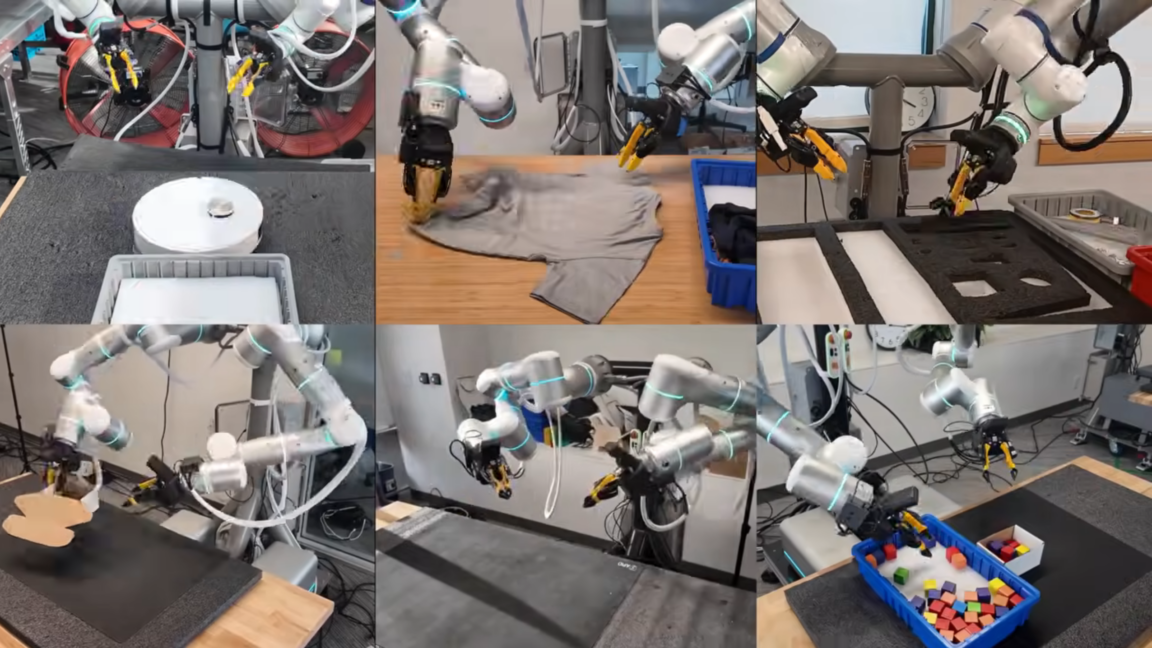
DoorDash has launched a new "Tasks" app that pays couriers for recording videos used to train AI and robotics systems. Couriers can earn money by performing tasks such as filming everyday activities or recording themselves speaking in another language. The platform sets compensation in advance, taking into account the complexity and effort required. The collected data is intended to help artificial intelligence and robots better understand the physical world. This innovative approach allows DoorDash to cheaply monetize its courier network outside of order delivery times. For workers in the gig economy, it represents an additional earning opportunity, though it raises questions about data exploitation and working conditions. The initiative demonstrates how major tech corporations increasingly rely on crowdsourcing data to train AI models, rather than investing in more expensive information collection methods.
DoorDash has just opened a new front in the war for AI training data. The logistics platform, which handles millions of orders annually in the United States, has launched a dedicated "Tasks" application that pays couriers for performing seemingly simple tasks — filming everyday activities, recording statements in foreign languages, or documenting interactions with their surroundings. This is not ordinary gig-economy work. This is systematic data collection that will fuel AI models and autonomous robots that may, in a few years, compete with these same couriers for jobs.
DoorDash's initiative reveals profound transformations in the delivery industry and more broadly — across the entire digital economy. As OpenAI, Google, and Anthropic compete for access to high-quality training data, logistics companies have realized they possess something valuable: employees who move through the physical world, observe it, and can document it. Instead of investing in expensive data collection teams, DoorDash proposed a transaction: we pay you for recordings, you earn extra money. Everyone is happy. Except the reality is more complicated — and darker.
This is a breakthrough moment that shows how corporations exploit gig-economy workers to finance their own transformation. And how these workers, unknowingly, may be laying the groundwork for their own automation.
Read also

How Tasks Works — From Theory to Practice
The Tasks application is architecturally simple but conceptually advanced. Couriers can browse available tasks that require video or audio recording. Each task has a clearly stated compensation rate — DoorDash promises price transparency from the start. Tasks may include filming how a package is unpacked, how one walks through a door, how one says a specific phrase in Mandarin or Arabic. All of this is training material for computer vision models and speech recognition systems.
Key is that compensation is "based on effort and task complexity," as DoorDash writes. This means recording a fifteen-second video might generate different income than recording a five-minute conversation. The platform also has quality control mechanisms — DoorDash employees will verify submitted materials to ensure they meet requirements. This resembles Amazon's Mechanical Turk model, but instead of clicking checkboxes, we have full-body and voice engagement.
For a courier working for DoorDash, especially one waiting between orders, Tasks is potentially an additional income source. Instead of idle time, they can earn a few dollars by recording. But for DoorDash it is something completely different — it is scalable infrastructure for collecting billions of data points about how people move, speak, and interact with their surroundings. Data that is invaluable to companies working on autonomous robotics and advanced AI systems.
Why DoorDash Needs This Data Right Now
DoorDash is not hiding its ambitions in robotics. The company is investing in autonomous delivery robots and drones that could replace people in last-mile delivery. But before a robot can independently carry a package up to the third floor, it must learn to recognize hundreds of real-world scenarios. It must know what an opening door looks like, how a person descends stairs, what happens when it rains, when people pass by, when a dog is present.
Computer vision systems that power autonomous robots are hungry for data. OpenAI and other AI labs collect terabytes of video from the internet, but data from the logistics world — actual deliveries in real conditions — is far more valuable. DoorDash couriers work in thousands of different cities, climates, building architectures. Every recording they submit is a data point that helps the model better understand the physical world.
It is also worth noting the context of competition. Amazon, which also invests in delivery robotics, has a huge advantage: millions of employees in warehouses and logistics centers that it can encourage to collect data. DoorDash, as a pure delivery company, must be more creative. Tasks is the answer — instead of hiring people to collect data, DoorDash mobilizes its existing workforce.
Gig-Economy as a Source of Data for AI
Tasks is not an isolated experiment. It is part of a broader trend in which gig-economy companies discover that their workers are not only a source of labor but also a source of data. Uber has access to billions of GPS data points from rides. Instacart knows how people move through stores. Lyft collects data on road conditions. Now DoorDash adds a layer — direct video and audio recordings that can be used to train models.
This changes the nature of the relationship between worker and platform. Traditionally, a gig-economy delivery worker sells their labor — time and physical effort. Now they also sell biometric data and recordings of their voice. This data can be stored, analyzed, sold, or used for purposes the worker does not fully understand.
For Polish couriers working for delivery platforms, this is particularly relevant. Poland is one of the countries where the gig-economy is growing rapidly. If DoorDash or other platforms offer similar programs in Poland, couriers will face a choice: earn extra money on recordings, or protect their privacy and biometric data. This is not a simple choice for someone earning 30-40 zloty per hour.
Price Transparency Versus Data Opacity
DoorDash emphasizes that compensation is "shown upfront" — couriers know exactly how much they will earn for each task before they accept it. This is indeed better than many gig-economy platforms, where compensation is mysterious or changes dynamically. But this price transparency masks a fundamental lack of transparency regarding data.
Couriers do not know how their recordings will be used. Will they be used only to train DoorDash's delivery robots? Will they be sold to third parties? Will they be stored forever? For how long? Can they request deletion of their data? DoorDash's privacy policy regarding Tasks is available, but it is written in such a way that most workers will not read it — and even if they do, it will be hard to understand the implications.
Compare this to what happens in Europe. EU GDPR regulations require explicit consent for biometric data processing. An employee must know what will happen to their data. In the United States, where DoorDash is launching Tasks, such requirements do not exist. This is one of the biggest differences between European and American regulations — Europe treats biometric data as particularly sensitive, while the US leaves it to business.
Automation as Endgame
Here emerges a dangerous irony that should concern every courier considering participation in Tasks. The data they collect will be directly used to train systems that may replace them. DoorDash does not hide this — the company openly discusses its plans regarding autonomous robots. Every recording of a courier showing how they pass through a door, how they approach a house, how they deal with obstacles, is a lesson for a robot.
This is a classic gig-economy dilemma: the worker is usually in poor financial condition and must earn every dollar. By offering extra money for recordings, DoorDash exploits this desperation. The worker thinks: "I'll earn 50 dollars today on recordings." But in reality, for those 50 dollars, they are contributing to a system that may throw them out of work in five years.
This is not conspiracy theory. Logistics companies have been talking about automating last-mile delivery for years. Amazon is testing Scout delivery robots. Starship Technologies has delivery drones. Nuro has autonomous delivery vehicles. All these companies need training data. Tasks is an elegant way to obtain it — instead of hiring a team to collect data, DoorDash pays workers who are already working for the company.
Comparison with Other Data Collection Models
To understand how innovative (and problematic) Tasks is, it is worth comparing it to other ways companies collect training data. OpenAI uses data publicly available on the internet — articles, books, websites. Google collects data from user searches. Meta collects data from social media. All these companies receive data as part of normal use of their services — the user is not directly paid for each data point.
On the other hand, Amazon's Mechanical Turk pays workers to perform small tasks — describing photos, answering questions, rating content. But these tasks are abstract and do not engage the worker's biometrics. Tasks is a hybrid — it combines paying for work (like Mechanical Turk) with collecting biometric data (like social media).
There are also applications like Foap or Shutterstock Contributor that pay photographers for their photos. But there photographers know they are selling photos — it is clear. In Tasks, couriers may not fully understand that they are selling training data for AI that will replace them.
Implications for the Future of Work
Tasks is a signal of where the future of work is heading. Companies will increasingly expect workers not only to perform work but also to provide data to train systems that may replace them. This may become the norm in the gig-economy — instead of just delivery, the worker will also "deliver data".
For workers this means the need to understand what happens to their data. For regulators it means the need to create legal frameworks that protect workers from data exploitation. For companies like DoorDash it means they can train their AI systems and robots at a fraction of the cost of traditional data collection methods.
The question is: will gig-economy workers have a choice? Will Tasks be optional or will it become a requirement to remain on the platform? Will compensation for recordings be fair relative to the value of the data? These questions will not have answers until they are asked — and until workers, especially in countries like Poland, have the power to ask them.