GPT‑5.4 mini and nano

Foto: Product Hunt AI
OpenAI has presented two new versions of the GPT-5 model: mini and nano. These lighter variants are intended to address growing demand for more accessible and efficient AI solutions, particularly for applications requiring fewer computational resources. The GPT-5 mini model offers significantly better performance than previous generations while reducing resource consumption, which translates to lower costs for developers. The nano version is the smallest variant, designed for applications running on mobile and edge devices, where speed and energy efficiency are crucial. For practical users, this means access to more advanced AI capabilities in mobile applications, chatbots, and tools operating in resource-constrained environments. Expanding the model portfolio allows developers to better tailor solutions to specific needs, balancing computational power against operational costs. This is a strategic move by OpenAI toward democratizing access to AI technology.
OpenAI has just announced the availability of GPT-5.4 mini and GPT-5.4 nano — two new variants of its flagship model that fundamentally change the landscape of access to advanced artificial intelligence. This is not a routine update: it is a strategic move that makes room in the ecosystem for everyone — from individual developers to corporations with billion-dollar budgets. While the world waited for GPT-5 in full glory, OpenAI chose a more pragmatic approach: instead of one powerful model, they deliver three variants, each optimized for a different market segment.
For Polish creators and startups, this means something concrete — the ability to build advanced AI applications without having to negotiate corporate contracts or hire an entire team of ML engineers. The history of technology shows that miniaturization always opens new markets. When Apple miniaturized the computer, the PC was born. When smartphones became cheap, the world changed. Now AI is undergoing a similar transformation.
Three-tier architecture: from nano to full potential
OpenAI has abandoned the traditional "one model for all" approach. Instead, it presents three separate variants of GPT-5.4, each with different architecture and capabilities. GPT-5.4 nano is the smallest variant — a model designed to run on edge devices and in resource-constrained environments. It can run on smartphones, IoT devices, and even in a web browser without needing to connect to OpenAI servers. This changes the game for mobile applications requiring fast, private text analysis.
Read also


GPT-5.4 mini is the midpoint — a reasonably sized model that offers capabilities close to the full GPT-5.4, but with significantly lower computational requirements and costs. It can run on standard servers and graphics cards available on the market. This is the variant for startups, creative agencies, and tech companies that want to scale their operations without excessive infrastructure spending.
The third variant is the full GPT-5.4 — a model with all the power, designed for organizations requiring the highest performance and ability to handle the most complex tasks. The difference in performance between mini and the full variant is significant, but not as drastic as it might seem. OpenAI has optimized the architecture so that nano and mini retain key abilities in context understanding, code generation, and complex problem analysis — they simply do it more slowly and with less accuracy in edge cases.
- GPT-5.4 nano: model size under 1 billion parameters, runs locally, latency under 100ms, ideal for real-time mobile applications
- GPT-5.4 mini: approximately 10 billion parameters, requires GPU, latency 200-500ms, cost approximately 80% cheaper than the full variant
- GPT-5.4 (full): over 100 billion parameters, highest accuracy, latency 500ms-2s, full access to advanced capabilities
Economic implications for the AI applications market
Price is the issue that changes everything in technology. OpenAI is introducing a pricing model where GPT-5.4 mini costs approximately 15% of the full variant price, and nano is practically free for local deployment. This means that a startup with a budget of 10,000 zlotys per year can now build an AI application that would have been available only to companies with budgets measured in millions.
For the Polish startup ecosystem, this is a paradigm shift. Previously, smaller providers' models or open-source solutions were most often chosen because OpenAI costs were too high. Now the economic calculation has changed. Even small creative agencies can integrate GPT-5.4 mini into their tools without worrying about ruinous API costs. This opens the door to an entire class of applications that were previously economically unfeasible.
Competition is reacting, but cannot match the speed. Anthropic Claude is excellent, but more expensive. Meta Llama is open-source, but requires independent deployment and optimization. Google Gemini offers similar options, but the OpenAI ecosystem has incomparable developer support. OpenAI, offering models in three price variants, practically monopolizes the space for every budget level.
Technical capabilities: where nano and mini fall short, but not drastically
The natural question is: what do we lose by choosing a smaller model? The answer is more nuanced than it might seem. GPT-5.4 nano performs excellently with classification tasks, information extraction, simple text generation, and translations. Where it falters is in complex multi-step reasoning, writing code for complicated algorithms, and analyzing very subtle nuances of natural language.
In practice, this means nano is perfect for customer service chatbot applications, mobile assistants, content categorization tools, and simple recommendation systems. Where it falls short is in generating complex business strategies, debugging advanced code, or analyzing academic articles from fields requiring deep specialized knowledge.
GPT-5.4 mini occupies a middle position that can be compared to GPT-3.5 from a few years ago, but with better context understanding. It handles most real-world business applications. It can write code for standard applications, generate marketing content, analyze business documents, and handle complicated conversations. Where mini begins to falter is in very specialized tasks requiring the highest precision — for example, generating code for safety-critical systems.
OpenAI has published benchmarks showing that mini achieves approximately 85-90% of the full GPT-5.4 performance on standard tests. This is surprisingly good. In practice, for most business applications, the difference is almost imperceptible, as long as you don't venture into very specialized territory.
Integration with the ecosystem: APIs, plugins, and tools
OpenAI is not just releasing models — it is building an ecosystem around them. All three variants are available through the standard API, which means code you write for nano will work with mini and the full GPT-5.4 with minimal changes. This is brilliant from an engineer's perspective: you can prototype on nano, scale to mini, and if needed, move to the full variant without rewriting the entire application.
For Polish developers, the key is that OpenAI maintains excellent documentation and community support. You won't be alone with integration problems. There is a huge community of programmers already experimenting with these models, sharing code on GitHub, and offering advice on Discord.
Plugins and extensions for popular tools (Zapier, Make, n8n) will support all three variants. This means that even non-technical users will be able to build automations without writing code. For companies that want AI but don't have a developer team, this is a game-changer.
Security and privacy: the nano model changes the game
One of the biggest concerns with AI is data privacy. When you send data to OpenAI's API, it goes to servers in the United States. For many organizations, particularly those processing personal data, this is a problem. GPT-5.4 nano, running locally, completely solves this problem. Data never leaves the device or private server.
This opens the door to applications in healthcare, law, finance, and other regulated sectors where privacy is critical. Poland, with GDPR and other regulations, will be particularly interested in this variant. Now you can build AI applications for Polish patients, legal clients, or investors without worrying about data transfer abroad.
OpenAI has also implemented new security standards for the mini variant. The model undergoes additional safety training to reduce the risk of generating harmful content. In practice, this means mini is more "safe" than the full variant — less willing to generate something potentially problematic, even if you ask it directly.
Real-world use cases: from startups to enterprise
Imagine a Polish digital agency hired to create a chatbot for e-commerce. Previously, they would have had to choose between expensive GPT-4 API or a less advanced open-source model. Now they can use GPT-5.4 mini — get advanced AI for a fraction of the price, and the chatbot will be better than anything they could build open-source. The project margin immediately improves.
Or take a Polish startup building a mobile medical assistance application for patients. They need to be offline-first because users might be in rural areas without good connectivity. GPT-5.4 nano is ideal — the model runs on the phone, analyzes symptoms, suggests when to seek help, all without sending data to the cloud. This is an application that was previously practically impossible to build.
In the enterprise segment, large Polish companies can now consider AI-first strategies that were previously too expensive. A bank can integrate mini into its customer service system, an insurer can analyze claims, a manufacturer can optimize the supply chain — all using GPT-5.4 at a price that makes business sense.
Implementation challenges and limitations you need to know
There is no magic here. GPT-5.4 nano, running locally, requires a device with sufficient computational power. An average 2024 smartphone will handle it, but older devices may struggle. For IoT devices with very limited resources, even nano may be too large. OpenAI is working on this, but it is a physical limitation.
GPT-5.4 mini requires a GPU to run efficiently. You can run it on a CPU, but it will be very slow. If you are building a startup, you need to plan for infrastructure costs — servers with graphics cards are not cheap. For large scale, costs can quickly add up.
Another challenge is latency. Nano and mini are slower than the full variant. If you are building an application where every millisecond counts (for example, high-frequency trading), mini may be too slow. But for most business applications, where a user waits a few seconds for a response, this is not a problem.
The final limitation is model updates. OpenAI will update all three variants, but not always simultaneously. If you use nano and a critical security patch appears for the full variant, you may have a delay before receiving that patch. This is something to remember for security-critical applications.
Perspective for the Polish technology market
Poland has a strong ecosystem of technology startups and a growing AI scene. The release of GPT-5.4 mini and nano fundamentally changes the economics for Polish companies. A startup in Warsaw can now compete with companies from Silicon Valley in the AI field because it has access to the same tool at a similar price. The difference will be in creativity and implementation, not in access to technology.
For Polish universities and research centers, this is also a change. Students can experiment with the latest AI models without needing access to supercomputers. This will accelerate innovation and education.
The only real threat is that OpenAI still dominates the market. For Poland's long-term technological independence, it would be better if there were competitive European alternatives. But for today, GPT-5.4 mini and nano are tools that everyone should have in their toolkit.
More from Tech


Related Articles
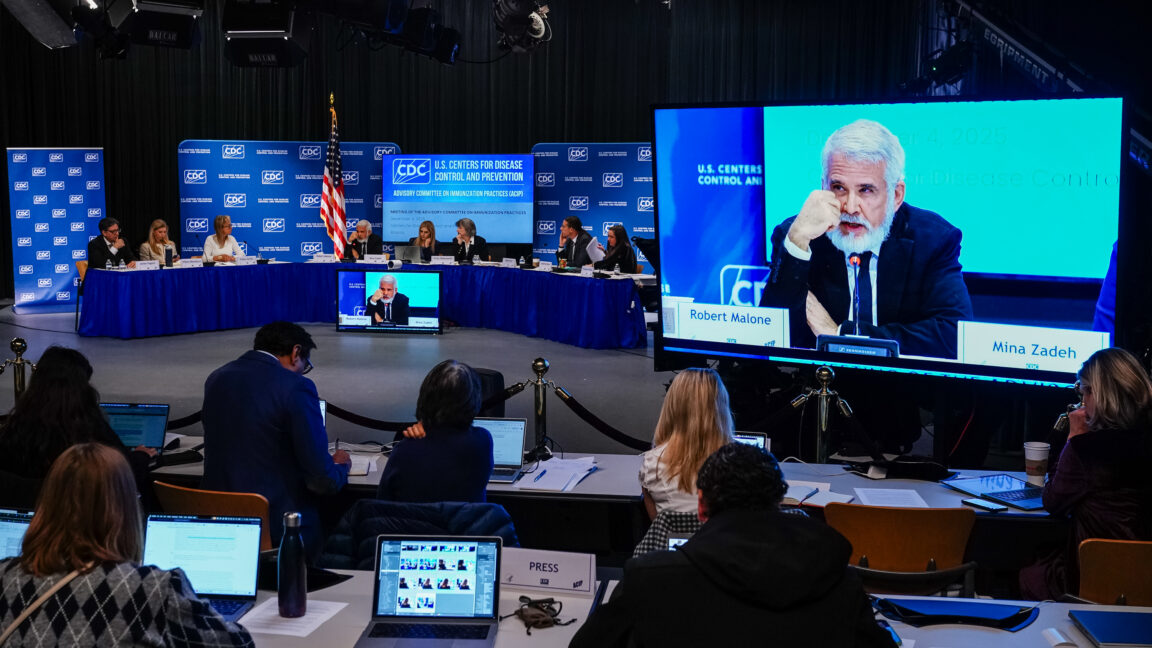
After court loss, RFK Jr. gives himself more power over CDC vaccine panel
Apr 6
Steven Spielberg Still Wants to Make a Horror Film ‘Someday’
Apr 6New Jersey has no right to ban Kalshi's prediction market, US appeals court rules
Apr 6