Hargreaves Lansdown says IT issues which affected thousands are over
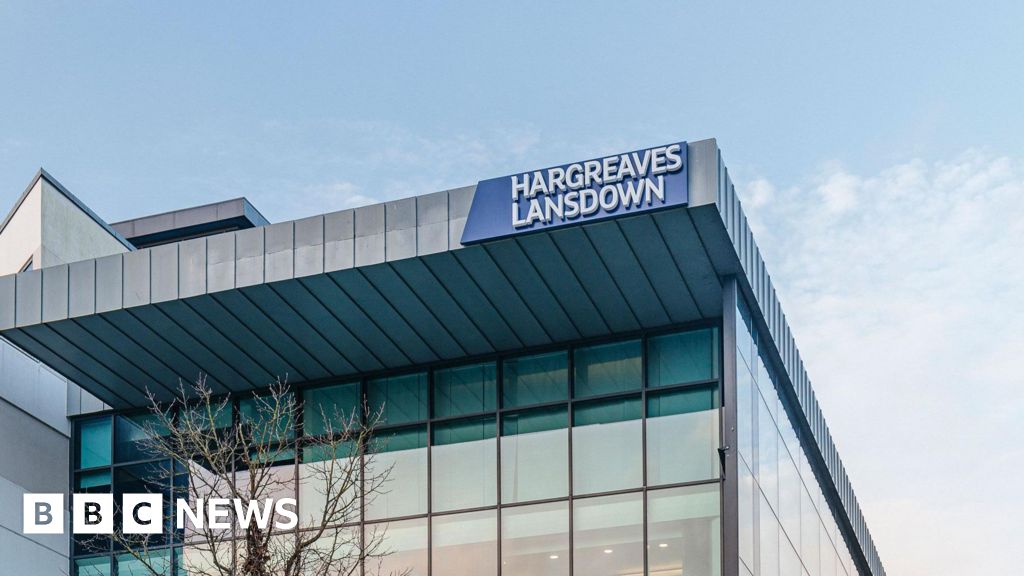
Foto: BBC Tech
Two million private investors have regained access to their funds following a major technical failure at Hargreaves Lansdown, the UK's largest direct-to-consumer investment platform. Login issues affecting both the website and mobile app, which began on Thursday evening, paralyzed the ability to trade stocks and manage ISA accounts at a critical moment ahead of the financial year-end. Although the company officially confirmed the restoration of full functionality and assured that client data and assets are secure, the incident sparked a wave of outrage among users. For the global community of investors utilizing Fintech solutions, this situation serves as a painful reminder of the risks associated with the digitalization of financial services. Lack of access to portfolios during periods of high market volatility, driven by factors such as geopolitical tensions, translates into tangible financial losses—some clients have estimated lost profits at thousands of pounds. Despite Hargreaves Lansdown ruling out a cyberattack, users are increasingly demanding compensation and showing less tolerance for technical downtime. This event forces investment platform providers to revise their Disaster Recovery procedures, as in the world of algorithmic trading and instantaneous transactions, every minute of system unavailability undermines the foundation of trust in a financial institution.
In a world dominated by trading algorithms and instant order execution, every minute of investment platform downtime is counted in millions of dollars of lost opportunities. When Hargreaves Lansdown, a giant managing assets for nearly two million clients, experienced a major technical failure, the market received a brutal reminder of the fragility of digital financial infrastructure. Although the company has already announced the restoration of full functionality, the scale of user frustration and potential financial losses call into question the operational resilience of the largest players in the FinTech sector.
The problem affected both the mobile application and the website, effectively cutting investors off from their portfolios during a period of high market volatility. Official company statements reassure that client data and assets remained secure, while ruling out cyberattacks or data leaks. However, for traders operating on leveraged instruments or short-term positions, lack of account access for over a dozen hours is as severe as theft of funds — as it prevents the realization of profits or, worse, effective loss cutting.
Architecture under pressure of time and expectations
The Hargreaves Lansdown outage is not an isolated incident, but part of a broader trend of legacy systems destabilizing when faced with modern network traffic. The platform, being the largest direct-to-consumer entity in its category, must handle an enormous load, especially during financial year-end periods or rapid stock market movements. Technical issues that began in the evening and lasted through much of the following day exposed gaps in system redundancy, which should guarantee 99.9% availability.
Read also


Users such as those described in reports, operating on volatile energy sector assets, were trapped in positions they could close neither by phone nor digitally. This raises questions about the efficiency of disaster recovery plans. In the era of cloud computing and microservices, the total paralysis of both access channels (web and mobile) suggests a deeper error in the backend layer or a critical point of contact with databases, which for a company of such reputation is an error difficult to forgive.
- Lack of transparency: Customers complained about vague messages regarding "work continuing through the night," which heightened anxiety in the face of a tense geopolitical situation.
- Market risk: The inability to trade during periods of high volatility directly translates into real financial losses for users.
- Opportunity costs: Investors lose not only capital but also trust, which is the most difficult loss to recover in the financial sector.
Financial consequences of digital paralysis
When systems fail, the issue of liability comes to the fore. Individual investors are increasingly demanding compensation for "lost profits" — a term legally difficult to enforce but reputationally lethal. The Hargreaves Lansdown case shows that traditional financial institutions undergoing digital transformation often struggle with technical debt that does not keep pace with a dynamically growing user base. Client estimates of thousands of pounds in "missed" profits are just the tip of the iceberg.
It is worth noting that the wealth management industry is currently at a turning point. On one hand, we are dealing with mergers and acquisitions (such as the £5.4 billion buyout offer for HL), and on the other, pressure from agile neobrokers. Every such technological slip-up is a gift to competitors who built their systems from scratch in a cloud-native architecture. The blockquote below captures the sentiment among customers who no longer accept explanations of "technical problems" in the age of universal digitalization.
"It's not just a matter of convenience. It's a matter of financial security. In a world where markets react in milliseconds, being cut off from your own money for over a dozen hours is unacceptable."
Evolution of transaction systems and digital resilience
Analyzing this incident from a technological perspective, we must pay attention to the growing complexity of financial ecosystems. Modern platforms are not just interfaces for buying stocks; they are powerful analytical engines integrated with banking systems, real-time market data providers, and compliance modules. When one of these elements fails — for example, the OAuth authorization system or the data bus (API gateway) — the entire application facade becomes useless.
For Hargreaves Lansdown, the lesson is painful: stability is more important than new features. In the investment industry, uptime is a key performance indicator (KPI). It can be assumed that after this incident, the company will be forced to revise its IT infrastructure spending and increase investment in Site Reliability Engineering (SRE). Without this, the risk of capital outflow to more modern platforms will become a real threat to the company's valuation.
- Scalability: Systems must be ready for sudden traffic spikes triggered by market news.
- Redundancy: Having independent access channels that do not share the same single points of failure.
- Crisis communication: Providing specific repair timeframes instead of generic apologies.
This incident sheds light on a broader problem in the online services sector: the more we rely on centralized platforms, the greater the systemic risk. Although this time it occurred without a hacker attack, the internal failure itself was enough to shake the trust of thousands. In the coming months, the key challenge for large financial entities will not be the fight for new markets, but a desperate attempt to modernize their own technological foundations before the next "glitch" leads to a mass migration of customers.
It can be assumed with high probability that regulatory bodies will begin to impose increasingly strict requirements regarding operational resilience. Companies that are unable to prove their systems can survive a failure without cutting customers off from the market will have to reckon not only with the anger of users on platform X but also with giant financial penalties that will make today's "lost profits" seem like a mere minor inconvenience.