Jury finds Musk owes damages to Twitter investors for his tweets
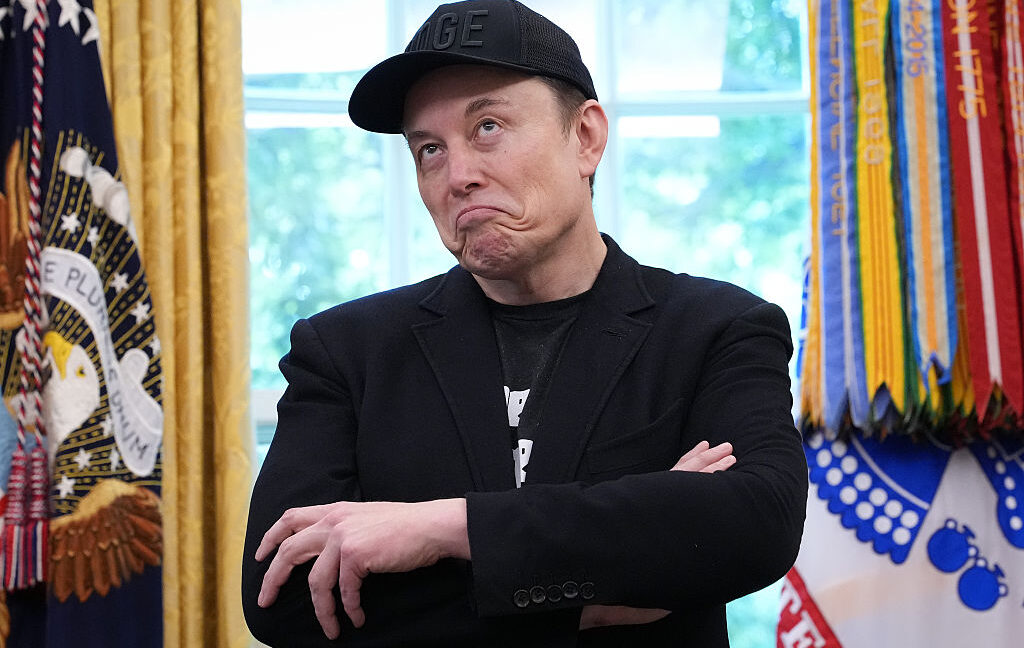
Kevin Dietsch / Staff | Getty Images News
A California court ordered Elon Musk to pay damages to Twitter investors for misleading tweets. The jury determined that Musk's public statements — primarily about bot problems on the platform — deliberately lowered the stock price before his eventual takeover of the service. Investors who sold securities at depressed prices during this period filed a class action lawsuit. Although the court found no evidence of a planned fraud scheme, it held Musk liable for the content of the tweets themselves. Potential damages could reach $2.6 billion. The final amount will be determined in separate proceedings. The case is significant for the entire social media ecosystem — it shows that even influential figures can be held accountable for the impact of their public statements on stock prices.
A California court has restored order in one of the most convoluted legal cases of recent years. A jury ruled that Elon Musk misled Twitter investors through his public statements, which lowered the company's stock price before his eventual acquisition of the platform. This is not a victory for the billionaire — even if jurors did not believe the entire narrative about a planned conspiracy, they held him responsible for damages caused by his tweets. Potentially billions in damages are at stake, which could change how tech moguls think about their influence on financial markets.
The case reveals a fundamental conflict of our times: can a billionaire treat social media as a private forum for his thoughts, or do his words — given the scale of his influence — constitute communications directed at the investing public and subject to securities fraud regulations? The California court's answer is clear: in Musk's case, his tweets counted.
A disinformation campaign about bots and its consequences
In the period leading up to Twitter's acquisition, Musk repeatedly raised the issue of fake accounts on the platform. He posted tweets and gave podcast interviews in which he emphasized the scale of the bot problem — suggesting that the platform might be worth significantly less than believed. These statements had a direct impact on Twitter's stock price, which fell significantly during the period when Musk was conducting this campaign.
Read also

For many investors who held Twitter stock, this was terrifying. As the price fell, many of them sold their shares in panic, realizing losses. These investors believed that the information they received was reliable — that if someone of Musk's scale of influence spoke about bot problems, it must be true. They did not realize they might be part of a negotiation game.
The irony of the situation is biting. Musk ultimately bought Twitter for 44 billion dollars — significantly less than the initial price that had resulted from his disinformation campaign. Investors who sold their shares in panic indeed lost on the transaction. Now the court finds that this loss was not the result of ordinary market fluctuations, but of deliberate deception.
The conspiracy theory — where jurors drew the line
The plaintiffs' lawyers argued that Musk acted as part of a planned scheme — that all his behavior, from initial interest in the acquisition to the disinformation campaign, was part of a strategy to reduce the price so he could buy the platform more cheaply. This would have been not only fraud, but also deliberate market manipulation on a scale difficult to imagine.
The jurors, however, rejected this broader narrative. They found insufficient evidence that Musk had planned this entire operation as part of a coordinated strategy from the beginning. However — and this is key — they found him responsible for the fact that the tweets were misleading and that he caused harm to investors.
This distinction is important for understanding the verdict. The jurors did not say: "Musk can say whatever he wants." They said: "Musk can be held responsible for what he says, even if we cannot prove he did it as part of a long-term plan." This significantly restricts his freedom of action than full acceptance of the conspiracy theory.
Damage estimates — from billions to potentially even larger amounts
Probably the most surprising aspect of the verdict is its potential financial cost. The plaintiffs' lawyers claim that damages could reach 2.6 billion dollars. For perspective — this is more than the annual revenue of many large international firms. For Musk, whose wealth is estimated at over 200 billion dollars, it is painful but not ruinous.
However, the size of this number reveals the scale of the problem. This is a class action lawsuit — meaning that all investors who held Twitter stock during a specified period and suffered losses can seek compensation. The number of such people could reach thousands, if not more. Each of them has the right to a share of the compensation.
It is worth noting that the final amount of damages may be lower than the estimates of the plaintiffs' lawyers — courts often reduce such amounts. But even if it is cut in half, it is still a billion dollars. This is the real cost of misleading investors.
A precedent for billionaires on Twitter and beyond
This verdict has implications far beyond Musk himself. In an era where wealthy entrepreneurs regularly communicate with millions of people through social media, the question of accountability becomes increasingly important. Can CEOs treat their Twitter accounts as a private forum, or is every tweet potentially a communication of market significance?
Traditionally, when CEOs of public companies want to communicate with investors, they do so through official channels — press conferences, SEC filings, official press releases. These are regulated and monitored. Tweets, on the other hand, have always been seen as more informal, more personal. But the verdict suggests that this informal nature does not protect against liability if tweets affect stock prices.
For other billionaires who like to communicate through social media — and there are many — this may be food for thought. If your tweets can affect the stock price of your company or another company you are involved with, you may be held responsible for the damage you cause. This is not a complete ban — it is simply a requirement to be careful and honest.
Practical challenges in enforcing the verdict
Of course, a verdict is one thing. Enforcing it is quite another challenge. Musk will certainly appeal. His legal team will argue that the jurors were wrong, that the evidence was insufficient, that the interpretation of law was incorrect. The appeals process could take years.
Moreover, even if the verdict is upheld, the question of actually collecting the money is complicated. Musk will have to either pay from his own resources or find a way to finance through his companies — Tesla, SpaceX, and others. This could have implications for these companies if they have to allocate significant resources to cover damages.
History shows that even the largest court judgments are not always fully enforced. But in this case, due to the public nature of the case and media involvement, the pressure to enforce the verdict will be significant. Musk will not be able to simply ignore this.
What this says about financial market regulation in the age of social media
This verdict reveals gaps in our current regulatory systems. The SEC — the Securities and Exchange Commission — has traditionally focused on official communications from public companies. Tweets were a gray area for them. Are they official communications? Are they personal opinions? Where is the line?
The California court's verdict suggests that the line should be drawn based on impact and potential fraud, not based on the channel of communication. If a tweet affects stock price and contains misleading information, it can be treated as fraud, regardless of whether it was published formally or through social media.
This could prompt the SEC to more actively monitor social media. They may begin to issue clearer guidelines about what CEOs of public companies can say on Twitter and other platforms. This could change the way billionaires communicate with the public.
Broader context: Musk, Twitter, and a series of bad decisions
The verdict comes in the context of a much broader issue — Musk's acquisition of Twitter. The entire undertaking was full of controversy: promises that were not kept, changed terms, ultimately a transaction that many industry observers consider a bad business decision. Twitter did not become a better platform under Musk's management — instead it saw an exodus of users and a collapse in value.
In this context, the verdict can be seen as part of a broader assessment of Musk's management of Twitter. The jury essentially said: "The way you handled this transaction was unethical and misleading." This is not just a matter of law — it is a matter of accountability for actions that had real impact on real people.
For Musk, who tends to see himself as above the system, this verdict is a reminder that even billionaires are subject to the same laws as everyone else. His influence and wealth do not protect him from accountability — at least not always.
The future of similar cases and a shift in the dynamics of power
This verdict may be the beginning of a trend. If investors see that they can successfully sue billionaires for misleading social media communications, there may be more such cases. Each of them will test the limits of what wealthy entrepreneurs can say.
This could also change the dynamics of power between billionaires and the rest of society. For years, tech moguls have operated with a sense that they are above the system — that they can do whatever they want without consequences. The verdict suggests that this is changing. There are consequences. There is accountability. The law may be slow, but it can eventually catch up with anyone.
Of course, Musk will appeal, and he may win in higher courts. But the mere appearance of this verdict, the mere recognition by the jury that Musk is responsible, is a symbolic victory for investors and for the idea that even the most powerful can be held accountable. In times when wealth and influence often seem to be above the law, this is an important signal.
More from Tech




Related Articles
After court loss, RFK Jr. gives himself more power over CDC vaccine panel
Apr 6
Steven Spielberg Still Wants to Make a Horror Film ‘Someday’
Apr 6New Jersey has no right to ban Kalshi's prediction market, US appeals court rules
Apr 6