NASA’s Artemis 2 Mission Blasts Off
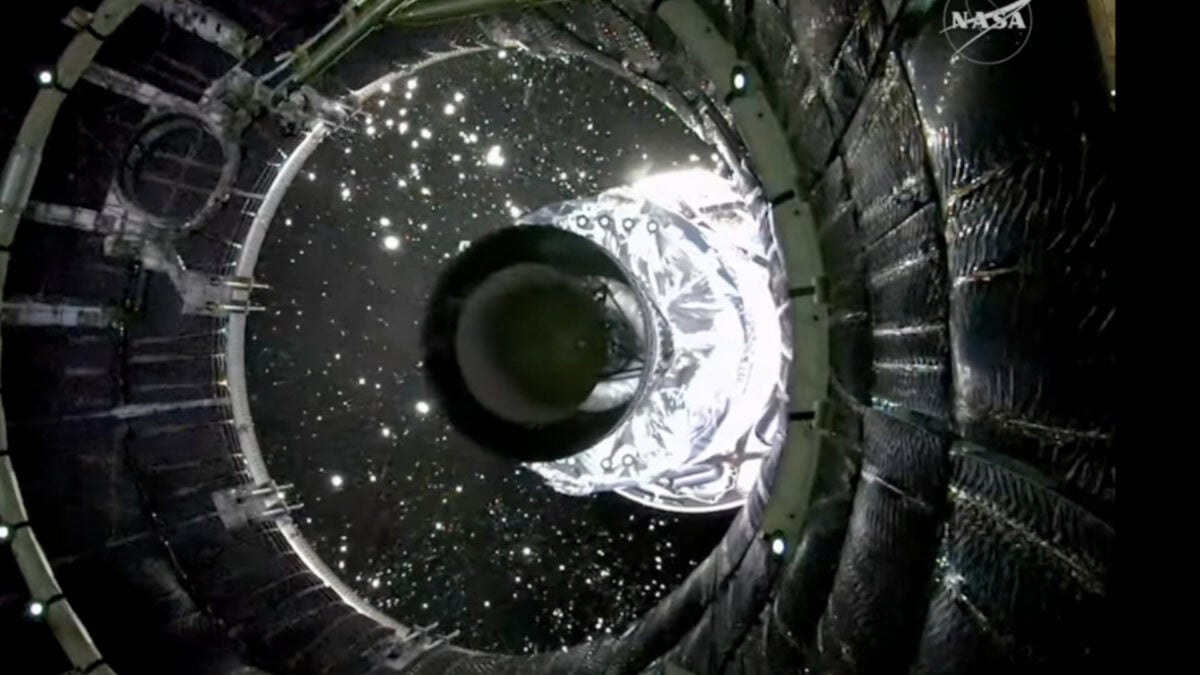
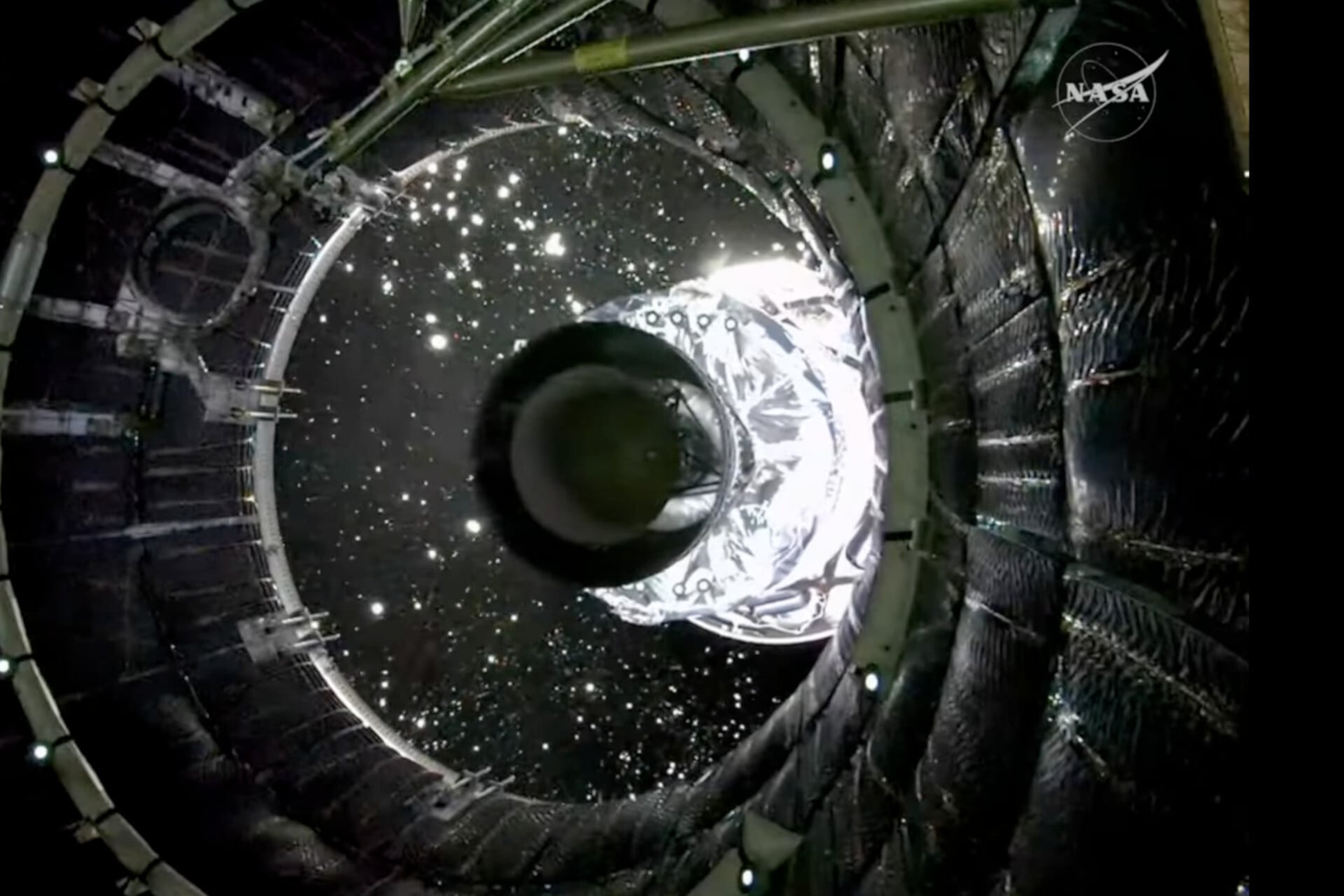
Foto: The Space Launch System (SLS) rocket's core stage separated from the the upper stage and Orion spacecraft about 8 minutes into the Artemis 2 mission © NASA
Four astronauts have left Earth's surface aboard the Orion capsule, launched by the powerful Space Launch System (SLS) rocket at precisely 6:35 PM ET from the Kennedy Space Center. This marks a historic moment for the Artemis 2 mission, representing the first crewed flight toward the Moon in over half a century. After reaching low-Earth orbit, the crew will spend approximately 25 hours testing systems and preparing for the critical Trans-lunar injection maneuver, which will set them on a trajectory toward the lunar surface. For the creative technology and space engineering sectors, the success of this launch serves as proof of the reliability of the Deep Space Exploration Systems architecture. While the mission does not involve a landing, its progress will provide invaluable telemetric data and high-resolution visual materials that will define standards for deep-space broadcasting. Users worldwide can now be certain that humanity's permanent return to interplanetary space has moved from the realm of planning to operational fact. Artemis 2 blazes the trail for the future Gateway station and the commercial utilization of lunar resources, which will completely transform the landscape of the global data- and innovation-based economy over the next decade.
The clock struck 6:35 PM Eastern Time (ET) on Wednesday, and with it, a hiatus in crewed deep space exploration lasting more than half a century came to an end. From the legendary Kennedy Space Center at Cape Canaveral, Florida, the powerful Space Launch System (SLS) rocket lifted off, carrying the Orion spacecraft with a four-person crew at its tip. This is not just another routine flight to the International Space Station — it is the Artemis 2 mission, a turning point intended to restore human presence in the vicinity of the Silver Globe and pave the way for permanent lunar bases.
The sight of the rising SLS giant is a demonstration of unprecedented computing and engineering power. NASA has put all its cards on the table, building a system intended to be the foundation of a new era. At this moment, the four astronauts are in low Earth orbit, where the spacecraft's systems are undergoing rigorous testing before a crucial maneuver. In approximately 25 hours, Orion will fire its engines to leave Earth's safe neighborhood and head toward the Moon.
The engineering foundation of the return to the Moon
The Space Launch System rocket is currently the world's most powerful operational launch system, designed specifically for missions beyond LEO (Low Earth Orbit). Its construction is based on proven but thoroughly modernized technologies that allow the Orion spacecraft, along with its crew and necessary supplies, to be launched on a mission lasting many days. Precision is the key element here — every gram of fuel and every second of the RS-25 engines' operation has been calculated to ensure the safety of the crew in an environment where help from Earth cannot arrive in a matter of hours.
Read also


The Orion spacecraft, housing the astronauts, is the pinnacle of achievement in crewed capsules. It possesses the most advanced life support systems ever sent into space. Unlike the Apollo missions, Artemis 2 utilizes a digital infrastructure based on modern processors and control algorithms that can autonomously correct the course in the event of a loss of communication with the mission control center in Houston. It is this technology that allows for the safe planning of a return trajectory that will use the Moon's gravity to "bounce" the spacecraft back toward Earth.
The energy aspect of the mission is noteworthy. Orion does not rely solely on chemical fuel; its service module, provided in cooperation with international partners, is equipped with solar panels in a characteristic four-pointed star shape. These provide the energy necessary to power onboard computers, long-range communication systems, and research instruments that will monitor cosmic radiation levels throughout the journey — one of the greatest threats to astronaut health outside our planet's magnetic field.
Flight strategy and the TLI maneuver
The current phase of the mission, staying in low Earth orbit, is of critical importance to the success of the entire venture. The crew and engineers on Earth are checking hull integrity and the efficiency of navigation systems. Only after ensuring that all parameters are normal will the rocket's upper stage engine fire, initiating the Trans-Lunar Injection (TLI) maneuver. This is a precise impulse that will give Orion sufficient speed to break free from Earth's gravitational grip.
During the flight toward the Moon, which will take several days, the crew will conduct a series of experiments regarding optical navigation. These involve photographing the Earth and the Moon to determine the spacecraft's position without relying on radio systems. This is an essential skill for future missions to Mars, where communication delays will be measured in tens of minutes. Artemis 2 is therefore not just a "there and back" flight, but a testing ground for technologies that will define space exploration in the 21st century.

The next challenge will be passing through the Van Allen radiation belts. Although Orion has reinforced shielding, the flight trajectory was chosen to minimize the crew's exposure time to high-energy particles. Data collected during this transit will be used to optimize the design of future lunar landers. NASA is taking an iterative approach — every success of the Artemis 2 mission directly translates into the safety of the next mission, Artemis 3, which is intended to culminate in a surface landing.
A new paradigm in the race for space dominance
The launch of the Artemis 2 mission is not only a technical triumph but, above all, a clear geopolitical and economic signal. The return to the Moon is taking place in a completely different environment than the Apollo program. Today, the talk is of building permanent infrastructure, such as the Lunar Gateway station, and the commercial utilization of lunar resources. NASA acts here as the leader of a broad coalition, integrating technologies from various suppliers and partners, which allows for the distribution of costs and risks.
- SLS Rocket: Generates 8.8 million pounds of thrust, making it the most powerful rocket since the Saturn V era.
- Orion Spacecraft: Designed to survive atmospheric reentry at speeds of approximately 40,000 km/h.
- Crew: Four astronauts who will be the first since 1972 to see the "far side" of the Moon with their own eyes.
- Duration: The mission will last approximately 10 days, ending with a splashdown in the Pacific Ocean.
In the face of growing competition from the private sector and other space agencies, the success of Artemis 2 is essential to maintaining the momentum of the Deep Space Exploration program. If Orion reaches the vicinity of the Moon without hindrance and returns safely, it will open the way for a human landing on the South Pole of the Silver Globe in the coming years. It is there, in eternally shadowed craters, that scientists expect to find water ice — a key resource for the production of rocket fuel and oxygen outside of Earth.
"Today's launch is not just fire and smoke on the launch pad. It is proof that humanity has regained the ability to leave Earth orbit and realistically plan a presence on other celestial bodies."
The next hours of the mission will be decisive. The world is now watching every kilometer of distance that separates Orion from its goal. The ability to conduct such a complex operation using modern digital systems and new composite materials confirms that creative technologies and AI engineering find application even in the most extreme conditions of the space vacuum. The return to the Moon has ceased to be a matter of plans — it has become a fact that is redefining the boundaries of what is possible before our very eyes.
More from Tech




Related Articles

After court loss, RFK Jr. gives himself more power over CDC vaccine panel
Apr 6
Steven Spielberg Still Wants to Make a Horror Film ‘Someday’
Apr 6New Jersey has no right to ban Kalshi's prediction market, US appeals court rules
Apr 6