Sam Altman’s thank-you to coders draws the memes

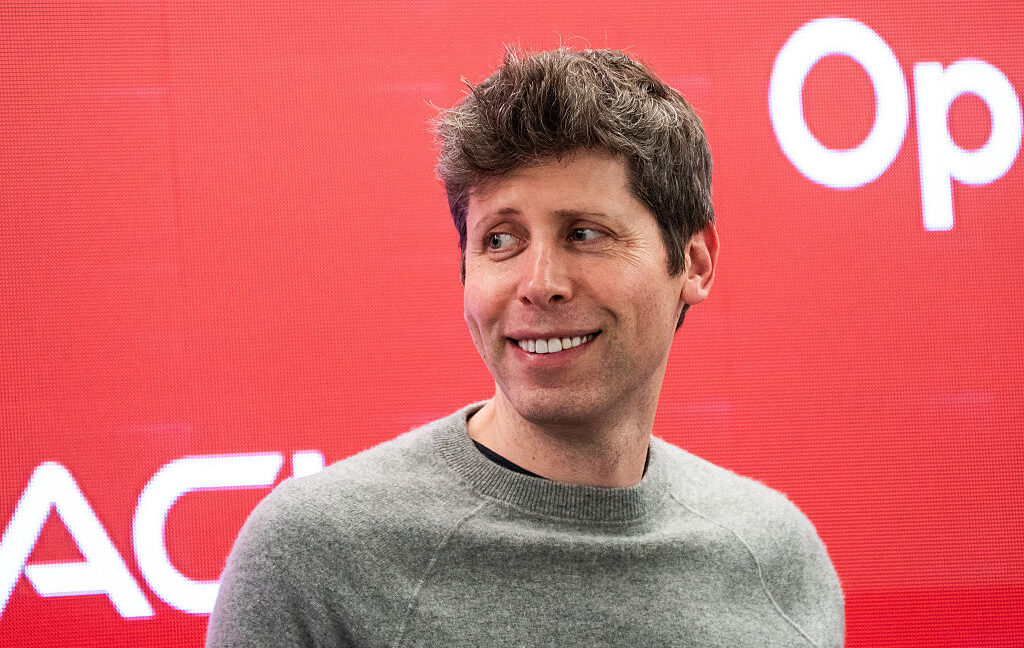
Alex Wong / Getty Images
While Amazon is laying off 16,000 employees and Meta is considering further mass layoffs — all allegedly for AI — OpenAI CEO Sam Altman decided to thank coders. His post on X, however, became the subject of ridicule and memes. Altman, instead of directly addressing the employment crisis in the tech industry, sent a general message of gratitude to programmers. Such communication at a time when corporations are mass-firing employees proved unacceptable to the internet. Social media users quickly noticed the disconnect between words of thanks and labor market reality. A wave of layoffs in the technology sector — where giants like Block and Atlassian cut staff by 50 percent and 10 percent respectively — shows that the industry speaks of gratitude for developers while actually reducing their employment. The irony of this situation did not escape social media users, who responded with memes and criticism. The incident reveals a growing gap between the rhetoric of tech companies and their actual business decisions regarding the workforce.
If you're looking for a cathartic escape from news about mass layoffs in the tech industry — 16,000 people from Amazon, nearly half of Block's employees, 10 percent of Atlassian's team and threats of further purges at Meta — it's worth browsing through the responses to a recent post by Sam Altman on X. It turns out that sometimes the best antidote to pessimism is pure, raw internet sarcasm.
Altman, head of OpenAI, published a post on Tuesday in which he expressed gratitude for people who were able to write code from scratch. It would seem like a simple, nice message in an industry often poisoned by competition and tension. Nothing could be further from the truth. The internet immediately turned into a battlefield of sarcasm, dark humor and bitter jokes about the future of programmers in the age of AI.
This is not just a social media anecdote. This is a juicy, telling moment about the times we live in, which shows how the tech industry perceives itself and its future — and how this perspective is received by those who create it.
Read also

Gratitude from the OpenAI CEO and its unfortunate timing
Sam Altman, the man who heads one of the most influential artificial intelligence companies, decided to express gratitude to programmers and engineers. In theory, it's beautiful. In practice? It was a classic example of what communications experts would call "unfortunate timing at the level of epic failure".
Altman's post came at exactly the moment when the entire tech industry is going through a wave of mass layoffs. We're not talking about dozens of people here and there. We're talking about tens of thousands of people who ended up on the street in the name of digital transformation and optimization in the age of AI. The irony? As thick as concentrated juice.
It's particularly painful for employees who spent years learning to code, building skills, being part of an ecosystem that now pushes them out. For these people, Altman's post sounded less like gratitude and more like mockery — like someone saying "thank you for your hard work" just before showing them the door.
The internet responds: sarcasm in full force
Responses to Altman's post were immediate and merciless. Twitter memes and comments quickly turned into collective, bitter laughter — the kind of humor that emerges when people feel threatened and helpless. It was stand-up comedy, but with real stakes.
Users pointed out a fundamental contradiction: Altman thanks programmers for writing code from scratch, while his company (and the entire industry) invests billions in having machines write code for them. This is not a subtle contradiction — this is a logical atomic bomb.
One of the popular threads of comments touched on a more existential dimension of the problem: if AI will write code, why thank programmers for the ability to write code? It's like thanking a merchant for the ability to trade in times when e-commerce is replacing traditional stores. You're thanking someone for a skill you just made obsolete.
Generative artificial intelligence versus coding from scratch
To fully understand why this post became a meme, you need to delve into industry reality. Generative AI, particularly models like GPT-4 or GitHub Copilot, can already generate code with alarming accuracy. We're not talking about fragments or skeletons — we're talking about entire, functional applications.
For beginner programmers, this is both a blessing and a curse. A blessing, because they can learn faster. A curse, because it changes the fundamental dynamics of learning and the value of skills. If AI can write code for you, is it really worth spending months learning algorithms and data structures?
For experienced programmers, the situation is more complex. AI tools can be incredibly productive — they can save hours on repetitive tasks and boilerplate. But they also pose a concrete threat to employment. If a junior developer can be replaced by an AI-assisted senior developer, what happens to the middle class of engineers?
Layoffs: AI as an excuse or real reason?
Here we get to the heart of the matter. Amazon, Meta, Atlassian and many other companies talked about "optimization" and "efficiency". But is it really about AI, or is AI a convenient excuse for what they always wanted to do: cut labor costs?
The truth is probably somewhere in between. AI really is changing the landscape — some tasks that previously required a team can now be performed by a smaller group aided by tools. But at the same time, many of these layoffs stem from over-investment in COVID-19, speculative preparations for growth that never materialized, and general management chaos.
For employees, the difference is meaningless. Whether you were laid off because AI really is replacing your work, or because management mismanaged the budget — the effect is the same. You sit in front of your computer, read a post from the OpenAI CEO thanking you for skills that just lost their market value, and you feel — rightfully — cheated.
Polish perspective: outsourcing under pressure
For the Polish tech ecosystem, this situation has an additional dimension. Poland is home to a large number of outsourcing engineering centers — companies like Codility, or numerous smaller studios that employ thousands of programmers. These studios live off the fact that they can deliver cheap work for Western corporations.
If AI really does replace coding, these businesses become threatened. Not because of lack of talent — Polish programmers are considered among the best in the world. But because of economics. If AI can do the work for 10 percent of a human's price, even a cheap Polish developer won't be competitive.
This is not an abstract scenario. There are already conversations in the industry about how AI is changing the economics of outsourcing. Companies are wondering whether it's still worth maintaining large teams in Warsaw, Krakow or Wroclaw, or perhaps better to invest in AI tools and a smaller team to manage them.
Reality versus narrative: what the data says
Despite the pessimism, data shows a more complex picture. The number of job offers for programmers continues to grow. Salaries continue to rise. Companies continue to hire engineers. What's happening?
Well, the reality is that AI creates as much work as it destroys — at least for now. New roles are emerging: prompt engineers, AI trainers, people who know how to work with models. Old roles are disappearing. For someone with skills, this can be a transition. For someone without them — this can be the end.
But this doesn't change the fact that the sector is undergoing transformation. And that this transformation is painful. Altman's post hit a sensitive spot precisely because it spoke of gratitude for skills that the system is actively undermining.
Memes, sarcasm and deep concerns
The memes that appeared under Altman's post were more than just a joke. They were forms of protest, ways of expressing the fear that engineers feel but can't always express at work. They are also a form of solidarity — collective recognition that the situation is absurd.
One of the more popular memes showed Altman thanking people for coding, and then showed him sweeping the office — a metaphor for what's really happening. Another spoke of "thank you for your work, which just became worthless". It was humor, but with a sharp bite.
Importantly, these memes were not aimed at Altman personally — they were aimed at the system we live in. A system in which industry leaders talk about human value while investing billions in replacing people. It's hypocrisy that everyone sees, but which is hard to articulate in a professional context.
What's next for programmers and the industry
The question everyone is asking is: where does this lead? Will programmers become unnecessary? Will a new kind of work emerge?
The answer we hear from optimists is that history repeats itself. When the compiler appeared, people said programmers would be unnecessary. When the Internet appeared, they said the same thing. There's always a new layer of abstraction, new possibilities, new jobs. Maybe it will be similar this time.
But there's also a more pessimistic possibility: that this time it's different. That AI is not a tool that people control, but a competitor that replaces them. That the difference between a compiler and AI is that the compiler still required a human mind to instruct it. AI can instruct itself.
For the Polish labor market, this means the need to adapt. Programmers who want to remain competitive will need to learn to work with AI, not against it. They will need to specialize in things that AI (for now) cannot do: system architecture, mentoring, innovation, strategic thinking.
Altman's post and the memes that followed it are a symptom of deep changes taking place in the industry. They are not merely an amusing moment on social media — they are a window into the reality we live in. A reality in which we thank people for skills we just made obsolete. This is absurd, but it is also the reality of our times.