Tech Now
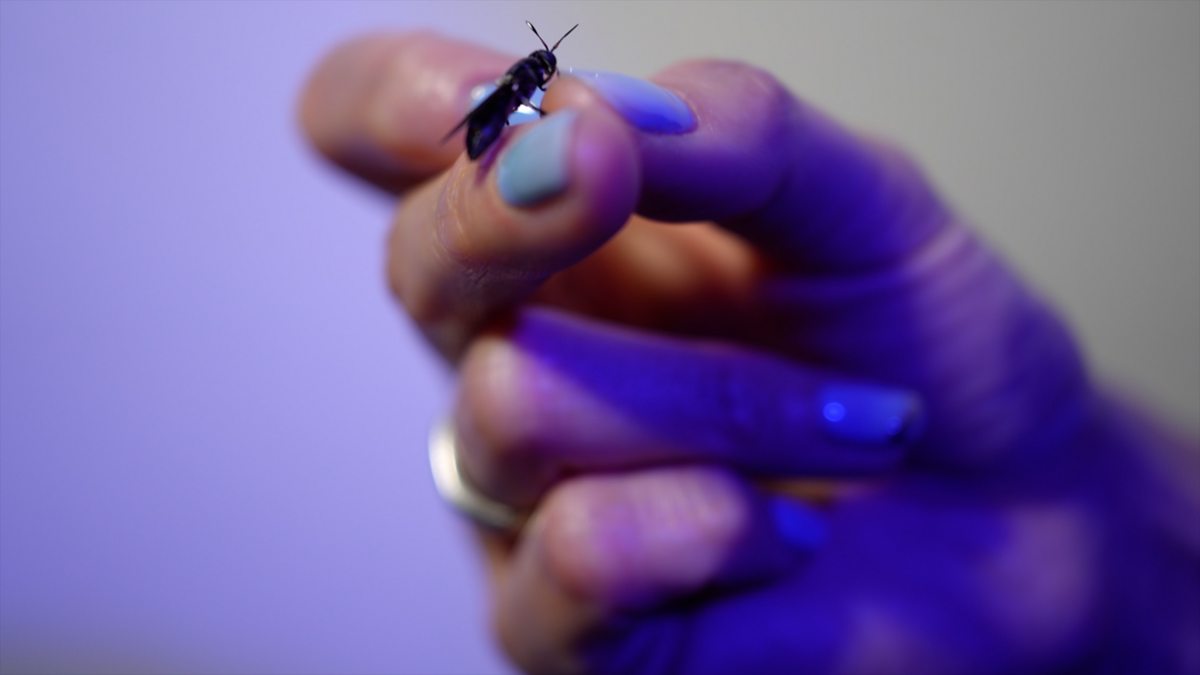
Foto: BBC Tech
Modern entomological farms combine artificial intelligence with insect breeding, creating automated protein production systems. BBC analyzed how technology is changing the scale and efficiency of this sector — from monitoring environmental conditions through sensors to optimizing reproduction cycles with machine learning algorithms. Insects, particularly black soldier fly larvae and crickets, require significantly fewer resources than traditional animal farming. High-tech farms achieve population density impossible to obtain through conventional methods, and AI systems predict feed demand and herd health conditions in real time. The sector is developing rapidly due to the potential application of insect protein in animal feed, human supplements and biofuel production. However, implementing the technology requires significant capital investment and process standardization. For the food industry, this is an opportunity to scale protein production with minimal environmental impact — provided that farms become economically accessible beyond niche premium markets.
A visit to an underground insect farming operation is not an adventure for the faint of heart, but this is exactly the kind of innovation that the agritech industry has been focusing on in recent years. When Alasdair Keane descends into the interior of one such facility, he discovers a world that seems straight out of science fiction — rows of containers holding millions of insect larvae, precisely controlled temperature and humidity, and an elegant solution to one of the greatest challenges of our time: what to do with the enormous amount of food waste produced daily around the world. This simple but brilliant concept — transforming food scraps into feed for livestock — represents a fundamental shift in the approach to circular economy and sustainable development in the agriculture sector.
The numbers are impressive. Globally, we throw away approximately 931 million tons of food annually, while the feed industry must feed over 80 billion farm animals yearly. Traditional feed sources — mainly soy and fish — are increasingly insufficient, and their production generates an enormous carbon footprint. Insects, particularly Black Soldier Fly larvae and mealworms, offer an elegant alternative: they convert food waste into high-quality protein with remarkable efficiency. A larva can grow and reach full mass in just 14-21 days, and its protein content is 40-80 percent of dry mass — compared to traditional soy, which contains about 36 percent protein, the difference is significant.
Technology hidden underground: how a modern insect farm operates
Inside the underground facility that Keane visits, the atmosphere is more reminiscent of a biotechnology laboratory than a traditional farm. Climate control systems maintain the temperature at 27-28 degrees Celsius — optimal for larval growth — regardless of the season and surface conditions. Humidity is monitored to within one percent accuracy, and air flow is controlled by advanced filters that prevent the spread of odors and pathogens. This is no accident — every parameter is precisely calibrated because insects, despite being small, require the same control standards as modern pharmaceutical production facilities.
Read also


The process begins with the collection of food waste — leftovers from restaurants, supermarkets, food processing plants, and households. The waste goes to processing systems, where it is cleaned and prepared for feeding to the larvae. Not all waste is suitable; things like bones or glass must be removed, and potentially toxic substances — such as certain pesticides — require testing. After preparation, the waste goes into breeding containers, where Black Soldier Fly larvae begin their work.
Insect farming in such a system generates significantly fewer emissions than traditional feed sources. Cattle raised for meat or milk require enormous amounts of feed, water, and occupy significant land areas. Insects occupy only a fraction of the space, do not require as much water, and their conversion of food into body mass is incomparably more efficient. Research suggests that to produce a kilogram of protein from insects requires about 2 kilograms of feed, while for cattle the ratio is 6-10 kilograms. This is a difference that has a real impact on the entire ecology of food production.
From waste to resource: the logic of circular economy in practice
The concept of converting food waste into feed is not new — people have always found ways to reuse scraps. However, what is new is scaling this process to an industrial level using modern monitoring and automation technologies. Traditionally, food waste went to compost facilities, where it decomposed over months, or worse — to landfills, where it fermented for years, emitting methane — a gas with a greenhouse potential 28 times higher than carbon dioxide.
Insects offer a solution that is both faster and more productive. Larvae can process waste within weeks, and the end product is not only feed for animals, but also biomass rich in lipids, which can be used to produce biofuels or oil for industry. Even the remains of larvae — called frass — are valuable fertilizers, rich in nitrogen and microelements. Nothing is wasted; every element of the process has economic and ecological value.
For companies engaged in livestock farming, switching to insect-based feed also has a financial dimension. Traditional soy is subject to price fluctuations on global markets, changing depending on weather, geopolitics, and financial speculation. Insect-based feed can be produced locally, using local waste, which reduces dependence on international supply chains and stabilizes costs. This is particularly attractive for farmers in developing countries, where access to traditional feed sources is limited or expensive.
Regulatory obstacles: why insects have a problem with acceptance
Despite theoretical advantages, the insect farming industry faces significant regulatory obstacles. In many countries, particularly in Europe, the use of insects in livestock feed is restricted or completely banned. Historically, feed regulations have been very strict — following mad cow disease scandals in the 1990s, regulators became extremely cautious about any new feed source. Insects, being arthropods, were viewed as a potential food safety threat, despite the lack of any evidence that they can transmit pathogens dangerous to humans.
The situation is slowly changing. The European Union has approved the use of Black Soldier Fly larvae in feed for poultry and pigs, and other regions are gradually following suit. However, the approval process is slow and costly — it requires extensive safety research, toxicity tests, and documentation of the entire supply chain. For small and medium-sized insect farming companies, these costs can be prohibitive. Larger corporations, such as Ÿnsect or InnovaFeed, have the resources to go through this process, but for smaller players the market remains closed.
There is also the issue of consumer perception. Although insect-based feed will not be eaten directly by humans — it goes to farm animals — the idea that meat or eggs come from animals fed insects raises resistance among some consumers. This is irrational, considering that chickens and fish in nature eat insects for most of their lives, but marketing and public education matter. Companies in the industry must actively work to change this perception.
Economics of scaling: how much does insect farming actually cost
While insect farming seems economically sound in theory, practice is more complex. The initial capital investments in building an underground farming facility are significant — depending on scale, they can range from several million to tens of millions of dollars. Construction, HVAC systems, automation, monitoring systems — all of this requires investment. For comparison, a traditional soy farm requires much lower capital investment, although it occupies much more land.
Operating costs are, however, where insects can show their value. Energy is the main cost — maintaining an underground facility requires constant power supply for air conditioning and lighting systems. However, companies in the industry are experimenting with various solutions to reduce energy consumption: natural daylight in partially underground facilities, heat recovery systems, and even renewable energy sources. Some facilities are built next to food processing plants, which can provide both waste and excess heat — this is an example of intelligent production system design.
Currently, insect-based feed can be produced for approximately $800-1200 per ton, while traditional fish meal can be purchased for $1000-1500 per ton, and soy for $400-600 per ton. Insect-based feed is more expensive than soy, but competitive compared to fish meal — and due to growing concerns about fishing sustainability, it may soon be more attractive. As the industry scales and refines processes, costs are expected to fall.
A player in the global market: who is investing in insects
The insect farming industry is attracting significant venture capital investment. Ÿnsect, a French insect farming company, has raised over $370 million in funding and is one of the most well-funded startups in the sector. InnovaFeed, its French competitor, has raised over $250 million. Other notable companies include Calysta in the United States, Enterra Feed in Canada, and Protix in the Netherlands. Each of these companies has a slightly different strategy — some focus on aquaculture feed, others on poultry feed, and still others on the entire spectrum of applications.
Investments come not only from venture capital funds, but also from large agricultural and food corporations. Cargill, one of the world's largest feed producers, has engaged in partnerships with insect farming companies. Nestlé and other major food companies are also exploring the possibility of using insect-based feed in their supply chains. This signals that the mainstream industry no longer views insect farming as a niche, but as a potential breakthrough in feed production.
Competition in the industry is intense, but also constructive. Companies cooperate on common challenges — such as lobbying for more liberal regulations — while competing on the technological and operational level. This is a healthy ecosystem for innovation.
The future: insects as part of a larger nutritional transformation
Insect farming will not solve the global food crisis or climate change on its own, but it is an important part of a larger transformation. Combined with other technologies — such as vertical farming, lab-grown meat, plant-based alternatives — insects can contribute to creating a more sustainable food system. Particularly in developing countries, where pressure on natural resources is intense and access to traditional feed sources is limited, insect farming could be transformational.
Technology will also evolve. Currently, most insect farming is semi-automated — larvae are manually collected and processed. In the future, robotics and artificial intelligence could fully automate this process, further reducing costs and increasing efficiency. Already, companies are experimenting with using computer vision to monitor larval health and optimize breeding conditions in real time.
What Alasdair Keane is doing by visiting this underground farm is not just documenting a technological curiosity — it is observing a future that is already unfolding beneath our feet. Insects may be small, but their potential to change the global food system is enormous. And if we are wise in how we use them, they could be the key to a more sustainable and secure food world.