The end of Sora also means the end of Disney's $1 billion OpenAI investment
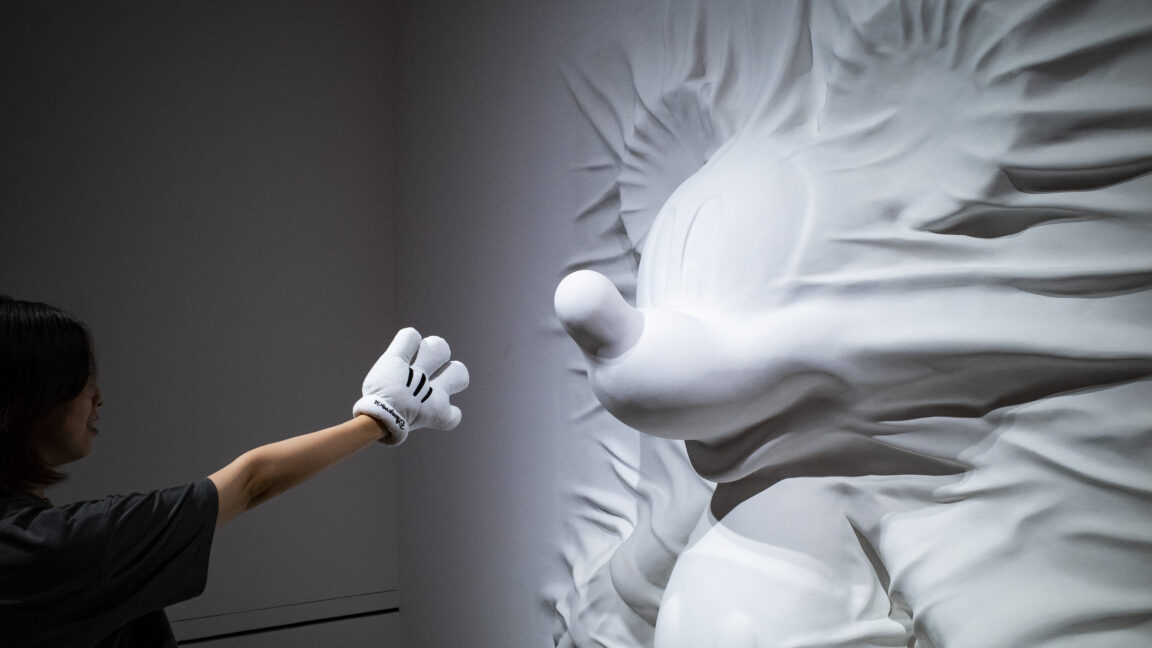
Foto: China News Service via Getty Images
A billion-dollar investment and access to over 200 iconic Disney characters have vanished following OpenAI's sudden decision to shut down the Sora project. This spectacular turn of events ends one of the most anticipated collaborations in the world of creative technology, which was intended to revolutionize the AI-generated video market. Although the three-year licensing agreement was announced as a near-certain success, reports from Axios and the Financial Times confirm that no funds changed hands, and the project was definitively abandoned in the face of shifting strategic priorities at OpenAI. For the global community of creators and video industry professionals, this decision serves as a powerful warning regarding the stability of Generative AI tools. The market leader's abrupt withdrawal from the video segment, described by insiders as "pulling the rug out," demonstrates that even the most powerful corporations are not immune to rapid reshuffling within the artificial intelligence sector. Users must accept that promising technologies can disappear from the market as quickly as they appeared, necessitating greater diversification of tools and caution in building long-term strategies based on closed models from external providers. The collapse of the Disney-OpenAI partnership proves that in the AI arms race, technology and intellectual property security still represent barriers that even the world's largest budgets cannot overcome.
The creative technology industry is currently experiencing one of the most abrupt plot twists in its short but intense history with generative artificial intelligence. OpenAI's decision to suddenly shut down the Sora project — a video generation application that was set to revolutionize Hollywood — has triggered a domino effect hitting the financial foundations of the entertainment giant. A partnership worth $1 billion between OpenAI and Disney, announced with great fanfare just a few months ago, has officially collapsed.
What was meant to be a "marriage of convenience" between the world's most powerful repository of intellectual property and the leader in AI innovation has ended in an atmosphere of consternation. Although both companies announced a three-year licensing deal in December intended to bring over 200 iconic Disney characters into the Sora ecosystem, we now know that no money ever changed hands. OpenAI's strategic retreat from video generation in favor of other priorities has left Disney out in the cold, demonstrating how fragile alliances can be in the era of rapid algorithmic development.
The billion dollars that never left the account
When news of Disney's $1 billion equity investment in OpenAI broke in December, it was seen as the ultimate confirmation of the Sora model's dominance. The plan was ambitious: creators would gain legal access to Disney's assets, and the Burbank giant would secure its future in a world dominated by synthetic content. However, as reported by Axios, citing sources close to the situation, the deal never moved beyond the negotiation phase. Despite public declarations, the billion-dollar transfer was never executed because the parties did not sign the final definitive agreements.
Read also

Analyzing the structure of that agreement, it is clear that OpenAI left itself a safety hatch. The original announcement mentioned that the transaction was subject to "negotiations of definitive agreements and required corporate and board approvals." It turned out that these "customary closing conditions" became an insurmountable barrier when OpenAI began revising its business strategy. For Disney, which was counting on a safe and controlled deployment of its characters into the AI world, its partner's sudden withdrawal from the video market is a signal that stability in the Generative AI sector is currently a scarce commodity.
Shock in Burbank and OpenAI's "rug-pull"
The reaction within the Disney empire is described by Reuters informants as a feeling of being "blindsided." One informant used the blunt term "rug-pull", suggesting that OpenAI pulled the rug out from under its partner at the least expected moment. As recently as Monday, OpenAI was publishing updated safety standards for the Sora model, suggesting that work was in full swing. The decision to shut down the project, announced just a day later on Tuesday evening, came as a surprise even to many employees of the tech company itself.
- End of project Sora: The video generation application is being completely shut down.
- Loss of licenses: Over 200 Disney characters will not enter official AI circulation.
- No capital transfer: The announced $1 billion Disney investment is being withdrawn.
- Shift in priorities: OpenAI is reallocating resources to other, as-yet-undisclosed projects.
Disney's official stance is diplomatic but cold. The company emphasizes that it respects OpenAI's decision to exit the video generation business and declares a continued willingness to collaborate with other AI platforms. However, the key element remains the "responsible use of new technologies while respecting intellectual property rights and creators." This sentence suggests that Disney does not intend to give up on AI, but after the painful lesson with Sora, it will look for partners more predictable than Sam Altman's team.
A new balance of power in video technology
The fall of Sora and the termination of the deal with Disney mark a turning point for the entire AI-generated video market. For the past few months, Sora has been the benchmark for competitors such as Runway, Luma AI, and Pika. The sudden withdrawal of the leader from the race opens up a massive space for smaller players who do not fear copyright risks to the extent that Disney had to face. It appears that OpenAI realized the legal and operational costs associated with licensing millions of hours of film footage outweighed the potential profits from the application itself.
From an industry perspective, OpenAI's move can be read as a flight forward. Instead of fighting for a video market that is extremely resource-intensive and legally controversial, the company will likely focus on Reasoning AI models or a new generation of multimodal assistants. For Disney, this means a necessity to return to the drawing board. The company must now decide whether to build its own In-house models, which is extremely expensive, or risk collaborating with smaller entities that may not offer the same scale and security as OpenAI.
"We appreciate the constructive collaboration between our teams and what we have learned, but we will continue to engage with AI platforms to find new ways to reach fans where they are," reads Disney's statement.
The end of Sora is a warning signal for all corporations that placed their hopes in a quick and painless adoption of AI technology from external providers. The tech industry moves at a speed that traditional corporate structures, like Disney, are unable to fully control. The fact that a billion-dollar deal could be terminated almost overnight shows that in the world of AI, the only constant is change, and even the most powerful brands have no guarantee of stability alongside the giants of Silicon Valley. Disney will likely now turn toward more niche, specialized tools, abandoning the dream of a single, universal platform for creating content starring Mickey Mouse.