There can (still) be only one: Highlander is 40
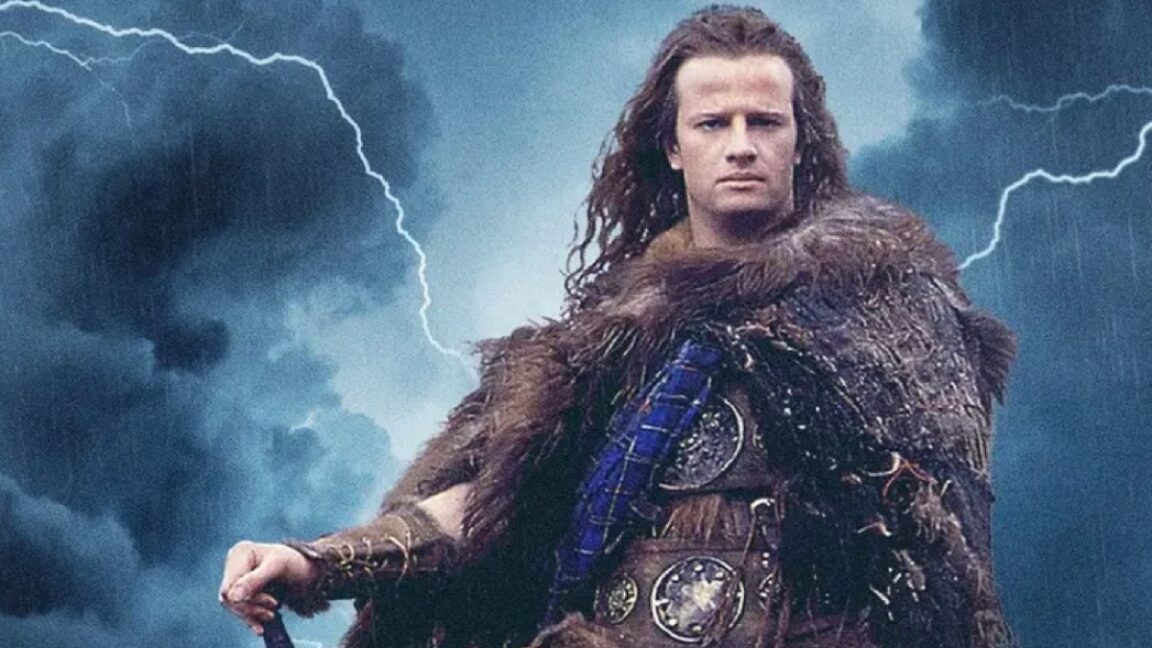
Foto: 20th Century Fox
A screenplay sold for $200,000 by a UCLA student became the foundation of a cult universe that has defined the fantasy action genre for 40 years. "Highlander," directed by Russell Mulcahy, remains the unsurpassed benchmark for stories about immortal warriors four decades later, outshining numerous sequels and series. The story of Connor MacLeod, played by Christopher Lambert, was born from Gregory Widen's fascination with the historical weaponry of the Tower of London and Ridley Scott's film "The Duellists." The production revolutionized the fusion of historical narrative with 1980s music video aesthetics, introducing the unique concept of "The Quickening"—a spectacular release of energy following an opponent's decapitation—into pop culture. For contemporary creators and users of creative technologies, "Highlander" serves as a lesson in building cohesive world-building that has stood the test of time without modern CGI effects. The film proves that a strong visual concept and practical special effects can create a global brand capable of maintaining audience interest across generations. Although Hollywood has been planning a reboot of the franchise since 2008, the original featuring Sean Connery as Ramirez remains proof that in the world of film franchises, there "can be only one" true pioneer. The use of a non-linear flashback structure became a standard that continues to inspire editors and screenwriters of video games and streaming productions today.
Four decades ago, genre cinema was presented with a proposal that seemed like a risky experiment on paper, but in practice, became the foundation of modern urban mythology. Highlander, directed by Russell Mulcahy, debuted in the atmosphere of the 1980s, blending the aesthetics of MTV music videos with the ruggedness of the Scottish Highlands and the gloom of New York City back alleys. Today, looking at this film from the perspective of the Pixelift editorial team, we see not only a cult action spectacle but, above all, a brilliant narrative concept that has stood the test of time better than the special effects of that era.
The story of Connor MacLeod, an immortal highlander who must fight for "The Prize" in a brutal game spanning centuries, was born in the mind of UCLA student Gregory Widen. It is fascinating proof of how classical film education meets pure imagination—the inspiration for Highlander was Ridley Scott’s debut, The Duellists, and Widen's visit to the Tower of London. For the sum of $200,000, which was an astronomical amount for a student, Hollywood bought an idea that defined the concept of urban fantasy for generations to come. Widen created a world where magic doesn't need wands, only tempered steel and a ruthless rule: "there can be only one."
The Visual Revolution of Russell Mulcahy
Before Russell Mulcahy took the director's chair, he built his brand as a creator of pioneering music videos for stars such as Duran Duran and Elton John. It was this experience that gave Highlander its unique, almost dreamlike rhythm. The film is not afraid of rapid editing cuts that transport the viewer from a stifling Madison Square Garden parking lot straight to the misty landscapes of Scotland in 1536. These transitions, executed using camera techniques that were innovative at the time, made the film a visual testing ground for the industry.
Read also


A key element that elevated the film's technical layer to the level of art was the soundtrack by the band Queen. In an era of today's often generic soundtracks, the symbiosis of Freddie Mercury’s music with Mulcahy’s imagery remains an unsurpassed benchmark. Tracks like "Princes of the Universe" and "Who Wants to Live Forever" are not merely background—they co-create the narrative, giving the fight scenes and moments of reflection on mortality an emotional weight that cannot be generated by the script alone.
- Innovative Transitions: The use of fluid editing transitions (match cuts) connecting contemporary New York with historical Scotland.
- Practical Effects: The use of real sparks and pyrotechnic effects during sword duels, which added realism to the scenes.
- Soundtrack: A unique collaboration with the group Queen, who created music dedicated to specific scenes and moods of the film.
- Cinematography: The work of cinematographer Garry Fisher, who utilized the natural lighting of Scottish landscapes, contrasting them with the neon darkness of the city.
A Cast That Defied the Barriers of Logic
In hindsight, the casting of Highlander seems to be one of the most absurd yet brilliant moves in cinema history. Christopher Lambert, a Frenchman with almost no knowledge of the English language and suffering from severe myopia, took on the role of the Scottish highlander. Meanwhile, Sean Connery, an icon of Scottishness, played Juan Sánchez-Villalobos Ramírez—an Egyptian immortal serving at the Spanish court. This cultural cacophony, instead of sinking the film, gave it a specific, cosmopolitan character, emphasizing that for immortals, national borders and nationalities have long ceased to exist.
One cannot forget the phenomenal performance of Clancy Brown as the Kurgan. His portrayal of the antagonist is a textbook example of building a character that evokes genuine fear. The Kurgan is not a caricatured cartoon villain; he is a primal force of destruction that contrasts perfectly with Lambert's understated, melancholic role. The dynamics between these characters, supported by Connery's mentoring role, created an acting triangle that has not been replicated in any of the subsequent sequels or series.
"Immortality in Highlander is not a gift, but a curse of loneliness that can only be broken through violence. This is a tragedy written into every frame of the film."
Legacy and a Technological Leap into the Unknown
Although the Quickening effects (the magical discharge of energy after decapitation) from the 1980s may seem dated today, their concept inspired countless fantasy productions and video games. The mechanics of absorbing the power of a defeated opponent became a standard in designing progression systems in RPGs. Highlander was ahead of its time, creating a coherent magic system based on physical rules, which is highly valued by modern fans of world-building.
Modern CGI and AI technology offer immense possibilities for the long-planned reboot, which is to be helmed by Chad Stahelski (creator of the John Wick series). However, the original 1986 film possesses something that cannot be reproduced digitally: raw energy and the courage to mix genres. Mulcahy was not afraid to combine noir crime with epic historical drama, which in today's often formatted cinema, happens extremely rarely.
Analyzing the phenomenon of this production from today's perspective, it is clear that its strength did not lie in the budget, but in the universality of the questions it posed. Highlander is a story about loss, about watching everything we love turn to dust while we remain unchanged. It is this existential dread, dressed in the costume of an action movie with swords, that ensures we still remember Connor MacLeod after 40 years.
One might get the impression that modern fantasy cinema focuses too much on explaining every mechanic of the world, while Highlander left many things unsaid, building an aura of mystery. In an era of information overload and digital perfection, this somewhat "cheesy" but sincere film reminds us that in pop culture, it is not the most expensive works that survive, but those that can create their own, inimitable myth. The new version will likely dazzle us with fight choreography, but the original will forever remain the only one that defined the rules of the game.
More from Tech


Related Articles

After court loss, RFK Jr. gives himself more power over CDC vaccine panel
Apr 6
Steven Spielberg Still Wants to Make a Horror Film ‘Someday’
Apr 6New Jersey has no right to ban Kalshi's prediction market, US appeals court rules
Apr 6