We keep finding the raw material of DNA in asteroids—what's it telling us?
JAXA / JAMSTEC
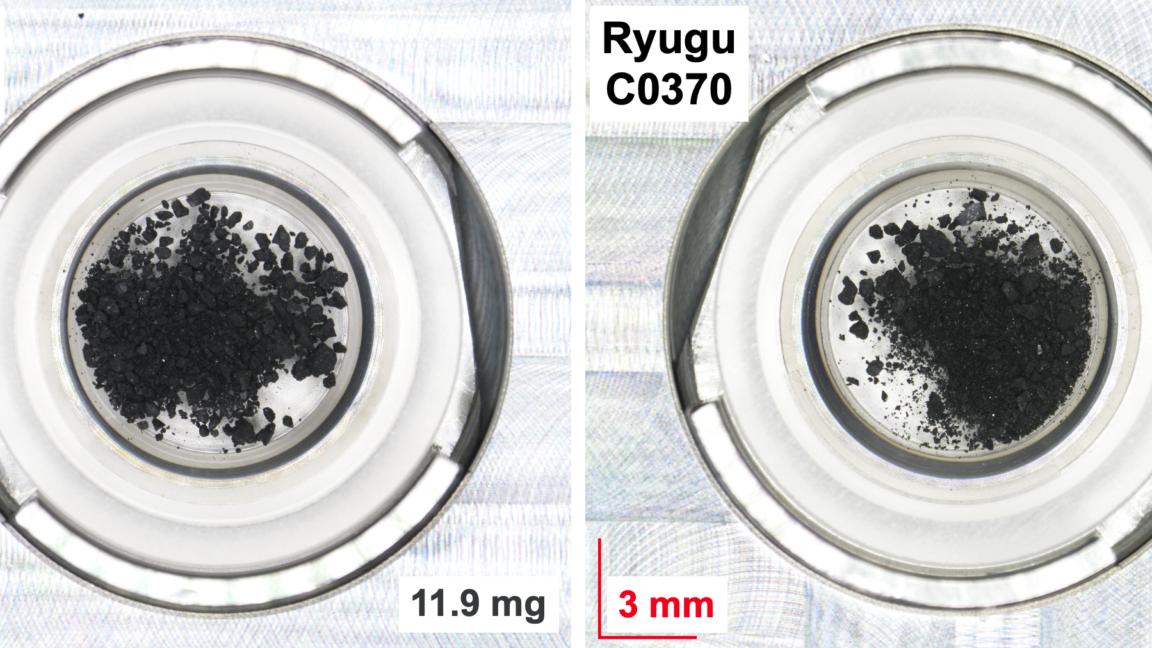
All five nitrogenous bases that form the foundations of DNA and RNA have finally been identified in samples collected directly from the Ryugu asteroid. Although sensational headlines suggest a breakthrough, scientists are tempering expectations: this is not the first time "building blocks of life" have been discovered in space, but it is the first time a complete set has been confirmed in material free from terrestrial contamination. Previous studies of samples from the Hayabusa2 mission did not show the presence of all bases, which posed a puzzle for astrochemists. Only the application of more sensitive analytical methods and a larger amount of material allowed proof that Ryugu—much like the previously studied Bennu asteroid or numerous meteorites—carries adenine, guanine, cytosine, thymine, and uracil. For users and enthusiasts of creative technologies, this discovery changes the way we look at the origin of biological information. Confirming that complex organic compounds, such as purines and pyrimidines, form naturally in outer space without the involvement of biological processes, suggests that the raw materials needed for life to emerge are common throughout the Solar System. The practical implications of this research extend beyond biology—they help us understand how stable chemical information can be in extreme conditions, which is crucial for future exploration missions and the search for biosignatures on other planets. Since the foundations of the genetic code are a byproduct of the cosmos's chemical evolution, the boundary between "dead" matter and life is becoming increasingly fluid.
The discovery of all four nucleobases that build DNA on the surface of the asteroid Ryugu sparked a wave of enthusiasm in the media, although for the scientific community, it was not a surprise, but rather the missing piece of the puzzle. The publication in Nature Astronomy sheds new light on the cosmic origin of life, confirming that the foundations of biology are not unique to Earth, but represent a constant element of the Solar System's inventory. What we considered for decades to be the result of our planet's specific chemistry turns out to be "standard goods" delivered by cosmic rocks.
The key aspect of the latest research is not the mere fact of the existence of the bases adenine (A), guanine (G), cytosine (C), and thymine (T) in space, but the confirmation of their presence in samples taken directly from the asteroid, which definitively cuts off speculation about terrestrial contamination. For years, skeptics suggested that genetic material found in meteorites reached them only after impacting Earth. The Hayabusa2 mission, by providing pristine samples from Ryugu, proved that the prefabricated components of life were formed in a vacuum long before our planet became habitable.
The Ryugu Mystery and the Breakthrough in Equipment Sensitivity
Previous analyses of Ryugu samples caused consternation among astrobiologists. While other asteroids, such as Bennu studied by the OSIRIS-REx mission, showed a rich organic composition, Ryugu seemed poorer in this regard. Only one of the bases was detected on it, which contradicted the theory about the ubiquity of DNA precursors in the asteroid belt. The latest research paper explains this paradox: the problem was not a lack of raw materials, but the too low sensitivity of previous tests and too small an amount of material subjected to analysis.
Read also


The use of more advanced extraction methods and increasing the volume of the studied samples allowed for the detection of all five nucleobases (including uracil found in RNA). This is significant from a chemical perspective because:
- Purines (adenine and guanine) have a double-ring structure and are usually easier to detect.
- Pyrimidines (cytosine, thymine, uracil) have a single ring and are much harder to identify in extremely low concentrations.
- Confirming the presence of both groups suggests that complete organic synthesis processes occur in space, rather than just random fragmentation reactions.
Ammonia as a Cosmic Catalyst
The most intriguing conclusion drawn from the publication is the correlation between the level of nucleobases and the concentration of ammonia inside the asteroid. Scientists noticed that the proportions of purines to pyrimidines change depending on the availability of this compound. This suggests a specific chemical mechanism that led to the creation of these molecules in the asteroid belt billions of years ago. Ammonia acts here as a key substrate, allowing us to begin modeling the "cosmic factory" of life with much greater precision.
Own data analysis indicates that the conditions inside asteroids — despite the extreme cold and lack of atmosphere — favor prebiotic reactions that on Earth require specific hydrothermal conditions. Asteroids are therefore not merely dead rocks; they are chemical reactors that have stored and processed organic matter for eons. The fact that the same compounds were found on different objects (Ryugu, Bennu, Murchison meteorite) proves that this process is common across the entire Solar System.
"Understanding the chemistry occurring inside asteroids is the key to answering whether life on Earth was an inevitable result of chemical evolution, or perhaps a lucky coincidence supported by an external delivery of ready-made components."
The Limits of the Molecular Panspermia Theory
While this discovery strengthens the theory of the cosmic origin of the building blocks of life, caution should be exercised in drawing overly far-reaching conclusions. The mere fact of having "bricks" does not mean having a "house." Nucleobases are only one of the elements; the formation of DNA also requires sugars (deoxyribose) and phosphate groups, as well as a mechanism to link these elements into a stable chain. The conditions during an asteroid's entry into the Earth's atmosphere are extreme — high temperature and pressure can degrade delicate organic matter.
From a technological and research perspective, the coming years will be crucial, focusing on:
- Isotopic analysis: This will allow for a clear distinction between molecules formed in interstellar space and those formed already within the Solar System.
- Stability testing: How long nucleobases can survive exposed to cosmic radiation on the surface of an asteroid.
- Searching for polymers: Whether short chains similar to peptides or nucleic acids could have formed in space, or if this process is reserved exclusively for planetary environments.
The Cosmic Standard of Life
The presence of DNA building blocks on asteroids like Ryugu suggests that the universe is "programmed" to create life at a chemical level. Since these raw materials are so common that we find them on every rock studied, the probability of similar processes occurring in other planetary systems increases drastically. This changes the paradigm of the search for extraterrestrial life — we are no longer looking for rare anomalies, but for the natural consequence of cosmic chemistry.
In my assessment, within the next decade, we will discover that asteroids delivered to the early Earth not only water and simple organic compounds but a complete "starter kit" that, in the favorable conditions of Earth's oceans, underwent rapid self-organization. Ryugu is not an exception — it is the standard. This means that life, in one form or another, may be much more common in the galaxy than we previously dared to assume, because its foundations are scattered in the vacuum in an almost wholesale manner.
More from Tech




Related Articles

After court loss, RFK Jr. gives himself more power over CDC vaccine panel
Apr 6
Steven Spielberg Still Wants to Make a Horror Film ‘Someday’
Apr 6New Jersey has no right to ban Kalshi's prediction market, US appeals court rules
Apr 6