Bluesky Has a New App, and It’s All About AI

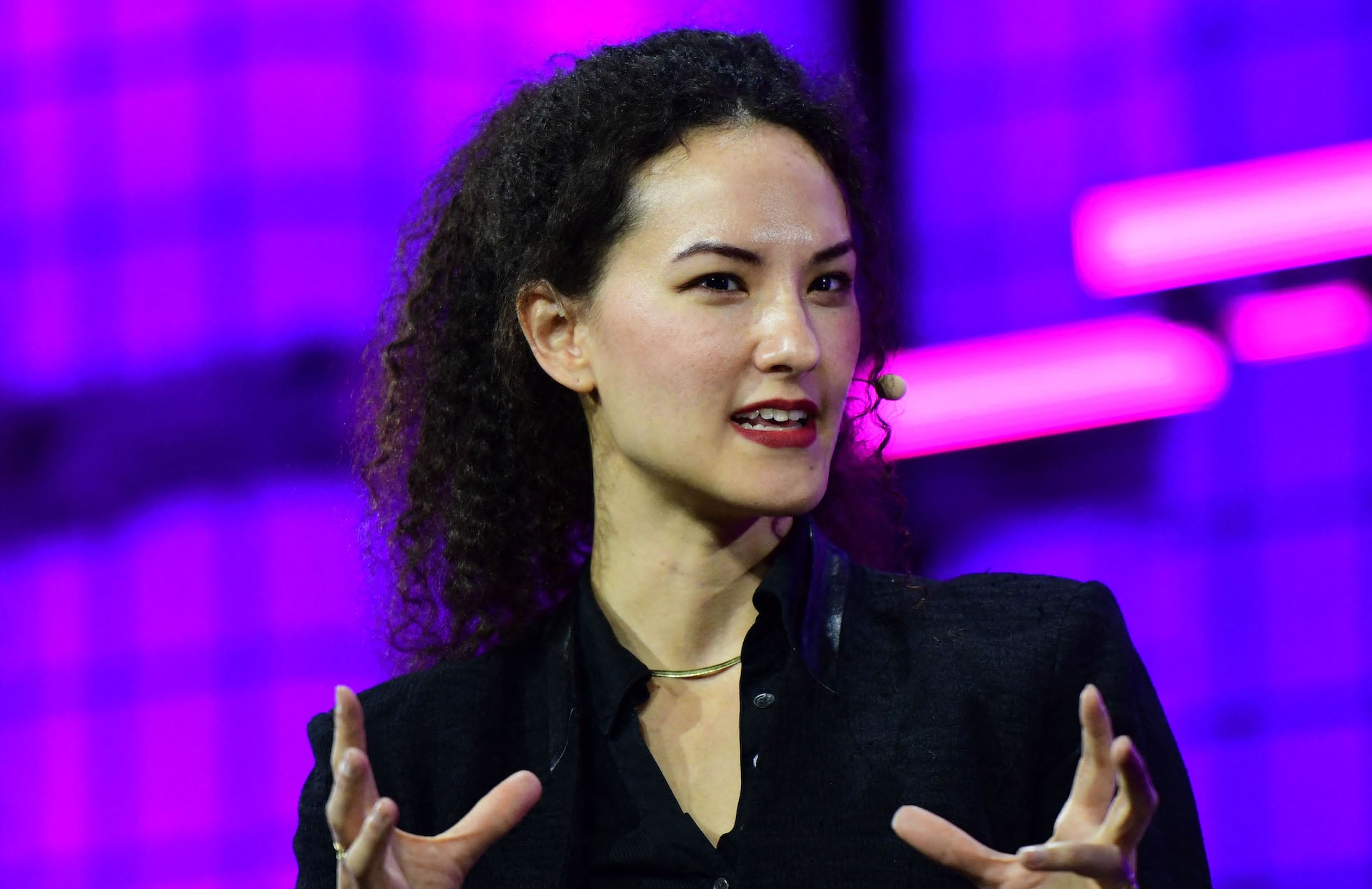
Bluesky chief innovation officer Jay Graber © DON MACKINNON/AFP via Getty Images
Jay Graber, stepping down as CEO of Bluesky to take on the role of Chief Innovation Officer, wasted no time—her team has just announced a brand-new application designed to revolutionize how we interact with social media through deep AI integration. Although the project has not yet been released to the public, the announcement marks a new strategic direction for the platform, which until now has been primarily associated with decentralization and the AT Protocol. For the global community of creators and users, this signifies a shift from passive content consumption to an ecosystem where artificial intelligence assists in personalizing experiences and moderation on an unprecedented scale. Instead of relying on rigid algorithms imposed by tech giants, the new app aims to offer tools that allow for greater control over what we see and how we create. The practical implications are clear: Bluesky is ceasing to be merely an alternative to X and is becoming a testing ground for generative technologies that could define Web3 standards. The decision to spin off these features into a separate product suggests that the company wants to test the most radical solutions without risking the stability of its main network. It is a clear signal that the future of social media will be built on the foundation of open language models and full user autonomy.
Changes at the top of power in Silicon Valley usually herald a sharp turn in product strategy, but in the case of Bluesky, we are dealing with a much more precise operation. Jay Graber, who until recently held the position of CEO of this decentralized platform, has stepped down from her role to take on the newly created position of Chief Innovation Officer. While in many corporations such a title is often seen as a sinecure, at Bluesky it has become the catalyst for the most ambitious project in the service's short history: a new application built entirely around artificial intelligence.
The decision to move Graber to the innovation division is no accident. From the beginning, Bluesky positioned itself as a technological alternative to centralized giants, betting on the AT Protocol. Now that the social media market has become saturated with simple microblogging clones, the team led by Graber has opted for a leap forward. The new application, although not yet publicly released, is intended to redefine how users interact with content generated by algorithms and other people.
Innovation architecture instead of crisis management
The role of Chief Innovation Officer allows Jay Graber to disconnect from daily operational management, putting out fires on servers, and fighting for user retention, and instead focus on what is most interesting in technology — experimentation. The tech industry often overuses high-flown titles, but in this case, Graber's team has already provided proof that the change in the company structure had deep substantive meaning. The announced application is not merely an update to the current Bluesky client, but a separate entity designed for the era of generative artificial intelligence.
Read also


The transition from the role of CEO to innovation leader is a move rarely seen, but extremely logical in the context of Bluesky. This platform has always aspired to be more than just a "safe harbor" after turmoil in other services. Thanks to the new structure, Jay Graber can now directly oversee the integration of advanced language models and AI tools with the AT Protocol, which could give Bluesky a technological edge that competitors operating on closed, outdated systems lack.
Artificial intelligence as the foundation of a new platform
Although technical details of the new application are being kept under wraps, the direction taken by Graber's team is clear: AI is not meant to be just an add-on, but the foundation of the user experience. Unlike current solutions, where artificial intelligence often serves as a censor or simple image generator, the new Bluesky app is intended to use these tools to personalize the data stream in an unprecedented way. The Chief Innovation Officer suggests that the future of social media lies in intelligent curation that gives control back to the user, rather than an algorithm focused solely on profit.
It is worth noting that Bluesky has promoted the idea of "algorithmic choice" from the start. The new application will likely take this concept to the next level, allowing for the dynamic creation of individual filters and content presentation methods using AI. This is a bold step, considering that most platforms are afraid to give users too much power over what they see on their screens. For Jay Graber and her team, however, it is the only way to create a truly open ecosystem.

Challenges facing the new Bluesky model
Despite the enthusiasm surrounding Graber's new role, Bluesky faces real challenges. Building an AI-based application requires not only massive computing power but also a precise approach to privacy and copyright issues — topics that are particularly sensitive in a decentralized world. As Chief Innovation Officer, Jay Graber must prove that she can translate the theoretical advantages of the AT Protocol into a product that will be accessible to a mass audience without losing its unique identity.
- AI Integration: Using artificial intelligence for deep personalization without violating privacy.
- Decentralization: Maintaining the open nature of the network while introducing advanced, proprietary tools.
- Adoption: Convincing users to switch to a new application that may differ drastically from what they know.
- Scalability: Ensuring smooth operation of AI-based features with a growing user base.
The new Bluesky application is a signal that the company does not intend to rest on its laurels after its initial image success. The change in leadership and the appointment of Jay Graber to a position responsible for innovation is a clear message to the industry: Bluesky wants to be a technological leader, not just an ideological alternative. If the announced product lives up to expectations, we may witness the birth of a new category of social tools where AI serves the user, not corporate financial results.
"Chief innovation officer is a real position that, in the case of Bluesky, means real products. Jay Graber's team isn't waiting for the future — they are coding it right now."
One could argue that the success of the new Bluesky application will depend on how much Jay Graber manages to democratize access to AI tools within the social network. If the platform manages to combine the freedom of a decentralized protocol with the power of artificial intelligence, it will create a standard that will be hard for even the biggest market players to match. The industry has stopped asking if Bluesky will survive — now everyone is wondering how much Graber's new vision will change our perception of digital communication.
More from Tech




Related Articles

After court loss, RFK Jr. gives himself more power over CDC vaccine panel
Apr 6
Steven Spielberg Still Wants to Make a Horror Film ‘Someday’
Apr 6New Jersey has no right to ban Kalshi's prediction market, US appeals court rules
Apr 6