DJI Osmo 360 Review: The Best 360 Camera for the DJI-Pilled
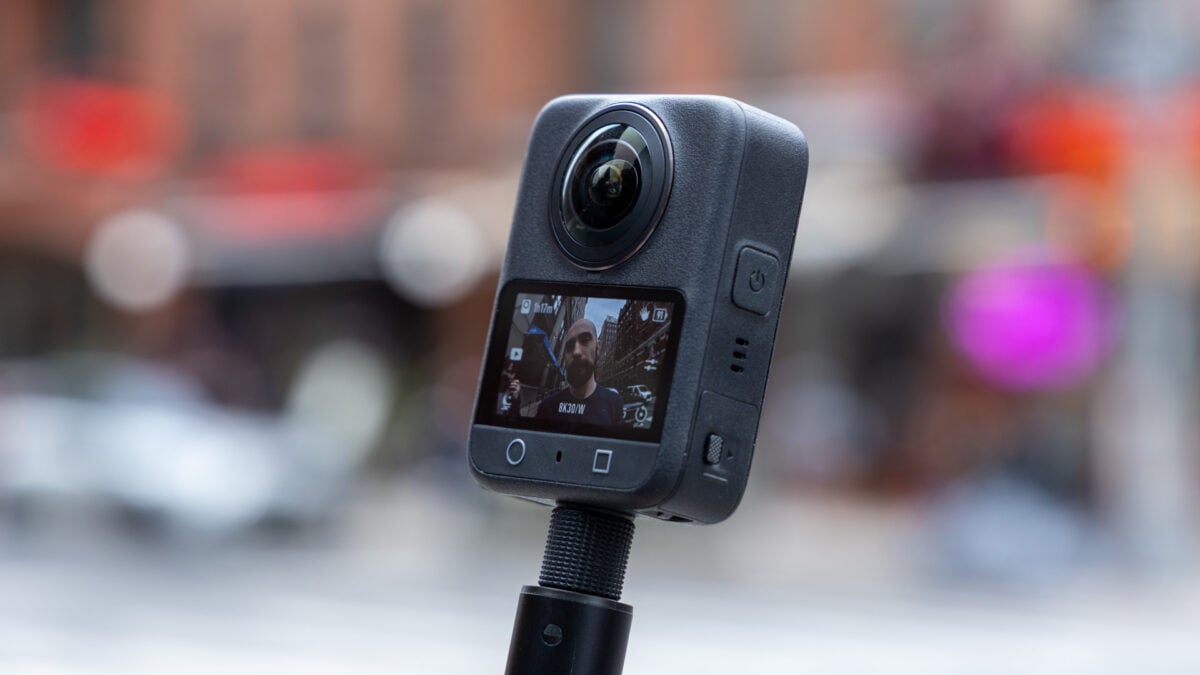
© Raymond Wong / Gizmodo
8K resolution at 50 frames per second is the new standard in the spherical camera segment, introduced by DJI with the Osmo 360 model, directly challenging the dominance of the Insta360 brand. The device allows for recording in a full 360-degree range, eliminating the need for precise framing during filming—users can select any viewing angle during the post-production stage. Thanks to advanced sensors, the camera performs significantly better in challenging lighting conditions than previous consumer solutions, making it a viable tool for professional content creators. For users integrated into the DJI ecosystem, a key benefit is full compatibility with the DJI Mimo app and Action series accessories. The practical implications are clear: the ability to capture incredibly smooth "third-person view" shots without a visible selfie stick, and immense flexibility in editing materials for various social media formats. The Osmo 360 is not just another gadget, but a powerful visual data recorder that, thanks to its high resolution, allows for lossless cropping to 4K format. This signals that the 360-camera market has matured to a point where image quality is no longer a compromise for a unique perspective.
The action camera market has undergone a drastic transformation in recent years, moving away from static wide-angle shots toward total compositional freedom. DJI Osmo 360 enters this arena as a direct response to the dominance of the Insta360 brand, offering parameters that until recently seemed reserved for professional cinema equipment. The ability to record spherical images in 8K resolution at 50 frames per second is not just an engineering feat, but a real game-changer for creators who do not want to choose between motion smoothness and fine detail.
For users deeply rooted in the DJI ecosystem, the new camera represents the missing link in their arsenal of creative tools. The device eliminates the age-old problem of "missing the frame" — here, framing takes place only at the post-production stage, allowing you to focus on the action itself rather than aiming the lens. This "capture everything, everywhere, all at once" approach makes the Osmo 360 one of the strongest players on the market, challenging the current leaders of the 360-degree camera segment.
The power of 8K resolution in a spherical edition
The key to understanding the DJI Osmo 360 phenomenon is its sensor and image processor, which allow for the generation of the massive number of pixels necessary to maintain sharpness after "cutting" a flat image from the sphere. Recording in 8K while maintaining 50 fps means that even after significant digital zooming in post-production, the final material retains a clarity that was lacking in older models recording in 5.7K. It is this resolution surplus that allows for the creation of dynamic transitions and smooth perspective changes without visible quality degradation.
Read also


It is worth noting how DJI has handled color reproduction and dynamic range. The camera performs excellently in difficult lighting conditions, which is a common pain point for many smaller sensors. Thanks to advanced noise reduction algorithms, spherical footage from the Osmo 360 looks natural, and the transitions between the two fisheye lenses are almost invisible. This image "stitching" occurs with a precision that minimizes parallax errors, which is crucial when filming objects close to the lenses.
- Maximum resolution: 8K
- Frame rate: up to 50 fps at full resolution
- 360-degree spherical recording capability
- Full integration with DJI mobile apps
- Advanced RockSteady image stabilization
Post-production challenges and hardware requirements
Owning a tool as powerful as the DJI Osmo 360, however, comes with specific requirements on the user's side. Recording in 8K generates massive amounts of data, making the choice of appropriate editing software critical. Not every free application can handle smooth playback and rendering of files with such high pixel density. To fully exploit the potential of this camera, it is essential to have a powerful workstation or a modern tablet with professional software capable of handling 360 video.
DJI provides its own editing tools, which are intuitive, but for professional creators, they are only a starting point. The process of "reframing," or choosing specific frames from the image sphere, requires practice and an understanding of the specifics of wide-angle lenses. The user must remember that although the camera sees everything, the final effect depends on skillfully guiding the viewer's eye during editing. Osmo 360 provides the tools to create impossible shots, but it also imposes greater discipline in file management and the creative process.
The DJI ecosystem as a competitive advantage
For individuals who already use Mavic series drones or Ronin gimbals, the DJI Osmo 360 is a natural choice due to color and interface consistency. DJI has focused on unifying the user experience, which significantly facilitates work on larger projects where material from multiple cameras must look identical. The intuitiveness of operation, known from the brand's other products, has been transferred here to the field of spherical cameras, making the entry barrier into the world of 360 video much lower than ever before.
Even though the market is saturated with solutions from competitors, the Osmo 360 stands out for its build quality and firmware reliability. DJI has proven that it can optimize hardware for extreme applications, and their new 360 camera is no exception. The device is ready to work in harsh conditions, offering stability that smaller manufacturers often lack. This is equipment tailored to the needs of modern content creators who expect maximum quality without technical compromises.
A new standard in a pocket-sized format
The arrival of the DJI Osmo 360 definitively ends the era in which spherical cameras were treated merely as gadgets for YouTube curiosities. Thanks to 8K resolution and 50 fps fluidity, this technology becomes a full-fledged tool in professional video production. DJI has not only caught up with the competition but, in many aspects, has set a new direction for development, focusing on raw processing power and optical quality that withstands the rigors of post-production.
Choosing this camera is an investment in the future of content creation, where the line between filming and creating space is blurring. Although it requires the user to have a solid hardware background for editing, the results that can be achieved with the Osmo 360 are currently unattainable for traditional action cameras. DJI has created a product that forces the industry to take another step forward, and for creators, it means one thing: the end of limitations related to the lens's field of view.
More from Tech




Related Articles

After court loss, RFK Jr. gives himself more power over CDC vaccine panel
Apr 6
Steven Spielberg Still Wants to Make a Horror Film ‘Someday’
Apr 6New Jersey has no right to ban Kalshi's prediction market, US appeals court rules
Apr 6