Final analysis of 2025 Iberian blackout: Policies left Spain at risk
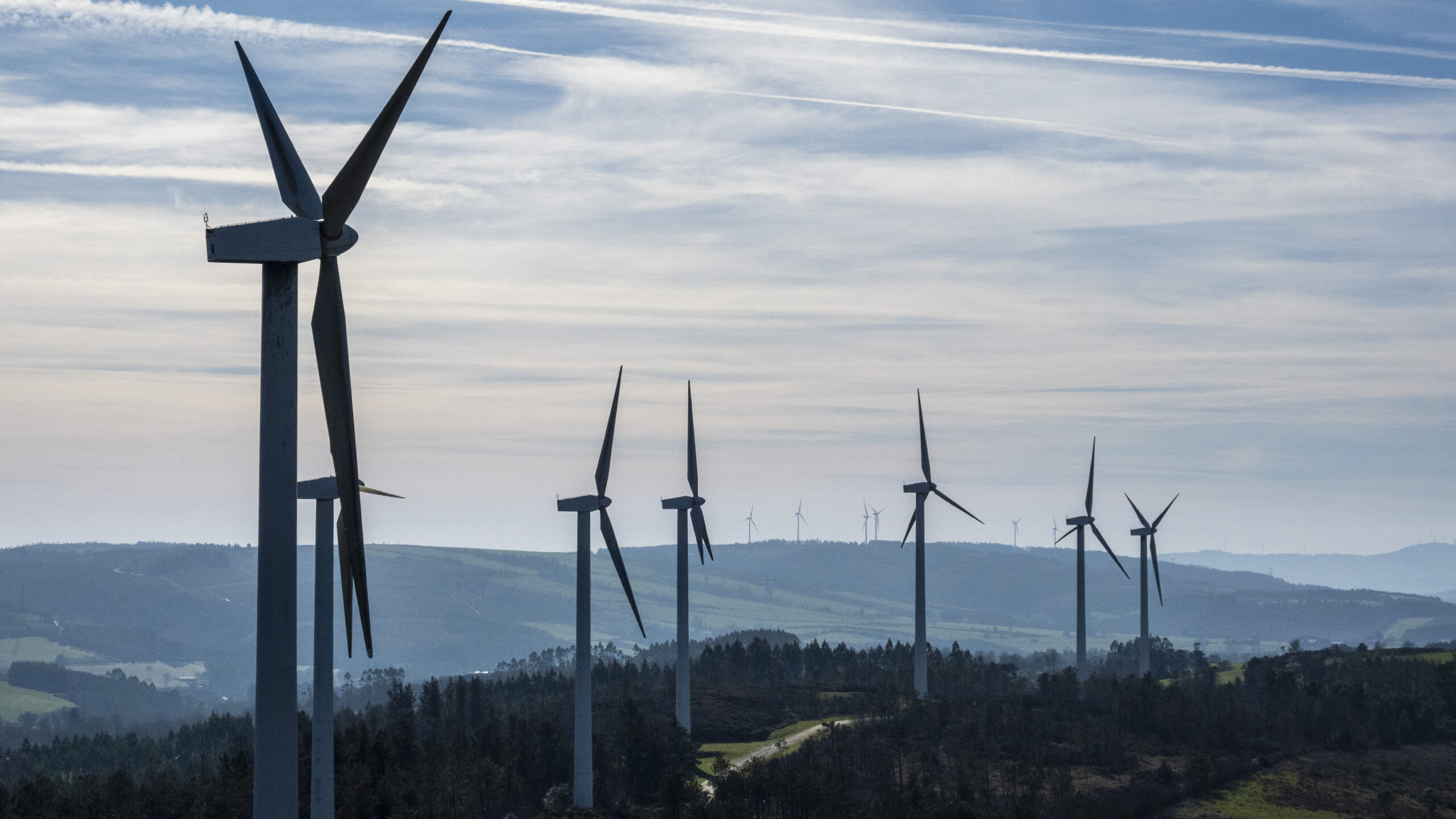
Foto: Xurxo Lobato
A single inverter fault at a photovoltaic plant near the Spanish-Portuguese border became the flashpoint that led to the energy paralysis of the entire Iberian Peninsula. The final report on the 2025 blackout published by ENTSO-e reveals that the key issue was not the hardware failure itself, but dangerous voltage and frequency oscillations. Sub-second precision data showed that protection systems reacted too aggressively—instead of damping the fluctuations, they led to the premature disconnection of subsequent units from the grid. The analysis highlights the critical role of Inverter-Based Resources (IBR) technology. While renewable energy sources are the foundation of the transformation, their digital control can behave unpredictably in crisis situations, triggering a domino effect. For users and the technology sector, the conclusion is clear: the stability of a modern grid depends on the precise calibration of reactive power control software. Global standards must be updated to force inverter manufacturers to ensure greater resilience to momentary anomalies. Without a change in operational policy and better coordination of interconnectors between countries, systems based on distributed photovoltaics will remain vulnerable to rapid, cascading outages that can cut off power to entire regions in just a few seconds.
The recently published report by the European network coordinator ENTSO-e sheds new light on the causes of the total energy paralysis of the Iberian Peninsula in 2025. Although initial analyses pointed to voltage oscillations, a detailed investigation revealed a much deeper problem: a combination of unfortunate legal regulations, incorrect hardware configurations, and a lack of flexibility in renewable systems. This document not only reconstructs the collapse of the grid in Spain and Portugal second by second but, above all, exposes the dangerously low safety margins at which modern power systems operate.
A key conclusion from the report is that the infrastructure was pushed to the brink of endurance not by extreme weather events, but by devices that disconnected from the grid exactly when they should have been stabilizing it. Analysis of high-precision log data showed that protection systems were set too aggressively, leading to a chain reaction that operators were unable to stop within the critical time window.
Harmony of chaos and problematic inverters
The ENTSO-e investigation focused on two types of oscillations that occurred just before the failure. The first is a well-known systemic phenomenon in which the eastern and western ends of the European grid oscillate relative to its center. However, the second oscillation turned out to be much more local and destructive. Experts traced its source to a single interface between the grid and a photovoltaic power plant in Spain, located near the border with Portugal. The likely cause was a fault in an inverter converting direct current to alternating current.
Read also


Although the oscillations themselves did not directly cause the blackout, they drastically increased the risk. Rises and falls in frequency and voltage forced other devices on the grid to operate at the limits of their operational ranges. In response to these fluctuations, Spanish oscillation damping procedures increased the amount of reactive power in the system, which paradoxically led to a rapid voltage surge on the main 400 kV transmission lines.
Policy of rigid values instead of flexibility
One of the most controversial points of the report is the assessment of Spanish energy policy regarding renewable sources. On the day of the failure, due to early spring weather, most of the energy in the grid came from RES. However, instead of allowing these installations to dynamically absorb excess reactive power (which would help lower the voltage), existing regulations imposed fixed parameter values on them. This deprived operators of flexibility at the moment it was most needed.
An additional problem proved to be the so-called shunt reactors, which are used to remove reactive power from the grid. Although Spain had a significant reserve of these devices, they were operated manually. The pace of events was so breakneck that by the time the blackout became inevitable, as much as two-thirds of the available reactor capacity remained unused. The system was simply not prepared for such a lightning-fast voltage escalation, which exceeded permissible norms within two minutes.
- The main 400 kV transmission grid should operate within +/- 20 kV limits.
- Alarms were set at levels of 420 kV, 430 kV, or 435 kV, depending on the node.
- Many generators were permitted to disconnect as low as 430 kV.
- The safety margin between normal operation and disconnection was as low as 5 kV or non-existent.
Premature escape of generators
A detailed analysis of 19 key devices that disconnected in the critical 12-second window before the grid collapse revealed the scale of technical errors. Only four of them behaved in accordance with current regulations. The remaining nine units disconnected prematurely, failing to maintain the required delay times when voltage was exceeded. This "escape" of equipment eliminated nearly 1.9 GW of power from the system at the worst possible moment.
The report also addresses the role of micro-photovoltaic installations. Red Eléctrica estimates that there is about 6.5 GW of small-scale PV in the system, 75% of which is connected to the low-voltage grid. Data from two inverter manufacturers showed drastic differences in stability: devices from one manufacturer disconnected en masse at the first oscillations (up to 12% of units), while others remained stable. This suggests that hundreds of megawatts of power were "jumping" in the system without any control from the central operator.
"The safety margin between the allowed voltage range and the level at which generators could disconnect was low or non-existent," the ENTSO-e report states.
Inertia is not everything
In the public debate following the failure, the argument about the lack of "inertia" in the grid, provided by traditional, heavy gas or hydro turbines, was often raised. However, the ENTSO-e analysis dampens this enthusiasm. Simulations showed that even a threefold increase in system inertia would have reduced oscillations by only 3%. This clearly indicates that the problem was not the type of fuel, but the way modern power electronics interact with the grid under the supervision of rigid and outdated regulations.
Instead of investing exclusively in traditional energy sources, the report suggests a radical change in the software and configuration of inverters and making the reactive power management policy for wind and solar farms more flexible. The 2025 blackout was not a failure of renewable technologies as such, but a failure of control systems that did not keep pace with the energy transformation. Without the implementation of fast, automatic response systems and a revision of disconnection thresholds, grids with a high share of RES will remain vulnerable to similar resonance phenomena.
More from Tech




Related Articles

After court loss, RFK Jr. gives himself more power over CDC vaccine panel
Apr 6
Steven Spielberg Still Wants to Make a Horror Film ‘Someday’
Apr 6New Jersey has no right to ban Kalshi's prediction market, US appeals court rules
Apr 6