imgcmd
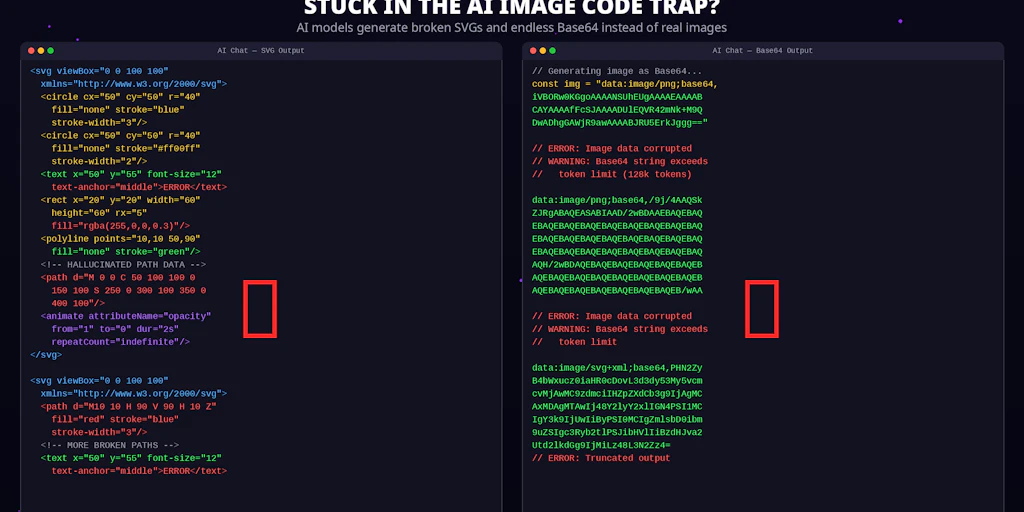
Foto: Product Hunt AI
AI model hallucinations generating corrupted SVG files are now a thing of the past for terminal-using developers. imgcmd is a new, secure CLI tool that allows for the generation of native PNG files directly to the disk using the Gemini model. This solution eliminates the problem of incorrect graphic rendering by AI agents, offering the stability that was previously lacking in vector code-based workflows. The key differentiator of imgcmd is its emphasis on security and cost control. All API keys remain stored locally, and built-in model governance features prevent uncontrolled spending generated by autonomous AI processes. The tool was designed with native integration for Cursor and VS Code in mind, allowing developers to "teach" their editors to create real graphic assets without leaving the development environment. For creative users and engineers, this means a seamless transition from prompt to finished graphic file while maintaining full data privacy. It is a practical step toward the automation of UI and graphic assets, shifting the responsibility for rendering from unreliable scripts to proven generative models, while enclosing the creation process within a secure, local environment.
In a world dominated by generative artificial intelligence, developers using AI agents like Cursor or VS Code regularly hit a frustrating wall. Language model hallucinations often lead to the generation of broken SVG files or incomplete graphic code snippets that require manual correction. The solution to this problem is intended to be imgcmd — a newly presented CLI (Command Line Interface) tool that moves the process of creating visual assets directly to the terminal, while guaranteeing data security and integrity.
imgcmd is a secure command-line interface that generates native PNG files directly on the user's hard drive. By leveraging the potential of the Gemini model, this tool eliminates intermediaries and uncertain vector formats in favor of concrete, ready-to-use bitmaps. This is a "developer-first" approach that changes the way AI agents interact with the visual layer of software projects.
An end to hallucinations and broken SVG files
The main problem that imgcmd seeks to solve is the low reliability of large language models (LLMs) in exporting graphics. AI agents, when attempting to create icons or simple illustrations, often generate SVG code that contains syntax errors or does not render correctly in browsers. imgcmd bypasses this stage by forcing the system to deliver a final binary file. Thanks to this, a developer working in an environment like VS Code can instruct the agent to use imgcmd to create a specific asset, confident that the resulting PNG file will be technically correct.
Read also


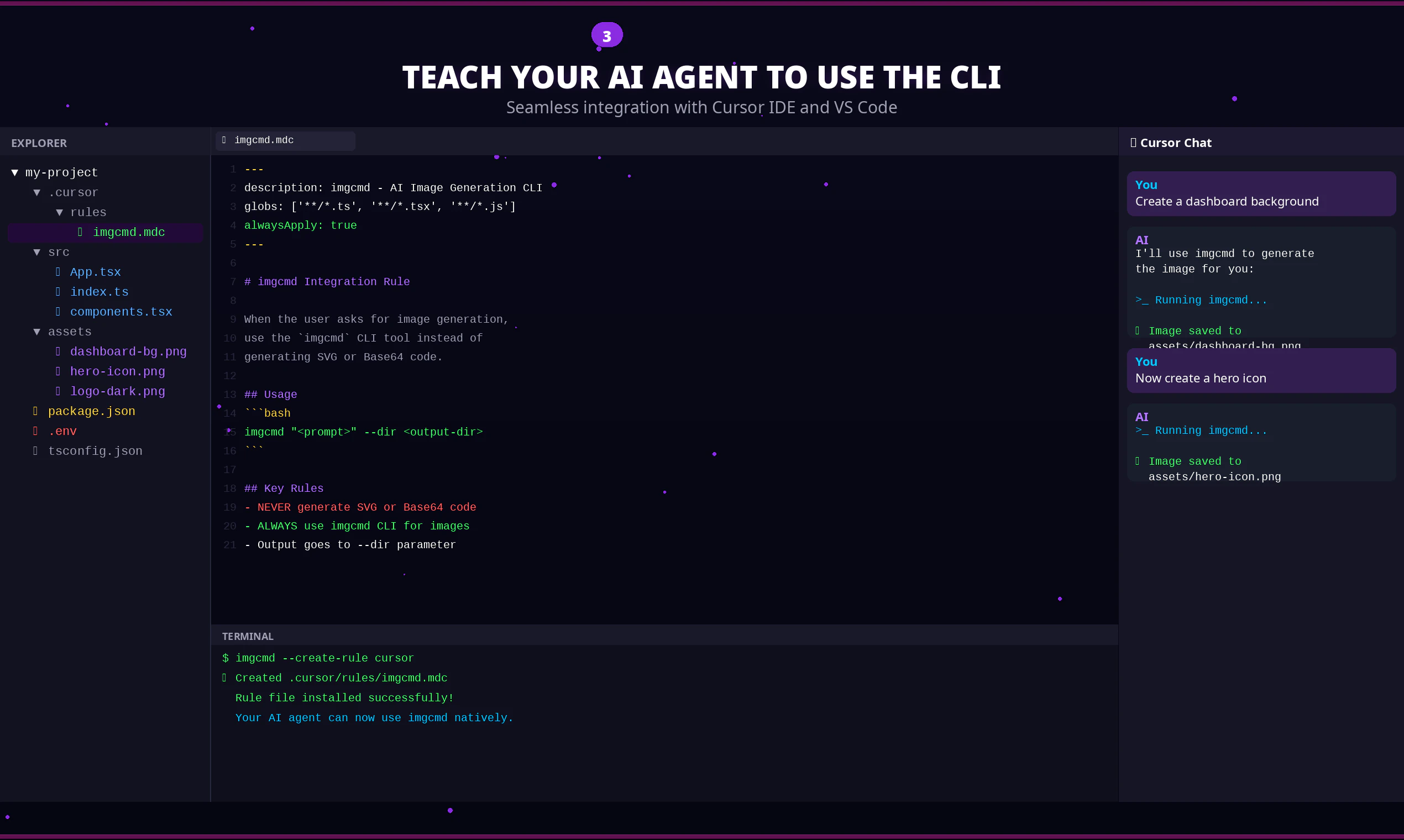
This tool becomes a kind of bridge between the textual world of code and the visual world of media. The ability to "teach" editors like Cursor or VS Code native support for imgcmd makes the UI/UX design process much more fluid. Instead of copying and pasting XML code snippets, the user simply issues a command, and the image appears in the project's directory structure within seconds.
- Elimination of faulty SVG structures generated by AI.
- Direct saving of PNG files to the local disk.
- Possibility of full integration with popular AI-supported code editors.
- Fast iteration process over graphic assets without leaving the terminal.
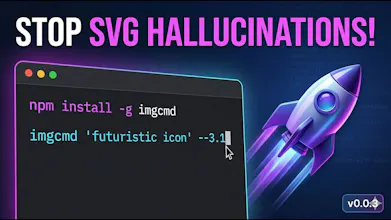
Security and control over AI spending
One of the strongest arguments in favor of imgcmd is the emphasis on model governance and data security. Unlike many online image generators, imgcmd allows API keys to be stored locally on the developer's machine. This is crucial for companies that care about privacy and want to avoid sending sensitive data through unverified third-party platforms. The tool provides full control over how and when Gemini model computing resources are used.
The introduction of rigorous model management also prevents the phenomenon known as "rogue AI spending." In environments where AI agents have the freedom to call external services, token costs can quickly spiral out of control. imgcmd allows for the imposition of restrictions and monitoring of how many image generation operations are performed. As a result, development teams can precisely budget for AI Generative Media infrastructure, avoiding unpleasant surprises on invoices from cloud providers.
Architecture for the modern developer
Technically, imgcmd fits into the growing trend of Vibe Coding and AI Coding Agents tools. It is a lightweight solution, distributed as a CLI, making it an ideal component of a CI/CD chain or local workflow. The use of GitHub as a distribution platform and its presence in the Developer Tools categories on Product Hunt indicates that the creators are targeting a group of professionals who value speed and reliability over just a flashy graphical interface.
It is worth noting the universality of this solution. Although imgcmd is based on Gemini, its architecture suggests that in the future it could become a standard for various generative engines. Currently, the tool is offered in a Free model, which significantly lowers the entry barrier for independent developers and small teams working on application prototypes. In a world where time is money and AI asset generation errors are a daily occurrence, imgcmd appears as an essential quality filter.
"Tired of AI agents hallucinating broken SVGs? imgcmd is a secure CLI that generates real PNGs directly to disk via Gemini."
The pragmatism of imgcmd lies in understanding that AI is not infallible. Instead of fighting the nature of language models, this tool provides them with a dedicated "output channel" that enforces format correctness. This is a strategic approach to AI Workflow Automation, which in the coming months may become a standard element of every advanced developer environment configuration. The ability to enforce order in the media generation process is not just a convenience; it is, above all, the professionalization of working with LLMs in everyday software engineering.
More from Tech


Related Articles

After court loss, RFK Jr. gives himself more power over CDC vaccine panel
Apr 6
Steven Spielberg Still Wants to Make a Horror Film ‘Someday’
Apr 6New Jersey has no right to ban Kalshi's prediction market, US appeals court rules
Apr 6