Influcio
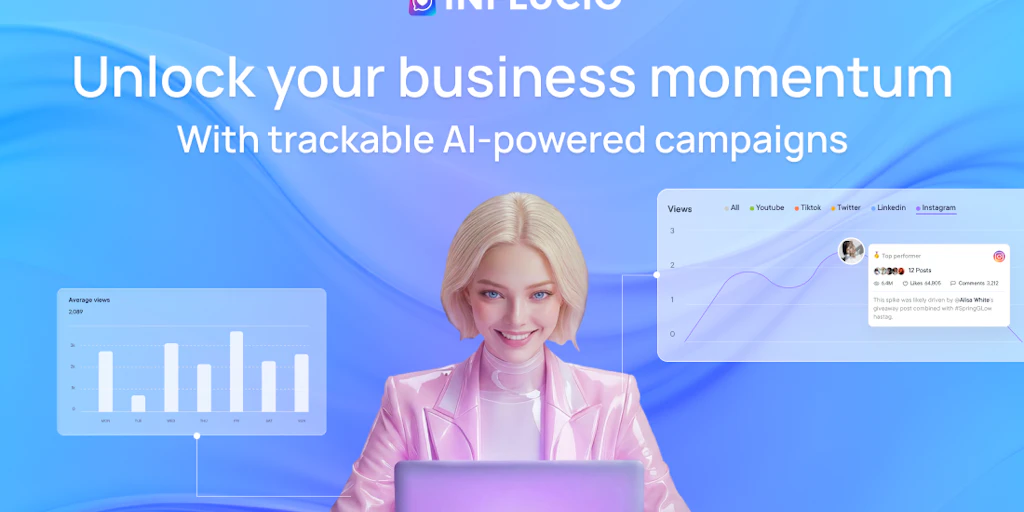
Foto: Product Hunt AI
One-off, risky collaborations with creators are becoming a thing of the past in favor of self-learning systems that guarantee real returns on investment. Influcio, a new AI marketing Agent debuting on the Product Hunt platform, is redefining influencer marketing by replacing intuition with hard data and end-to-end automation. The tool not only finds perfectly matched creators but independently manages entire campaigns, utilizing a feedback loop to optimize every subsequent implementation. For brands and marketers, this means an end to tedious manual research and the uncertainty associated with influencer selection. Influcio operates as an integrated all-in-one platform that analyzes performance in real-time and automatically adjusts strategy to deliver on established KPIs. The practical implication for users is clear: scaling promotional activities becomes simpler and cheaper, as artificial intelligence eliminates "dead air" and mismatched partnerships. In an era where authenticity must go hand in hand with cost-effectiveness, such an automated approach is becoming the new standard for building global reach. Handing over the reins to an AI agent allows for a focus on creative strategy, while technology takes on the burden of execution and analytics.
Modern influencer marketing has come a long way from amateur posts to a professional machine generating billions in turnover. However, as the scale increased, the industry hit a wall of efficiency: manual creator searches, negotiations, and performance monitoring became a bottleneck for brands focused on hard data. This is where Influcio comes in, a newly unveiled AI agent that promises to revolutionize how companies build relationships with creators, transforming chaotic campaigns into a precise, self-learning operational process.
The launch of Influcio on the Product Hunt platform sheds light on a broader trend in the creative technology sector – the transition from simple analytical tools to autonomous agents capable of making decisions. Instead of merely offering a database, Influcio positions itself as a comprehensive end-to-end system that takes full responsibility for the campaign lifecycle. This is a "set and forget" approach, where artificial intelligence not only suggests whom to engage but actively manages the process to maximize return on investment (ROI).
From one-off actions to a self-learning ecosystem
The biggest pain point of traditional influencer marketing is the lack of continuity and learning from mistakes. Most brands execute campaigns in a "one-off" mode – after the activities end, the data goes into a spreadsheet and rarely realistically influences the next selection of creators. Influcio drastically changes this dynamic by introducing a self-learning AI system. The platform's algorithm analyzes performance data from every conducted campaign to optimize subsequent launches. This means that every subsequent dollar spent in the system should theoretically work more effectively than the previous one.
Read also


The platform offers all-in-one functionality, which in practice means eliminating tool fragmentation. The marketing team no longer needs to switch between Instagram, Google Sheets, CRM systems, and payment tools. Influcio integrates the processes of finding the best influencers, managing communication, and monitoring results into a single dashboard. This is not only a time saver but, above all, a way to maintain data consistency, which serves as the fuel for the AI engine optimizing results.
Technical precision of an AI agent in marketing
The key to Influcio's advantage is its role as an "agent" rather than just a "tool." Traditional platforms require the user to perform tedious filtering of parameters such as reach, location, or demographics. The AI agent in Influcio goes a step further, analyzing the contextual fit of the creator to the brand and predicting potential results based on historical patterns. The tool has been classified in the Marketing Automation Platforms and AI Agents categories, highlighting its proactive nature.
- Automated search: Selection of creators based on real conversion data, not just empty reach metrics.
- End-to-end management: Handling campaigns from the first contact to final performance reporting.
- Result-driven optimization: Using data from previous campaigns for more precise planning of future activities.
- Integrated ecosystem: All the tools necessary to run influencer marketing in one application.
It is worth noting the Influcio business model, which is marked as Payment Required. In a world dominated by free tools with limited capabilities, a clear payment model suggests that the product is aimed at professional marketing departments and agencies that require reliability and hard evidence of effectiveness. The focus on result-driven campaigns clearly defines the target group: companies for which influencer marketing is a performance channel, not just an image-building one.
A new era of autonomy in creative technologies
The emergence of Influcio fits into the broader context of the development of AI Agents observed on portals like Product Hunt. We are no longer just talking about text generation by LLMs or creating graphics, but about systems that can operate in the real world – negotiating, analyzing budgets, and managing human relationships. For the Marketing & Sales industry, this represents a fundamental shift: marketers become operators of intelligent systems instead of executors of repetitive administrative tasks.
The application of Influcio goes beyond simple sponsored posts. Thanks to its analytical capabilities, the system can identify niche creators who build authentic engagement but are often overlooked by traditional agencies due to smaller reaches. Artificial Intelligence algorithms are not subject to bias and are not guided by intuition, but by hard statistics, allowing for the discovery of undervalued talent and the building of more effective strategies to reach the end customer.
One could argue that tools like Influcio will lead to the professionalization of the entire creator ecosystem. When campaigns are managed by result-oriented systems, influencers providing real value and conversion will naturally be promoted by algorithms. This marks the end of the "buying reach" era – in a world driven by AI agents, only the real impact on purchasing decisions and the authenticity of the message, which can be measured and replicated in subsequent campaigns, will matter.
For the global creative technology market, the launch of such a tool is a signal that automation is entering the most "human" areas of marketing. While the relationship with the creator remains crucial, the entire operational shell is becoming the domain of machines. Influcio proves that the future of influencer marketing lies not in larger budgets, but in smarter data management and the bold delegation of decision-making processes to specialized AI agents.
More from Tech

Related Articles
After court loss, RFK Jr. gives himself more power over CDC vaccine panel
Apr 6
Steven Spielberg Still Wants to Make a Horror Film ‘Someday’
Apr 6New Jersey has no right to ban Kalshi's prediction market, US appeals court rules
Apr 6