Mesh LLM

Foto: Product Hunt AI
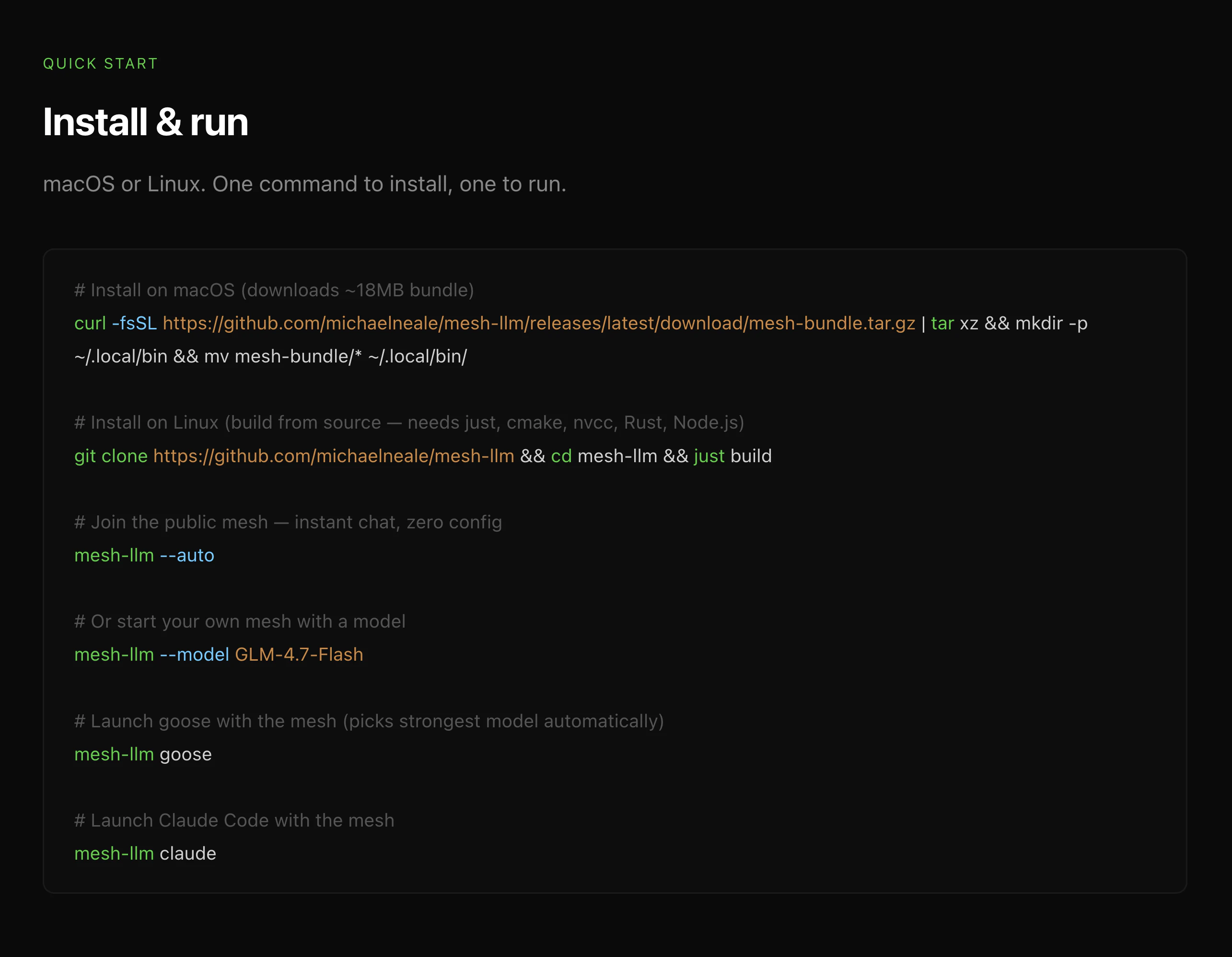
Unused computing power from home computers and servers can now create a powerful, decentralized network to support the most demanding language models. Mesh LLM debuts as a p2p inference cloud solution that allows users to combine distributed hardware resources into a single, auto-configurable infrastructure. Instead of relying on costly, centralized cloud service providers, the creators propose a pool compute model, enabling the execution of open AI models while maintaining full privacy and mobility. For developers and creative professionals, Mesh LLM represents a radical shift in technology accessibility. The system allows access to private models from anywhere in the world and enables AI agents to collaborate directly in a peer-to-peer architecture. This solution eliminates entry barriers for those working with large datasets, which previously required investments in expensive graphics cards or corporate subscriptions. In practice, users gain a free, scalable alternative to commercial APIs, transforming idle CPU and GPU resources into an efficient ecosystem for working on generative media or workflow automation. The democratization of access to AI infrastructure is becoming a reality, shifting the computational burden from massive data centers directly into the hands of the open-source community.
In a world dominated by cloud giants who dictate the terms of access to computing power, a solution emerges that challenges the centralized model of hosting artificial intelligence. Mesh LLM debuts as a tool in the AI Infrastructure Tools category, promising to democratize access to the most demanding language models. Instead of relying on expensive clusters in data centers, this project focuses on a distributed p2p (peer-to-peer) architecture, transforming unused hardware resources into a powerful, shared inference cloud.
The concept of "pool compute" is not new, but Mesh LLM gives it the form of a ready-to-use ecosystem for developers. The system allows for automatic network configuration where devices with different computing powers can collaborate to jointly handle large models that a single machine would not be able to support. This is a spare capacity approach — we use what we already have instead of investing in new infrastructure.

p2p architecture as a foundation of independence
At the heart of Mesh LLM is the ability to create an auto-configured p2p inference cloud. In practice, this means a user can connect their workstations, servers, and even edge devices into one cohesive structure. The key advantage of this solution is mobility and accessibility: private models hosted within such a network are accessible from anywhere in the world without the need to go through public access points of major providers.
Read also


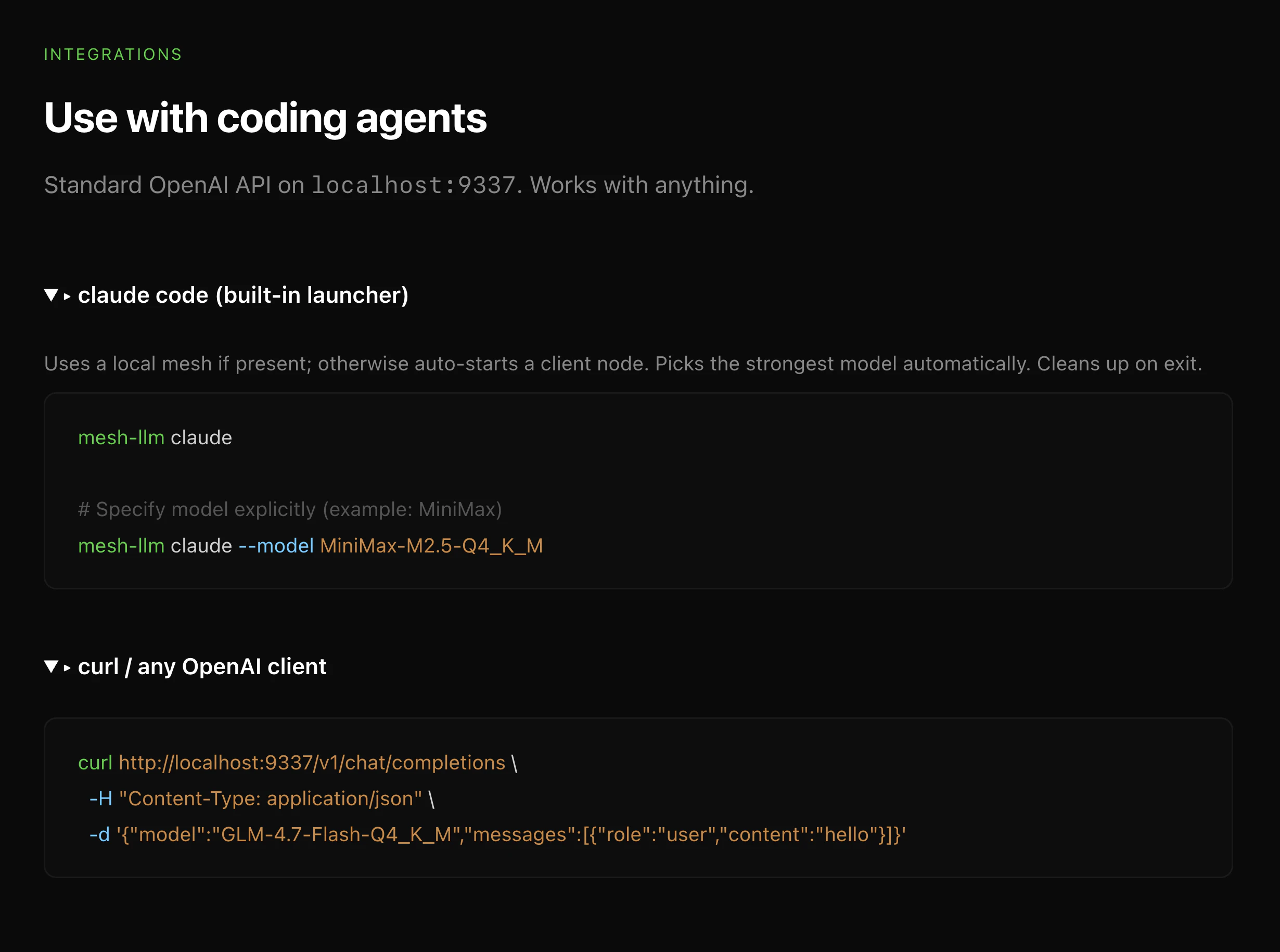
For developers working on advanced AI agents, Mesh LLM offers a unique functionality — agent collaboration in a p2p model. Instead of communicating through a central API, agents can share computing resources and data directly within a secure, distributed network. This not only reduces latency but, above all, increases data privacy, as data never leaves the infrastructure controlled by the user or a group of collaborators.
The list of key system functionalities includes:
- Automatic configuration of distributed inference clusters.
- Ability to share surplus computing power with other users.
- Secure access to private models from any location.
- Native support for AI agent collaboration in a peer-to-peer model.
- Support for multiple models simultaneously within a single computing network.
A new paradigm in the Developer Tools category
Analyzing the presence of Mesh LLM on the Product Hunt platform, there is a clear trend toward self-hosted and open-source tools. The tagging with Developer Tools and GitHub suggests that the project is aimed at engineers who want full control over their technology stack. In an era of rising token costs in proprietary models, the ability to run powerful open-weights models on one's own distributed hardware becomes an economic necessity.
Internal industry analysis indicates that Mesh LLM fills the gap between amateur local model execution and professional corporate infrastructure. Thanks to the Free model, the barrier to entry is practically zero. This is particularly important for startups and smaller research teams that possess diverse hardware but previously lacked the software to tie these resources into an efficient organism. This system solves the problem of wasted computing power, which remains idle in many companies after engineers' working hours.
The vision of "sharing" computing power (share compute) builds the foundation for a new AI resource economy, where the currency is not the dollar, but free CPU cycles and VRAM.
It is worth noting the context of AI Infrastructure Tools. Currently, the market is shifting from simple chatbots toward complex agentic systems. Mesh LLM fits perfectly into this trend, providing a hardware layer that is as flexible as the software running on it. The ability to serve multiple models simultaneously makes it a complete environment for testing and deploying multi-model solutions.
Cost efficiency and technological sovereignty
The biggest challenge for open large language models (LLMs) has always been hardware requirements. Models with 70B or 405B parameters require massive amounts of VRAM, which often excludes single GPU units from use. Mesh LLM, through pool compute, allows for "stitching" the memory of multiple devices together, opening the way to running the most advanced models without the need to purchase servers for hundreds of thousands of dollars. This is a real path to technological sovereignty for entities that do not want to be dependent on the pricing and regulatory policies of giants.
The project debuts in a dynamic environment, alongside trends such as Vibe Coding or AI Coding Agents, suggesting that its main application in the near future will be supporting rapid development cycles. Programmers can now build local test clusters that behave like a cloud but offer the security of local hosting. This is critical in industries such as finance or medicine, where data cannot be sent to external API providers.
The p2p model in the Mesh LLM edition is a herald of the end of an era where AI computing power is a luxury commodity available only to a few. By aggregating distributed resources, this technology creates a new layer of the internet — one where machine intelligence is a fluid, scalable, and above all, democratic resource. As open-source models catch up with their paid counterparts, the importance of infrastructure like Mesh LLM will only grow, becoming a standard in the arsenal of the modern AI engineer.
More from Tech


Related Articles

After court loss, RFK Jr. gives himself more power over CDC vaccine panel
Apr 6
Steven Spielberg Still Wants to Make a Horror Film ‘Someday’
Apr 6New Jersey has no right to ban Kalshi's prediction market, US appeals court rules
Apr 6