Pints meet prop bets: Polymarket’s “Situation Room” pop-up bar in DC
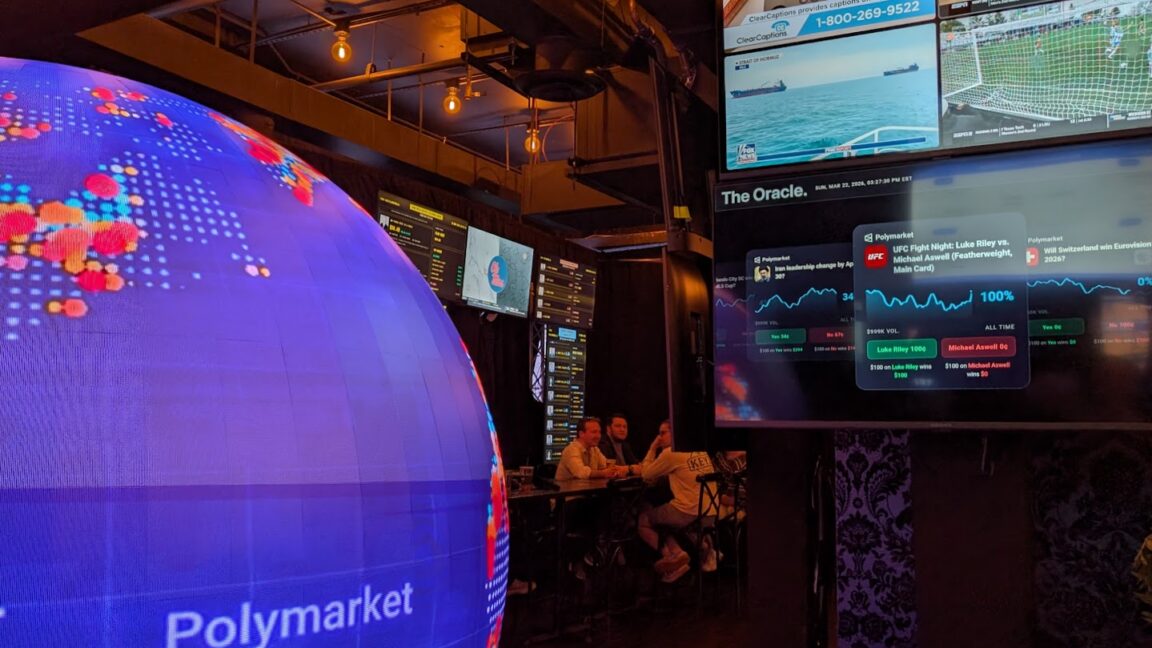
Foto: Rob Pegoraro
A four percent chance of the Second Coming of Jesus Christ before 2027 and nearly zero odds for a Swiss victory in Eurovision—these were just some of the unconventional bets featured in "The Situation Room." Polymarket, a leader in the prediction markets sector, took over a bar in Washington, D.C., for three days, transforming it into the world's first venue dedicated to monitoring global trends and forecasting markets. Instead of soccer matches, dozens of screens displayed broadcasts from C-SPAN and CNBC alongside dynamically shifting odds based on the USDC cryptocurrency. Despite initial technical issues with Wi-Fi, the pop-up bar became a hub for technology and finance enthusiasts, offering access to data from Bloomberg terminals and interactive "Match the Odds" games. Participants could confront their predictions with the "wisdom of the crowd" on issues such as NVIDIA's stock price, the future of AI regulation, or election results. For users worldwide, the success of this experiment signals that prediction markets are moving from a digital niche into the mainstream. It is no longer just gambling, but a new analytical tool that, thanks to blockchain technology, allows for the real-time pricing of the probability of almost any event on the planet. Polymarket has proven that data-driven speculation is becoming a new form of social entertainment that reflects the sentiments of the global community more effectively than traditional polling.
In the heart of Washington, on the famous K Street, an unusual transformation has taken place. The traditional sports bar Proper 21 turned into The Situation Room for three days – a physical manifestation of Polymarket, the leading prediction market platform. What might have looked like just another local pub at first glance actually became a bastion for cryptocurrency enthusiasts, data analysts, and individuals ready to bet real money on almost any geopolitical or social event.
The initiative, announced on March 18 on the X platform, had the ambition of being the "world's first bar dedicated to monitoring the situation." Although the beginnings were difficult – Friday's press preview was marked by power and Wi-Fi issues that immobilized all screens – the weekend's activity showed the full spectrum of Polymarket's ambitions. Instead of baseball or basketball games, dozens of monitors were dominated by broadcasts from CNN, CBS, C-SPAN and, most importantly, dynamically changing odds on the platform itself.
Analytical buzz instead of sports excitement
The atmosphere inside The Situation Room significantly deviated from the standards of American watering holes. Fans were replaced by people with open laptops, and the chatter about sports was replaced by debates on blockchain technology and political reshuffling. Polymarket promised access to Bloomberg terminals, flight radars, and data streams from X (formerly Twitter). Although the Bloomberg terminals ultimately did not appear on-site, the bar still offered a unique insight into how modern financial technology intertwines with everyday life.
Read also


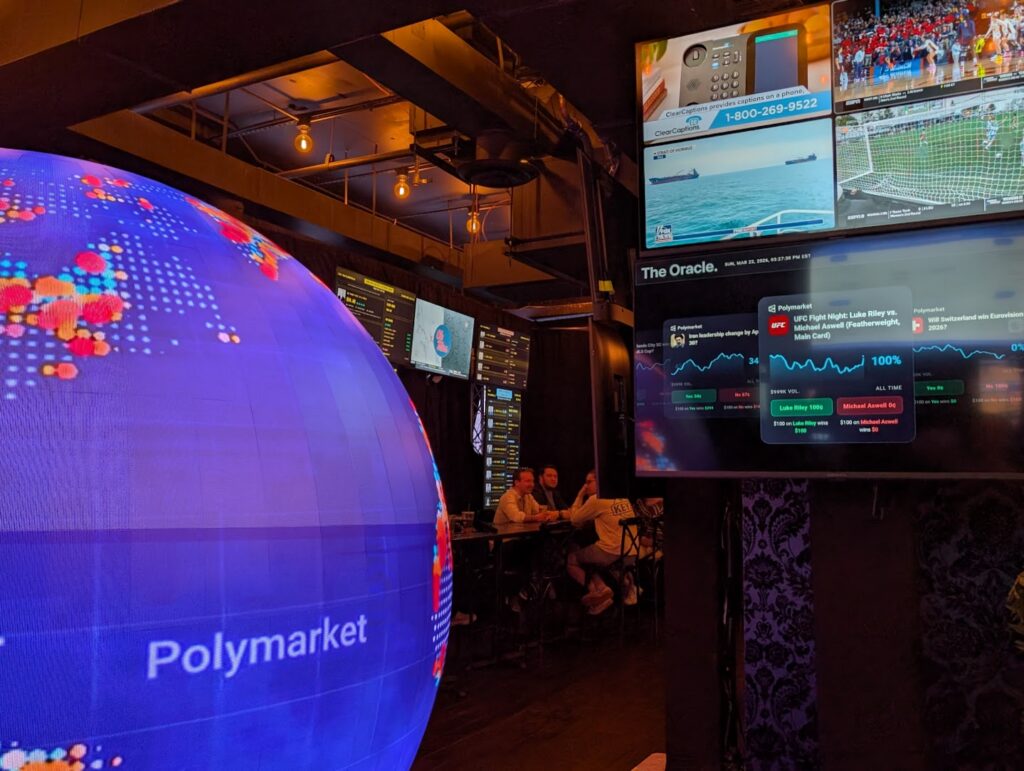
A key element of the decor was a giant rotating globe, indicating locations around the world that were the subject of current bets. Visitors could also test their analytical skills at the interactive Match the Odds table. This game required guests to precisely estimate the probability of specific events occurring and then confronted their results with the current odds set by the "collective intelligence" of the platform's users.
From politics to the second coming of the Messiah
The spectrum of topics on which Polymarket users bet USDC (a stablecoin pegged to the dollar) is fascinating and at times bizarre. On the bar's screens, one could track the chances for specific political and social scenarios:
- Control of Congress: Users gave Democrats an 85% chance of taking over the House of Representatives, while Republicans' chances of holding the Senate were assessed as even.
- 2028 Presidential Election: Vice President J.D. Vance (Republicans) and California Governor Gavin Newsom (Democrats) were considered the most likely candidates.
- AI Regulations: The market estimated the chances of passing a federal law on artificial intelligence regulation in 2026 at just 30%.
- Absurd issues: From a 0% chance for Switzerland to win Eurovision 2026, to a 4% chance of... the return of Jesus Christ before 2027.
Such a wide range of bets shows that prediction markets are becoming an alternative source of information, often more sensitive to sentiment than traditional polls. However, this "democratization of truth" brings with it serious ethical and legal challenges.
Lobbying, politics, and the dark side of predictions
Polymarket's presence in Washington is no coincidence. Although the company does not officially comment on the bar's operational goals, the tech sector usually appears in the capital when it wants to gain favor with regulators. However, Polymarket's situation seems stable – Donald J. Trump, Jr. is an investor and unpaid advisor to the platform, and the Trump administration quickly withdrew from earlier attempts to restrict the activities of Polymarket and its competitor, Kalshi.
Despite political support, the industry faces accusations of allowing insider trading and moral controversies regarding betting on the outcomes of armed conflicts. In March, Arizona Attorney General Kris Mayes accused Kalshi of running illegal gambling operations in connection with bets on state elections. Additionally, prediction markets can be arenas of aggression – Israeli journalist Emanuel Fabian received death threats from users whose bets were threatened by his reports from the front lines.
"Data from cryptocurrency wallets indicates that only a small minority of Polymarket users – from 7.5% to a maximum of 30% – record real profits."
This comparison of hard financial data with the enthusiasm seen in The Situation Room casts a shadow over the "wisdom of the crowd" narrative. Most participants in this market lose money, which makes prediction markets similar to traditional gambling, despite being packaged in the robes of advanced analytics and Web3 technology.
Marketing offensive in the real world
The Situation Room is not Polymarket's first marketing "stunt." In February, the company opened a temporary grocery store in Manhattan where customers could receive free products – as many as they could fit into a branded Polymarket bag. This strategy seems clear: stepping out of the digital bubble and building brand awareness through physical experiences.
Interestingly, the marketing in the bar itself was surprisingly restrained. No discounts were offered for creating an account, and the menu remained standard for the Proper 21 venue. The only tangible evidence of the giant's presence were logos on glasses and beer coasters. However, Polymarket signals that this is just the beginning – the company is considering creating a permanent version of The Situation Room.
Polymarket's expansion through partnerships with Substack (embedding data in posts) and Google (integration with Google Finance) suggests that prediction markets aim to become an integral part of the internet's information infrastructure. Whether we consider it a new form of data-driven journalism or sophisticated gambling, the physical presence of places like the Washington pop-up bar proves that the line between financial speculation and the interpretation of reality has finally blurred. It can be safely assumed that Polymarket will not stop at one "activation" and we will soon see further attempts to dominate public space with digital probability odds.
More from Tech




Related Articles

After court loss, RFK Jr. gives himself more power over CDC vaccine panel
Apr 6
Steven Spielberg Still Wants to Make a Horror Film ‘Someday’
Apr 6New Jersey has no right to ban Kalshi's prediction market, US appeals court rules
Apr 6