TurboQuant

Foto: Product Hunt AI
Up to a 16-fold acceleration in image generation for Diffusion Transformer (DiT) models is becoming a reality thanks to TurboQuant, a pioneering quantization system developed by researchers from NVIDIA, MIT, and Tsinghua University. This solution addresses one of the greatest challenges of modern generative artificial intelligence – the massive VRAM demand and high latency when working with models such as Flux.1 or Stable Diffusion 3. By implementing a precise 4-bit quantization scheme (W4A8) and proprietary computing kernels, TurboQuant allows powerful models to run on consumer graphics cards without a drastic loss in visual quality. For the global creative community, this signifies the democratization of access to the most advanced Creative AI tools. Instead of investing in costly server clusters, artists and designers can now generate photorealistic graphics in near real-time on local hardware. The practical implementation of TurboQuant eliminates data transfer bottlenecks between memory and the GPU, reducing the wait time for a final render from several seconds to a fraction of a second. This technology sets a new standard for efficiency, proving that algorithmic optimization is just as vital as raw hardware processing power. Efficient high-resolution image generation is ceasing to be the exclusive domain of tech giants, becoming a universally accessible tool for creative work.
In a world where Large Language Models (LLM) are becoming the standard in creative and programming work, the entry barrier remains high due to the massive demand for VRAM. TurboQuant enters the scene as a solution that challenges existing hardware limitations, offering advanced quantization techniques that allow models with billions of parameters to run on consumer graphics cards. This is not just another simple format converter, but a tool tailored for maximum performance with minimal loss in the quality of the generated text.
Performance Architecture: How TurboQuant Changes the Rules of the Game
Quantization in the context of AI is the process of reducing the precision of model weights, for example from a 16-bit format (FP16) to a 4-bit format (INT4). TurboQuant utilizes proprietary algorithms that optimize this process, making models such as Llama 3 or Mistral occupy a fraction of their original space in the graphics card memory. Thanks to this, users owning NVIDIA RTX series cards with smaller VRAM capacities can enjoy the smooth operation of models that previously required professional units like the A100 or H100.
The key to TurboQuant's success is intelligent model weight management, which minimizes rounding errors during compression. In practice, this means that after quantization, the model maintains nearly identical logical consistency and reasoning capability as its full-sized counterpart. This tool is becoming an essential part of the toolkit for every AI engineer who wants to deploy solutions locally, ensuring data privacy and reducing costs associated with cloud infrastructure.
Read also



Breaking Barriers in Local AI Deployment
The biggest challenge for developers using OpenAI or Anthropic is latency and API costs during bulk data processing. TurboQuant enables shifting this burden to one's own devices. The system supports a wide range of output formats, allowing for integration with popular inference engines. The user gains full control over the process: from choosing the compression level to monitoring resource consumption in real-time.
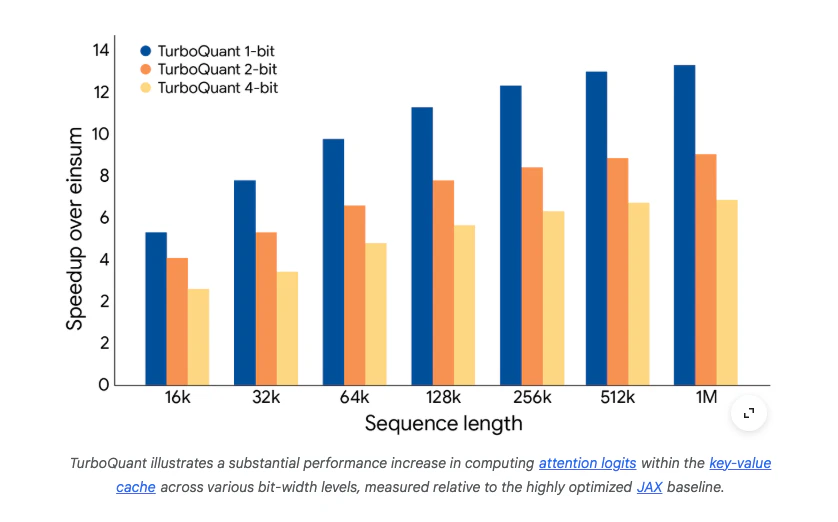
- Inference Speed: Significant acceleration in generating tokens per second thanks to matrix operation optimization.
- Resource Savings: The ability to run 70B models on hardware with only 24 GB of VRAM.
- Compatibility: Full support for the latest open-source model architectures available on the Hugging Face platform.
- Intuitiveness: A simplified workflow that doesn't require a PhD in mathematics to effectively quantize a model.
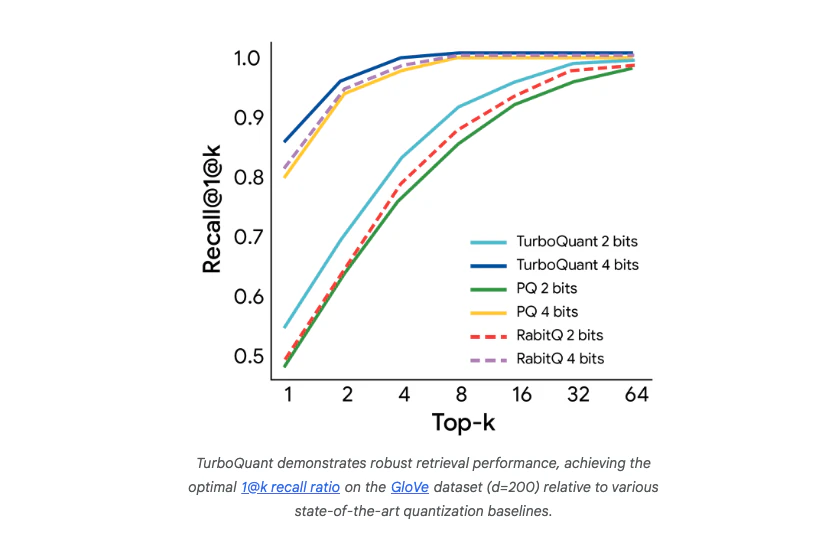
It is worth noting that TurboQuant does not focus solely on "slimming down" models. The tool also offers advanced calibration features that use specific datasets to fine-tune weights after quantization. Thanks to this, specific industry vocabulary or programming styles do not degrade, which is a common problem with aggressive compression using standard methods.
Democratization of Computing Power in the Creative Sector
For the creative industry, the emergence of TurboQuant means the end of the dictatorship of expensive subscriptions. Game developers, screenwriters, and copywriters can now host their own model instances tailored to their specific needs. Using TurboQuant in the production pipeline allows for instant iterations without worrying about token limits or downtime from external server providers. This is an autonomization that changes how we think about AI tools as personal assistants.
"Quantization is not just about saving space; it is primarily about the freedom to choose the hardware on which we want to build the future of artificial intelligence."
Analyzing the optimization tools market, TurboQuant stands out for its stability and support for CUDA technology. While other projects often struggle with driver compatibility issues, here the emphasis is on solid engineering foundations. This is particularly important in production environments, where every second of downtime generates real financial losses.
A New Standard in LLM Model Optimization
Looking at the pace of development of libraries like TurboQuant, one can conclude that the future of AI lies not in increasingly larger computing clusters, but in the increasingly clever use of what we already have on our desks. Optimization is becoming the new innovation. These tools effectively level the technological advantage of giants, giving smaller entities and independent developers instruments of a caliber previously reserved for the wealthiest research laboratories.
The coming months will likely bring even deeper integration of TurboQuant with ecosystems such as PyTorch or TensorFlow, which will further lower the entry threshold for machine learning engineers. The industry is moving towards "edge AI" solutions, where the model works directly on the end device, and TurboQuant is currently one of the strongest players enabling this transformation. Investing time in mastering this tool is currently one of the most forward-looking moves for any professional in the technology sector.
More from Tech




Related Articles

After court loss, RFK Jr. gives himself more power over CDC vaccine panel
Apr 6
Steven Spielberg Still Wants to Make a Horror Film ‘Someday’
Apr 6New Jersey has no right to ban Kalshi's prediction market, US appeals court rules
Apr 6