Here is NASA's plan for nuking Gateway and sending it to Mars
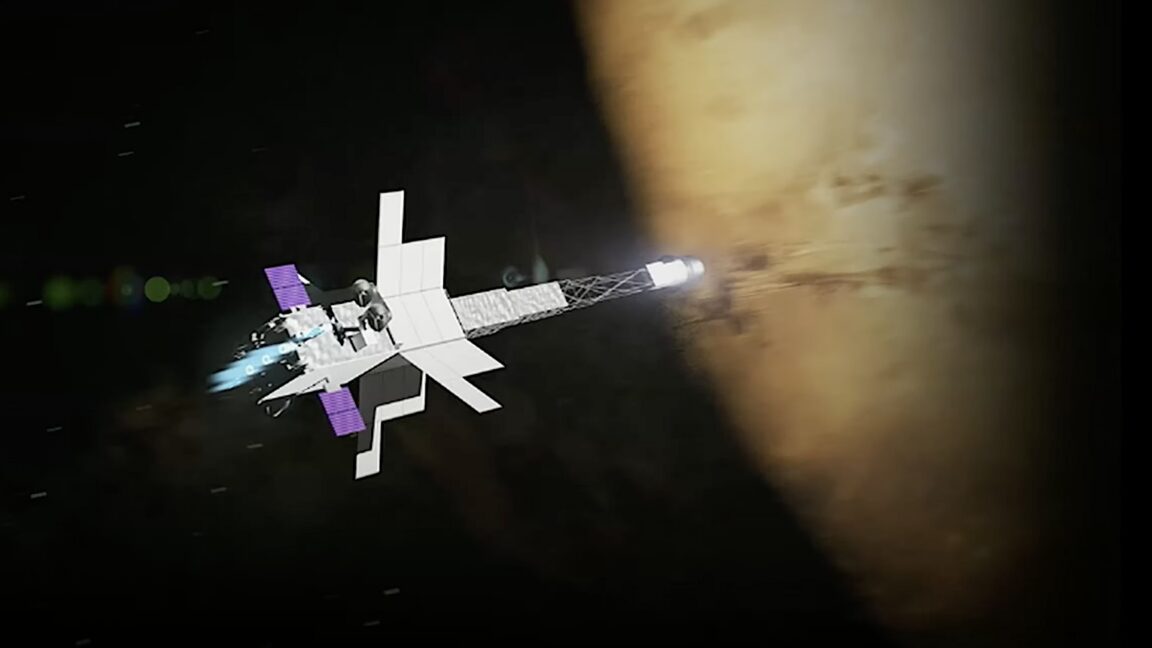
Foto: NASA
Nearly $4.5 billion invested in the Gateway program will not go to waste, despite the sudden halt of work on the lunar orbital station. NASA has announced a radical change of course: instead of building a transit hub for astronauts, the agency will utilize ready-made components to create SR-1 Freedom – a first-of-its-kind interplanetary mission powered by nuclear energy. The key Power and Propulsion Element (PPE) module, originally designed as the heart of the Gateway station, will be equipped with a uranium-fueled fission reactor and the most powerful electric propulsion system in history. This decision marks a transition from chemical technologies to Nuclear-Electric Propulsion, which is crucial for the future exploration of Mars. Although previous nuclear projects, such as Prometheus or DRACO, ended in failure, SR-1 Freedom is scheduled to launch before the end of 2028. For the creative technology and space engineering sectors, this is a signal that the era of long-term, energy-intensive deep space missions is becoming a reality. The practical application of nuclear reactors will allow not only for faster transport of cargo to the Red Planet but also for stable power supply to lunar bases during two-week polar nights. The success of this mission will ultimately define humanity's ability to efficiently move large masses through interplanetary space, paving the way for a permanent human presence beyond Earth's orbit.
In the world of space exploration, sudden plot twists are rare, but NASA's newly announced decision to halt work on the lunar Gateway station in favor of a base on the lunar surface has caused quite a stir. Instead of abandoning the already completed components, on which nearly $4.5 billion has been spent since 2019, the agency has decided on a risky but fascinating step: transforming the heart of the station into the first American nuclear-powered spacecraft in decades, which will set a course for Mars.
The key element of this transformation is the Power and Propulsion Element (PPE), a module currently being built by Lanteris Space Systems in Palo Alto. What was originally intended to be a stationary power hub orbiting the Moon will become the foundation of the SR-1 Freedom mission. NASA plans to launch this technology demonstrator as early as late 2028, presenting engineers with a grueling deadline of just 33 months to complete the project.
A second life for the PPE module and a nuclear reactor
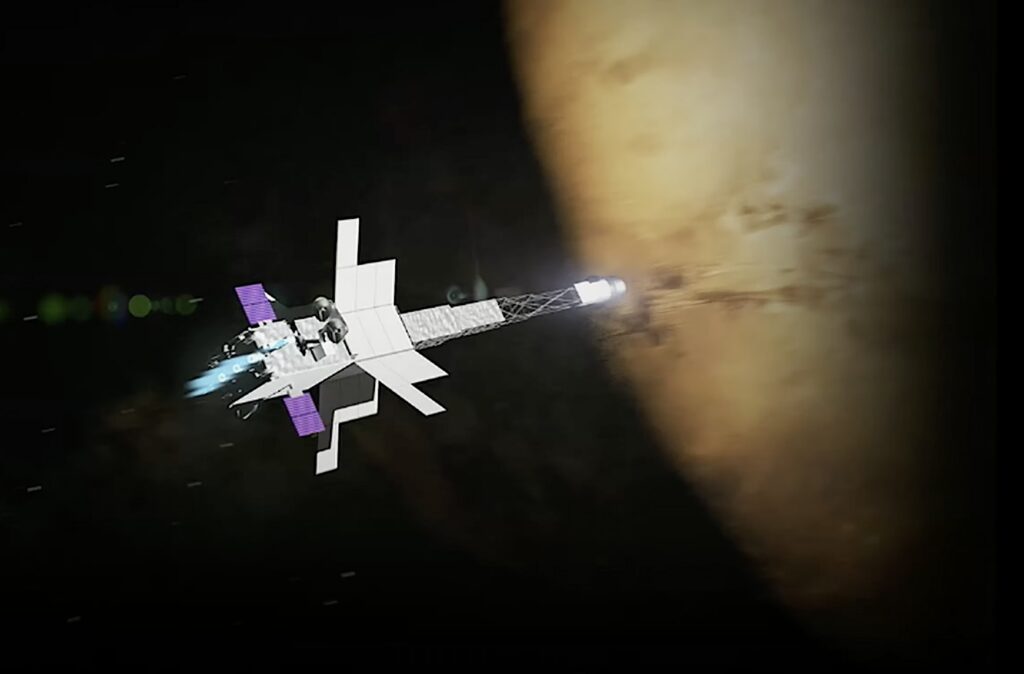
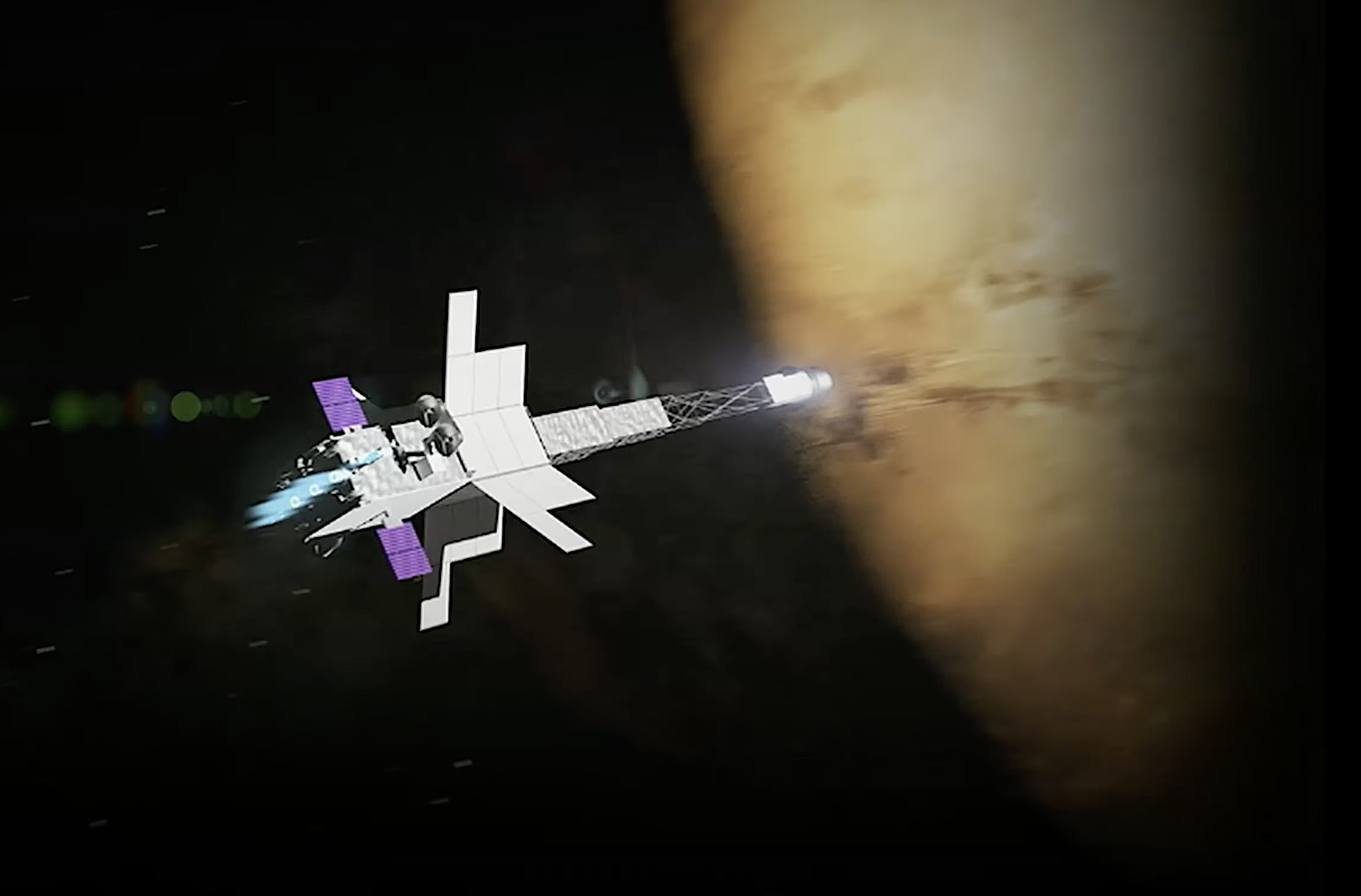
The decision to "cannibalize" hardware prepared for the Gateway program is a pragmatic attempt to save billions in investment. The PPE module features the most powerful electric propulsion system ever sent into space, consisting of three 12 kW thrusters and four 6 kW units. Although it was originally intended to rely solely on solar panels, the new configuration involves integration with a fission reactor powered by uranium.
Read also


Nuclear-electric propulsion offers significantly higher efficiency than traditional chemical rockets. While it generates less thrust than nuclear-thermal engines, it allows for the long-term and extremely efficient movement of large masses in deep space. For NASA, SR-1 Freedom is meant to be proof that the United States can build, safely launch, and operate a nuclear system beyond Earth orbit—something that hasn't been achieved in over 60 years.
No more ghost projects
The history of NASA's attempts to implement nuclear propulsion is long and littered with failures. From Project Prometheus, canceled over 20 years ago, to last year's closure of the DRACO program (conducted jointly with DARPA), the agency has struggled with the "curse of execution." As Steve Sinacore, director of the space reactor program at NASA, noted, the lack of an operational reactor is not a technological problem, but a matter of management and overly ambitious goals that drove up costs.
The SR-1 mission is intended to be different. Instead of building everything from scratch, NASA is utilizing an existing spacecraft chassis and a reactor with a power output of approximately 20 kilowatts. This is a fraction of what was planned under Prometheus, but still 20 times more energy than the systems in current Mars rovers or the Voyager probes generate. The strategy of NASA Administrator Jared Isaacman is clear: the agency must first prove the technology works before asking for more billions for full-scale crewed missions.
- Mission Goal: Demonstration of nuclear-electric propulsion in interplanetary flight.
- Key Component: A 20 kW fission reactor integrated with the PPE module.
- Launch Date: December 2028 (Mars launch window).
- PPE Lead Contractor: Lanteris Space Systems.
Skyfall: Helicopters over the Red Planet
Although the primary goal of SR-1 Freedom is a propulsion test, NASA is not sending the ship "empty." An ambitious secondary payload named Skyfall has been added to the mission. The mothership will transport three drones toward Mars, based on the design of the famous Ingenuity helicopter. Their task will be to scan the planet's surface using cameras and ground-penetrating radars in search of subsurface water ice deposits.
The landing process for these units promises to be an engineering masterpiece. After separating from the SR-1 module, the capsule will enter the Martian atmosphere at hypersonic speeds exceeding Mach 5. After slowing down to Mach 2 and deploying a supersonic parachute, the heat shield will be jettisoned, followed by the first-ever mid-air deployment of helicopters. These drones are intended to map out safe routes for future colonizers.
Logistics, safety, and ruthless celestial mechanics
Executing the mission in such a short timeframe requires nearly perfect execution. Steve Sinacore emphasizes that "orbital mechanics are non-negotiable"—if NASA does not make it by the end of 2028, the next launch window will not open until early 2031. To meet the deadline, the project must avoid "mission creep"—the continuous addition of new features that delay the launch.
Safety certification remains a major challenge. Launching nuclear fuel requires close cooperation with the Department of Energy and the selection of an appropriate rocket. Currently, the SpaceX Falcon Heavy is undergoing nuclear certification for the Dragonfly mission (flight to Titan), making it a natural candidate for launching SR-1 Freedom. NASA has not yet disclosed the total cost of the mission, but using ready-made hardware from the Gateway program is expected to radically reduce expenditures compared to previous, failed initiatives.
"We aren't trying to do everything. We are trying to do this one hard thing: for the first time in history, operate a coupled system of a nuclear reactor, energy conversion, and electric propulsion beyond Earth's orbit" – Steve Sinacore, NASA.
The success of SR-1 Freedom could completely change the paradigm of space travel. If nuclear propulsion proves reliable, travel time to Mars will be shortened, and the mass of cargo we can send there will increase drastically. NASA is betting everything on one card, believing that recycling Gateway station components is the fastest path to making humanity an interplanetary species. I predict that the next 33 months will be the most intense period in the history of modern nuclear engineering, and the outcome of this mission will define the solar system exploration strategy for the next half-century.
More from Tech




Related Articles
After court loss, RFK Jr. gives himself more power over CDC vaccine panel
Apr 6
Steven Spielberg Still Wants to Make a Horror Film ‘Someday’
Apr 6New Jersey has no right to ban Kalshi's prediction market, US appeals court rules
Apr 6