Nvidia CEO tries to explain why DLSS 5 isn’t just “AI slop”
Nvidia / Bethesda
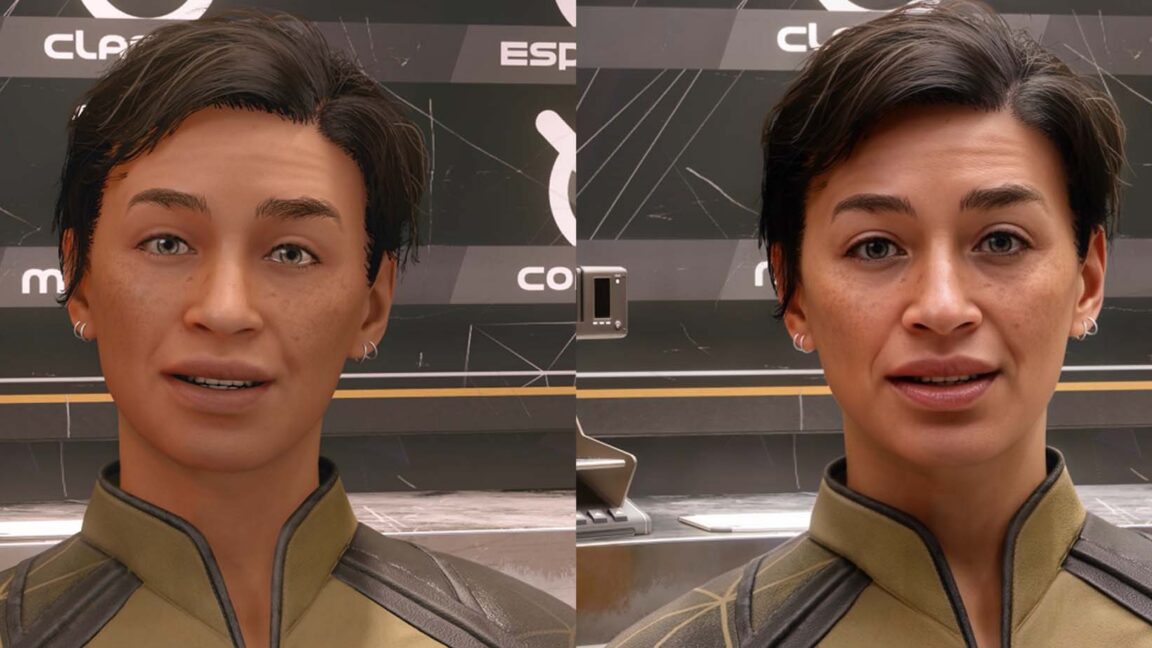
Nvidia sparked a storm in the gaming community by presenting DLSS 5 as a tool based on generative artificial intelligence, which was immediately met with allegations of flooding games with so-called "AI slop." Jensen Huang, the company's CEO, decided to personally address these criticisms on Lex Fridman's podcast, emphasizing that the new technology is not an attempt to replace artistic vision with a soulless algorithm. According to Huang, the key difference lies in the fact that DLSS 5 operates in a "3D conditioned" mode—the frame generation process is strictly guided by the geometry and textures created by developers, which serve as an inviolable database. For users worldwide, this signifies a fundamental shift in the perception of performance: AI is no longer just an image-sharpening filter, but an active co-creator of the final render. Although gamers fear a homogenization of game aesthetics and the loss of their unique character in favor of sterile photorealism, Nvidia argues that this technology is integrated into the creative process from the very beginning, rather than applied as a post-process. The practical implication is clear—DLSS 5 is set to become a standard that allows for unprecedented fluidity while maintaining project authenticity, provided that developers learn to treat generative AI as a precision chisel rather than an automated machine for mass image production. DLSS 5 redefines the boundary between traditional rendering and pure algorithmic creation.
The premiere of DLSS 5 was supposed to be another technological triumph for Nvidia, but instead of enthusiasm, the company hit a wall of skepticism from the gaming community. The allegations are serious: the generative AI-based technology is claimed to turn unique artistic visions into generic mush, bluntly described as "AI slop." Jensen Huang, CEO of Nvidia, decided to break his silence and, in an extensive interview for the Lex Fridman Podcast, explain why he believes these concerns stem from a misunderstanding of the new technology's foundations.
Huang, known for his enthusiasm for AI, took a more measured stance this time, agreeing with critics regarding the aesthetics of contemporary image generators. "I understand where these concerns come from because I'm not a fan of AI slop myself," stated the head of Nvidia. In his view, the problem with today's AI is repetitiveness and the fact that almost all generated content starts to look the same, despite its objective beauty. This admission is significant as it marks the first time the leader of the Santa Clara giant has so openly distanced himself from the visual monotony he helped create by providing the computational infrastructure.
Geometry as a foundation, not a suggestion
The key to understanding the defense of DLSS 5 is the way the algorithm processes data. Unlike "text-to-image" models that create images from a vacuum based on statistical probability, the new iteration of Deep Learning Super Sampling is based on what Huang calls "3D conditioned, 3D guided." This means the generative process is not left to its own devices but is strictly constrained by the geometry and structures provided by the game developers.
Read also

According to the Nvidia chief, artists still create what he calls the "ground truth structure" – the fundamental truth of the scene, its shapes, and textures. DLSS 5 is designed only to enhance these elements, not redefine them. Huang emphasizes that every frame of the image is improved in a way that does not change the artistic intent because the AI is "led by the hand" by the game engine. This is a fundamental difference compared to video models that can generate surreal artifacts because they do not understand physics or the permanence of objects in 3D space.
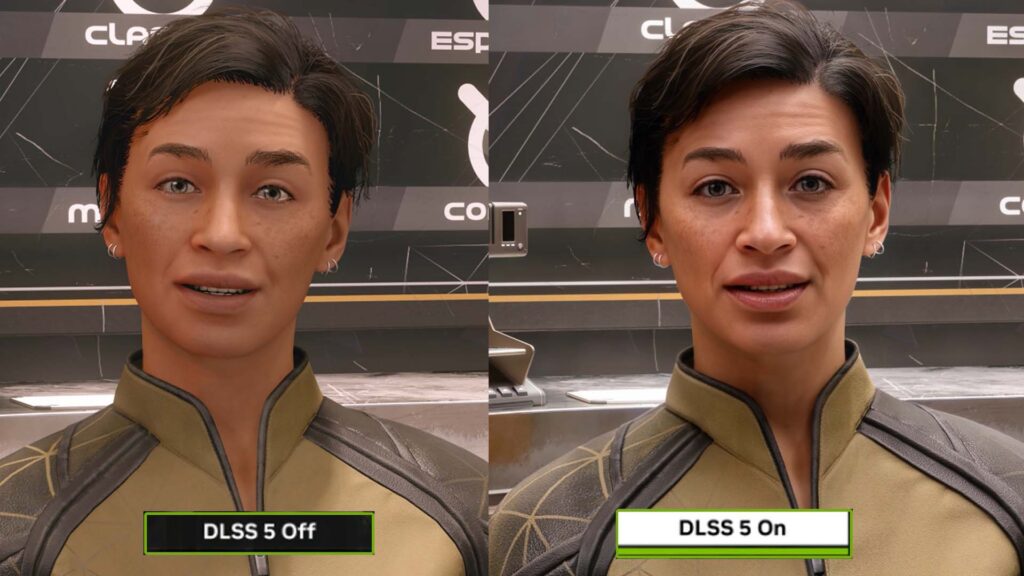
Despite these assurances, gamers fear the phenomenon of "photo-realism homogenization." The main concern is not that DLSS 5 will start drawing extra fingers in games or turning dragons into cars, but that it will smooth out the differences between the graphic styles of different developers. There is a real fear that whether playing a dark horror game or a colorful platformer, Nvidia's generative filter will apply the same "perfect" sheen to everything, causing games to lose their unique character in favor of an averaged visual standard.
A tool in the artist's hands, not a post-processing filter
Jensen Huang counters these attacks by claiming that DLSS 5 is not a "black box" solution applied to a finished product. "This is not a technology where the game is sent in one state and we post-process it later," he explained in the podcast. Instead, the new technology is meant to be integrated into the creative process at the production stage. Nvidia wants developers to treat generative AI as another brush in their arsenal, rather than an automatic retouch.
Huang's vision assumes that creators decide the degree of algorithmic intervention. If a studio wants to maintain a raw, grainy style, they are to have full control over it through proper "conditioning" of the model. DLSS 5 is intended to give artists a tool to achieve a level of detail that would be impossible to obtain in real-time using traditional rendering methods, even on the most powerful RTX hardware. This is a shift in weight from pure computing power to intelligent image reconstruction.
- 3D Conditioning: Using depth data and motion vectors to stabilize the AI image.
- Artist Integration: Deep cooperation between the algorithm and the game engine, rather than just analyzing finished pixels.
- Generative Glow-ups: The ability to reconstruct details that do not exist in lower base resolutions.
- Optionality: Developers have full freedom in implementing or opting out of individual DLSS 5 modules.
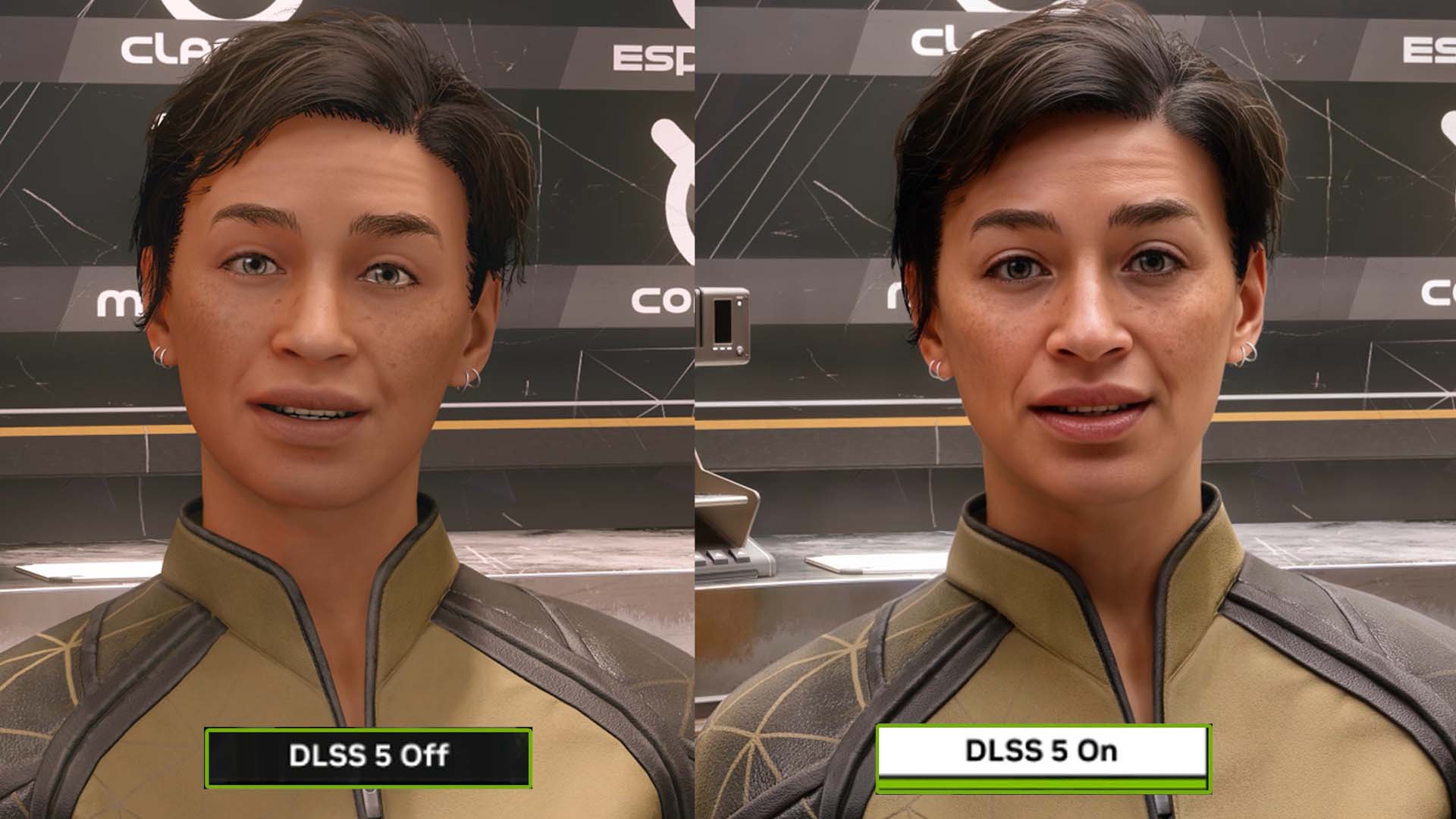
It is worth noting that the gaming industry is currently at a turning point. Over the years, DLSS has evolved from simple upscaling (DLSS 1), through excellent edge reconstruction (DLSS 2), to generating entire frames (DLSS 3) and ray reconstruction (DLSS 3.5). DLSS 5 goes a step further by introducing a purely generative component. This is a natural evolution, but also the riskiest, as it touches the very visual fabric of the work that players identify with human craftsmanship.
Democratization or degradation of quality?
Huang concludes his argument with a simple statement: the final decision belongs to the creators. "If game developers don't like it, they can simply decide not to use it," he cut short. This market logic is intended to calm the mood, suggesting that Nvidia only provides the technology and does not impose a new aesthetic. However, in reality, with the ever-increasing production costs of AAA games and the pressure for higher resolutions, few studios will be able to afford to ignore tools that drastically reduce the demand for raw computing power.
Analyzing the current situation, one can conclude that DLSS 5 will become a standard faster than purists would like. Nvidia is effectively shifting the definition of "rendering" toward "hallucinating based on data." If the technology indeed maintains the geometric rigor Huang speaks of, fears of "AI slop" may prove premature. The true test, however, will not be podcast interviews, but the first major titles that fully integrate this model. The line between enhancement and distortion is thin, and gamers, having an exceptionally keen eye for any visual anomalies, will be merciless judges of this technology.
It can be predicted that DLSS 5 will usher in a new era in computer graphics, where the traditional rasterizer becomes merely a sketch for powerful neural networks. The risk of standardizing the look of games is real, but the history of technology shows that artists usually find a way to bend new tools to their vision rather than succumbing to them. Nvidia is betting everything on one card: generative AI is the future of interactive entertainment, and we are currently witnessing the moment where the "artificial" must prove it can be "artistic."